Have you ever looked at a blueprint or listened to a contractor discuss roofing specifications and felt confused by terms like “5/12 pitch”? You are not alone. Many homeowners struggle to visualize what these ratios mean in real-world angles, which is crucial when planning renovations or understanding drainage capabilities. If you are asking, “What is the angle of a 5/12 roof pitch,” you have come to the right place for a clear, accurate answer.
Understanding the specific angle of your roof is not just about geometry; it affects everything from material selection to safety during maintenance. In this guide, we will break down the math, explain the practical implications, and help you master this essential aspect of home construction.
The Exact Answer: Converting 5/12 Pitch to Degrees
Let’s get straight to the point. If you need the number for a quick reference, here it is:
A 5/12 roof pitch converts to an angle of approximately 22.62 degrees.
To be precise, the calculation yields 22.6198649… degrees. For most construction and architectural purposes, rounding this to 22.6 degrees or even 23 degrees is standard practice. However, knowing the precise decimal is helpful when using digital design software or ordering custom-fabricated materials.
Why Isn’t It Just 5/12 of 90 Degrees?
A common misconception among beginners is assuming that a 5/12 pitch means the roof is angled at 5/12ths of a right angle (90 degrees). This is incorrect. Roof pitch is a ratio of rise over run, not a direct fraction of the total angle.
- Rise: The vertical height the roof gains.
- Run: The horizontal distance covered.
In a 5/12 pitch, the roof rises 5 inches for every 12 inches of horizontal distance. This creates a right-angled triangle where we must use trigonometry to find the angle.
How to Calculate Roof Pitch Angles Yourself
Understanding how to derive this number empowers you to calculate any roof pitch, not just 5/12. We use basic trigonometry, specifically the tangent function.
The Formula
The relationship between the pitch ratio and the angle (θ) is defined by the arctangent (inverse tangent) function:
θ=arctan(RunRise)
For a 5/12 pitch:
- Divide the rise by the run: 5÷12=0.4167
- Calculate the arctangent of that result: arctan(0.4167)
- The result is 22.62 degrees.
You can verify this using any scientific calculator or online conversion tool. This method works universally for any standard roof pitch expressed as X/12.
Why Does the 22.6-Degree Angle Matter?
Knowing that a 5/12 pitch equals roughly 22.6 degrees is useful, but why does this specific slope matter for your home? This angle sits in a “sweet spot” for residential roofing, balancing aesthetics, cost, and functionality.
1. Walkability and Safety
One of the most significant factors influenced by roof angle is safety.
- Low Slope (< 4/12): Often requires special sealing methods because water drains slowly.
- Steep Slope (> 9/12): Dangerous to walk on without harnesses and specialized equipment.
- Moderate Slope (5/12 to 8/12): A 5/12 pitch is considered walkable with caution. Most professional roofers can work on a 22.6-degree slope using standard fall protection, but it is steep enough that slipping is a genuine risk. It is not flat enough to stand comfortably without bracing.
2. Material Compatibility
Not all roofing materials work well at 22.6 degrees.
- Asphalt Shingles: These are the most common choice for a 5/12 pitch. They perform excellently at this angle, providing adequate water shedding.
- Clay or Concrete Tiles: These often require a steeper pitch (usually 6/12 or higher) to prevent water infiltration under the tiles. While some interlocking tile systems allow for 5/12, it is near the lower limit.
- Metal Roofing: Standing seam metal roofs work beautifully at 5/12. However, corrugated metal might require additional sealants at this lower angle to prevent capillary action (water wicking up between ridges).
3. Water Drainage and Debris
At 22.6 degrees, gravity does a decent job of pulling water off the roof. However, it is not steep enough to shed heavy snow loads rapidly. In regions with heavy snowfall, a 5/12 pitch may require stronger structural support to handle the weight of accumulated snow, as it won’t slide off as easily as it would on a 12/12 (45-degree) roof.
Comparing 5/12 Pitch to Other Common Pitches
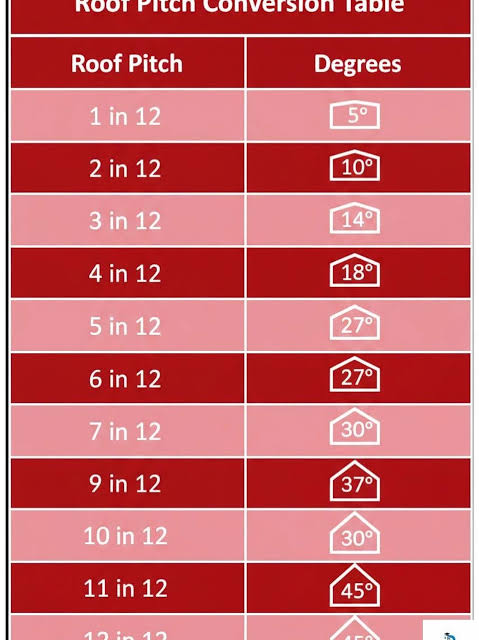
To better contextualize the 22.62-degree angle, let’s compare it to other standard residential roof pitches. This comparison helps you understand where 5/12 fits in the spectrum of roofing designs.
| Roof Pitch | Angle (Degrees) | Classification | Best For |
|---|---|---|---|
| 2/12 | 9.46° | Low Slope | Modern styles, requires membrane roofing |
| 4/12 | 18.43° | Low-Moderate | Standard suburban homes, good drainage |
| 5/12 | 22.62° | Moderate | Versatile, walkable, standard shingles |
| 6/12 | 26.57° | Moderate-Steep | Traditional colonial styles, better snow shed |
| 8/12 | 33.69° | Steep | Victorian styles, high aesthetic appeal |
| 12/12 | 45.00° | Very Steep | A-frame houses, extreme snow regions |
As you can see, the jump from 4/12 to 5/12 adds about 4 degrees, which noticeably changes the visual profile of the house and the ease of installation.
Practical Applications: When to Choose a 5/12 Pitch
If you are building a new home or replacing a roof, why might you choose a 5/12 pitch over a steeper or flatter option?
Cost Efficiency
A 5/12 pitch uses less material than a steeper roof. Since the surface area increases as the pitch gets steeper, a 22.6-degree roof is more material-efficient than a 45-degree roof. This translates to lower costs for shingles, underlayment, and labor time.
Aesthetic Balance
Architecturally, a 5/12 pitch offers a balanced look. It is not so flat that the house looks boxy or commercial, nor is it so steep that it overwhelms the facade. It is a classic choice for Ranch-style, Craftsman, and many contemporary suburban homes.
Attic Space
While a 5/12 pitch does not provide as much usable attic space as a 7/12 or 8/12 pitch, it still allows for sufficient ventilation and insulation depth. If you are not planning to convert your attic into living space, 5/12 is an economical choice that maximizes interior ceiling height without wasting volume on unused roof space.
Expert Insight: The Importance of Precision
According to general construction standards referenced in architectural engineering resources, precision in roof framing is critical. A deviation of even one degree can affect how ridge caps fit and how water flows into gutters. For more detailed information on geometric principles in construction, you can refer to foundational mathematical concepts on Wikipedia.
Professional framers use speed squares and digital level apps to ensure the rafters are cut to the exact 22.62-degree angle. If you are DIY-ing a project, always double-check your cuts. A roof that is too flat may pool water, leading to leaks, while one that is too steep may cause shingles to slide before they adhere properly.
FAQ Section
Here are answers to the most common questions related to roof pitch angles.
1. Is a 5/12 roof pitch considered steep?
No, a 5/12 roof pitch is considered a moderate slope. It is steeper than a low-slope roof (like 2/12 or 3/12) but significantly flatter than steep roofs (like 8/12 or 12/12). It is a very common standard for residential housing in the United States.
2. Can I walk on a 5/12 roof safely?
You can walk on a 5/12 roof, but it requires caution. At 22.6 degrees, the slope is slippery, especially if wet or dusty. Professional roofers use harnesses and proper footwear. For homeowners, it is recommended to avoid walking on the roof unless necessary, and even then, use extreme care and safety gear.
3. What is the rise per foot for a 5/12 pitch?
The term “5/12” literally means the rise per foot. For every 12 inches (1 foot) of horizontal run, the roof rises 5 inches vertically. This ratio remains constant regardless of the total size of the roof.
4. Does a 5/12 pitch require special shingles?
Generally, no. Standard asphalt shingles are perfectly suitable for a 5/12 pitch. However, you must follow the manufacturer’s installation guidelines, which may require specific nailing patterns or underlayment types to ensure warranty validity. Always check with your shingle provider.
5. How do I measure my roof pitch if I don’t know it?
You can measure it from inside your attic. Place a level horizontally against the bottom of a rafter. Mark the 12-inch point on the level. Then, measure the vertical distance from that 12-inch mark up to the rafter. If that distance is 5 inches, you have a 5/12 pitch.
6. Will a 5/12 roof handle heavy rain well?
Yes, a 5/12 pitch provides adequate drainage for heavy rain. Water will flow off efficiently enough to prevent pooling, provided your gutters and downspouts are clean and correctly sized. It is not ideal for areas with extreme debris (like heavy pine needles), where a steeper pitch might help shed waste faster.
Conclusion
So, what is the angle of a 5/12 roof pitch? It is precisely 22.62 degrees. This moderate slope offers an excellent balance of cost-effectiveness, aesthetic appeal, and functional performance for most residential homes. It is steep enough to shed water effectively but gentle enough to keep material costs and installation complexity manageable.
Whether you are planning a new build, a renovation, or simply satisfying your curiosity, understanding this angle helps you make informed decisions about materials and maintenance.
Did you find this guide helpful? Share it with your friends or family who might be tackling their own roofing projects! Understanding the geometry of your home is the first step toward maintaining it properly.
Leave a Reply