Have you just endured a severe thunderstorm and are now staring at your roof with a knot in your stomach? It is completely normal to feel anxious about potential structural issues, especially when trying to figure out what does hail damage look like on a shingle roof. Identifying these signs early can save you thousands in repairs and prevent minor issues from becoming major leaks.
In this guide, we will walk you through exactly what to look for, how to distinguish hail damage from normal wear and tear, and when it is time to call a professional. We aim to empower you with the knowledge to protect your home effectively.
The Immediate Aftermath: Understanding the Impact
Hailstorms are unpredictable forces of nature. According to the National Oceanic and Atmospheric Administration (NOAA), hail causes over $1 billion in property damage annually in the United States alone. While modern asphalt shingles are designed to withstand moderate weather, large hailstones can compromise their integrity.
The primary concern isn’t always an immediate leak. Often, the damage is subtle, affecting the protective granular layer of the shingle. This compromises the shingle’s ability to reflect UV rays and shed water, leading to premature aging. Understanding the visual cues is your first line of defense.
Key Visual Indicators of Hail Damage
When inspecting your roof, you are looking for specific anomalies that differ from standard aging. Here are the most common signs.
1. Random Bruising and Dark Spots
Unlike wind damage, which often follows a pattern, hail damage is random. Look for dark, circular spots on the shingles. These are “bruises” where the impact has compressed the asphalt matting beneath the granules.
- What to look for: A soft spot when gently pressed (use caution).
- Why it matters: The compression breaks the seal between the granules and the asphalt, exposing the underlying material to the elements.
2. Significant Granule Loss
Asphalt shingles are coated with ceramic granules that protect against sun and rain. Hail impacts can knock these granules loose.
- Check your gutters: An excessive amount of granules in your downspouts after a storm is a red flag.
- Bare spots: Look for shiny, black areas on the shingle surface where the granules have been stripped away. This exposes the asphalt to UV radiation, causing it to brittle and crack faster.
3. Cracks and Fractures
High-velocity hail can cause physical fractures in the shingle matrix. These cracks may not be visible from the ground.
- Star-shaped cracks: Often radiate from the point of impact.
- Horizontal cracks: These can occur if the shingle was already brittle due to age or cold temperatures during the storm.
4. Dented or Damaged Flashing and Vents
While focusing on shingles, do not ignore the metal components. Hail leaves distinct dents on aluminum flashing, vent caps, and chimney surrounds. If the metal is dented, it is highly likely the shingles sustained impact damage as well.
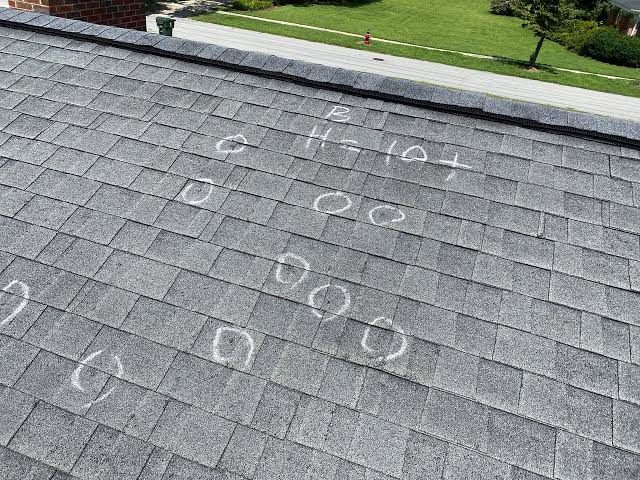
Hail Damage vs. Normal Wear and Tear
One of the biggest challenges homeowners face is distinguishing storm damage from natural aging. Misidentifying the cause can lead to denied insurance claims.
| Feature | Hail Damage | Normal Wear & Tear |
|---|---|---|
| Pattern | Random, scattered impacts | Uniform, consistent across the roof |
| Granule Loss | Localized around impact points | Even thinning over the entire shingle |
| Cracks | Sharp, fresh edges radiating from a point | Gradual, linear cracking along the shingle |
| Surrounding Areas | Dents on soft metals (vents, flashing) | No new dents on metal fixtures |
| Age Factor | Can happen to new or old roofs | Typically affects roofs older than 15 years |
Note: Always document the condition of your roof before and after storms with dated photographs.
How to Safely Inspect Your Roof
Safety is paramount. Never climb onto a wet or steep roof. Follow these steps for a safe preliminary inspection.
- Use Binoculars: Start from the ground. Scan the roof slope facing the direction the storm came from, as this side usually takes the brunt of the impact.
- Check Ground Level: Look for debris, such as shingle fragments or granules, near the foundation.
- Ladder Inspection: If you must use a ladder, ensure it is on stable ground. Have a spotter hold the base. Only inspect the edge of the roof; do not step onto the shingles.
- Document Everything: Take clear, high-resolution photos of any suspected damage. Include close-ups and wide shots for context.
For a comprehensive understanding of roofing materials and their durability standards, you can refer to this Wikipedia article on Roofing. This resource provides technical background on how different materials are tested for weather resistance.
When to Call a Professional Roofer
While DIY inspections are useful, they are not substitutes for professional assessment. You should contact a licensed roofing contractor if:
- You see multiple bare spots or cracks.
- Your gutters are filled with an unusual amount of granules.
- You notice interior signs of leakage, such as water stains on ceilings.
- Your insurance company requires a certified inspector’s report.
Professional roofers use specialized tools and have the training to identify “soft” damage that is invisible to the untrained eye. They can also provide a detailed estimate for repairs or replacement, which is crucial for insurance negotiations.
Navigating Insurance Claims for Hail Damage
Dealing with insurance can be daunting. Here is how to streamline the process.
- Review Your Policy: Understand your deductible and coverage limits for “actual cash value” versus “replacement cost.”
- File Promptly: Most policies have a time limit for filing storm damage claims. Do not wait.
- Provide Evidence: Submit your photos, dates of the storm, and any professional inspection reports.
- Be Present During Adjustment: When the insurance adjuster visits, walk them through the damage you identified. Point out the bruises and granule loss specifically.
FAQ Section
1. Can hail damage cause immediate leaks?
Not always. Often, hail damage compromises the shingle’s longevity rather than creating an instant hole. However, severe impacts can crack the shingle matrix, leading to leaks during the next rainstorm. It is crucial to inspect even if no leak is immediately visible.
2. How big does hail need to be to damage a roof?
Generally, hailstones larger than 1 inch in diameter (about the size of a quarter) can cause significant damage to asphalt shingles. Smaller hail can cause granule loss, especially if the shingles are older or brittle. Wind speed accompanying the hail also plays a critical role in the severity of the impact.
3. Will my insurance cover hail damage?
Most standard homeowners’ insurance policies cover hail damage. However, coverage depends on your specific policy terms, deductible, and the age of your roof. Some insurers may depreciate the value of older roofs. Always check your policy details and consult with your agent.
4. How long do I have to file a claim after a hailstorm?
Timeframes vary by insurer and state regulations, but it is generally recommended to file within 30 to 60 days of the event. Delaying can complicate the proof of causation, as the insurer may argue the damage resulted from subsequent weather events or normal wear.
5. Can I repair individual shingles, or do I need a full replacement?
If the damage is localized and minimal, individual shingles can be replaced. However, if the damage is widespread or the roof is near the end of its lifespan, a full replacement may be more cost-effective and ensure uniform protection. A professional roofer can advise on the best course of action.
6. What is the difference between hail damage and blistering?
Blistering is caused by moisture trapped in the shingle during manufacturing, which expands under heat. Blisters are usually uniform and raised. Hail damage is characterized by random, depressed bruises with associated granule loss. Blistering is a manufacturing defect, while hail damage is weather-related.
Conclusion
Identifying what does hail damage look like on a shingle roof is a critical skill for every homeowner. By looking for random bruising, granule loss, and cracks, you can catch issues early before they escalate into costly interior damage. Remember, safety comes first—inspect from the ground when possible and rely on professionals for thorough assessments.
Don’t let storm damage linger. Early detection protects your investment and ensures your home remains safe and dry. If you found this guide helpful, please share it with your neighbors and friends on social media. Together, we can build more resilient communities prepared for whatever weather comes our way.
Leave a Reply