Replacing a roof is one of the most significant home improvement projects you will ever undertake. It is not just about aesthetics; it is about protecting your family, your belongings, and your investment from the elements. If you are staring at curling shingles or dealing with a persistent leak, you are likely asking the critical question: how much does it cost to replace an entire roof?
The answer varies widely, but understanding the factors involved can help you avoid sticker shock and make informed decisions. In this guide, we will break down the costs, materials, and hidden expenses so you can plan your budget with confidence.
Understanding the Average Cost Breakdown
When homeowners search for roofing costs, they often find a massive range in prices. This is because every roof is unique. However, having a baseline expectation is crucial for financial planning.
In 2026, the national average cost to replace a roof on a standard 2,000-square-foot home typically ranges between $8,500 and $15,000. For high-end materials or complex architectural designs, this figure can easily climb to $25,000 or more.
It is important to note that these figures usually include both materials and labor. Labor often accounts for 40% to 60% of the total bill, depending on your location and the difficulty of the job.
Key Factors Influencing Price
Several variables dictate where your project will fall within that price spectrum:
- Roof Size: Measured in “squares” (one square equals 100 square feet). Larger roofs require more materials and labor.
- Pitch and Complexity: A steep, multi-gabled roof with chimneys and skylights takes longer to install than a simple, low-pitch roof.
- Material Choice: Asphalt shingles are the most affordable, while slate, copper, or clay tiles are premium options.
- Location: Labor rates in urban areas like New York or San Francisco are significantly higher than in rural regions.
- Removal of Old Roofing: Tearing off and disposing of existing layers adds to the cost. Some local codes allow up to two layers, but removal is often recommended for longevity.
Comparing Roofing Materials: Cost vs. Longevity
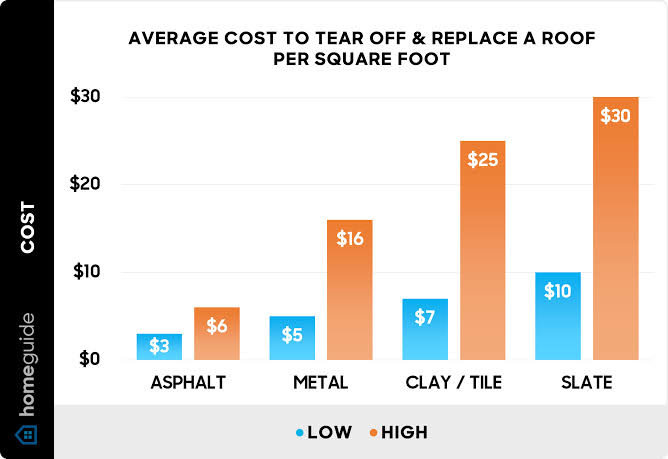
Choosing the right material is a balance between upfront cost and long-term value. Here is a detailed comparison of the most common roofing materials available in the US market today.
| Material Type | Average Cost per Sq. Ft. | Lifespan | Pros | Cons |
|---|---|---|---|---|
| Asphalt Shingles | $3.50 – $5.50 | 15–30 Years | Affordable, easy to install, wide variety of colors. | Shorter lifespan, susceptible to wind damage. |
| Metal Roofing | $7.00 – $12.00 | 40–70 Years | Durable, energy-efficient, fire-resistant. | Higher upfront cost, can be noisy during rain. |
| Wood Shakes | $6.50 – $9.50 | 20–40 Years | Natural aesthetic, good insulation. | Requires maintenance, fire risk (unless treated). |
| Clay/Concrete Tiles | $10.00 – $18.00 | 50+ Years | Extremely durable, excellent for hot climates. | Very heavy (may need structural reinforcement), fragile. |
| Slate | $15.00 – $30.00+ | 75–100+ Years | Premium look, virtually indestructible. | Extremely expensive, requires specialized installers. |
Note: Prices include material and installation labor.
For many American homeowners, asphalt shingles remain the go-to choice due to their cost-effectiveness. However, if you plan to stay in your home for decades, investing in metal roofing or slate can offer better return on investment through durability and energy savings.
The Hidden Costs You Might Forget
When calculating how much does it cost to replace an entire roof, it is easy to focus solely on the shingles. However, several ancillary costs can sneak up on you if you are not prepared.
1. Structural Repairs
Once the old roof is removed, contractors may discover rotted decking (the wooden base under the shingles). Replacing rotten plywood typically costs $75 to $150 per sheet. While unexpected, this repair is vital for the integrity of your new roof.
2. Ventilation and Flashing
Proper ventilation extends the life of your roof by preventing heat and moisture buildup. Upgrading ridge vents, soffit vents, or installing new flashing around chimneys and valleys may add $500 to $1,500 to your bill. Do not skip this step; poor ventilation is a leading cause of premature roof failure.
3. Permit Fees
Most municipalities require a building permit for roof replacement. These fees vary by city but generally range from $150 to $500. Your contractor should handle this, but ensure it is included in your quote.
4. Dumpster and Disposal
Disposing of old roofing materials is heavy work. Expect to pay $300 to $600 for dumpster rental and disposal fees, depending on the size of your roof and local landfill rates.
Step-by-Step Guide to Getting Accurate Quotes
To ensure you get a fair price, follow these steps when hiring a roofing contractor:
- Get Multiple Estimates: Aim for at least three detailed quotes. Do not just look at the bottom line; compare what is included.
- Check Credentials: Verify that the contractor is licensed, insured, and bonded. Look for certifications from major manufacturers like GAF or CertainTeed.
- Ask About Warranty: A reputable roofer will offer a workmanship warranty (typically 5–10 years) in addition to the manufacturer’s material warranty.
- Review the Contract: Ensure the contract specifies the type of shingles, color, underlayment type, and cleanup procedures.
- Avoid Large Upfront Payments: Never pay the full amount upfront. A deposit of 10–30% is standard, with the remainder paid upon completion and inspection.
For more information on building standards and safety regulations, you can refer to general construction guidelines on Wikipedia.
FAQ Section
How long does a roof replacement take?
Most residential roof replacements can be completed in 1 to 3 days, depending on the size of the home and weather conditions. Complex roofs or those requiring structural repairs may take up to a week.
Can I replace my roof myself to save money?
While technically possible, DIY roof replacement is strongly discouraged for most homeowners. It involves significant safety risks, requires specialized tools, and mistakes can void warranties or lead to leaks. Professional installation ensures code compliance and longevity.
Does homeowners insurance cover roof replacement?
Insurance typically covers roof replacement if the damage is caused by a sudden, covered peril such as a storm, hail, or falling tree. It generally does not cover wear and tear or age-related deterioration. Check your policy details and consult your agent.
What is the best time of year to replace a roof?
Late spring to early fall is the ideal window because weather conditions are predictable. However, scheduling during the off-season (late fall or winter) might yield lower prices as contractors have more availability, provided temperatures are not too cold for proper shingle sealing.
How do I know if I need a full replacement or just repairs?
If your roof is over 20 years old, has widespread granule loss, multiple leaks, or sagging areas, a full replacement is likely necessary. If the damage is isolated to a small area and the rest of the roof is in good condition, repairs may suffice. A professional inspection is the best way to determine this.
Conclusion
Knowing how much does it cost to replace an entire roof empowers you to navigate the process with clarity and confidence. While the average cost sits between $8,500 and $15,000, your final price will depend on materials, roof complexity, and local labor rates.
Remember, a roof is not just an expense; it is an investment in your home’s safety and value. By choosing quality materials, hiring reputable professionals, and accounting for hidden costs, you ensure peace of mind for decades to come.
Did you find this guide helpful? Share it with friends or family who might be facing similar home improvement decisions. Your share could help them save thousands!
Leave a Reply