Replacing a roof is one of the most significant home improvement investments you will ever make. It protects your family, enhances curb appeal, and ensures structural integrity. If you are asking, “How much does it cost to re roof a house,“ you are likely looking for clarity amidst confusing quotes and varying material prices. This guide breaks down the costs transparently so you can plan with confidence.
Understanding the Average Cost to Replace a Roof
The short answer is that the national average cost to replace a roof in the United States typically ranges between $8,500 and $14,500. However, this figure can swing dramatically based on several variables. For a standard 2,000-square-foot home, most homeowners spend around $11,000 for a complete tear-off and replacement using mid-range asphalt shingles.
It is crucial to understand that roofing costs are not one-size-fits-all. Prices have fluctuated in recent years due to supply chain adjustments and labor shortages. According to industry data from late 2025 and early 2026, material costs have stabilized, but skilled labor remains at a premium. Therefore, getting multiple quotes is essential to ensure you are paying a fair market rate for your specific region.
Key Factors Influencing Your Total Bill
Several components drive the final price tag. Here is what contractors look at when estimating your project:
- Roof Size and Pitch: Measured in “squares” (100 square feet). Steeper roofs require more safety equipment and time, increasing labor costs by 20–40%.
- Material Choice: Asphalt shingles are the most affordable, while slate, tile, or metal can cost three to five times more.
- Complexity: Chimneys, skylights, valleys, and multiple stories add complexity and time.
- Location: Labor rates in urban areas like New York or San Francisco are significantly higher than in rural Midwest regions.
- Existing Roof Removal: Removing old layers (tear-off) adds to the disposal and labor fees. Most codes allow up to two layers, but a full tear-off is recommended for longevity.
Breakdown by Roofing Material
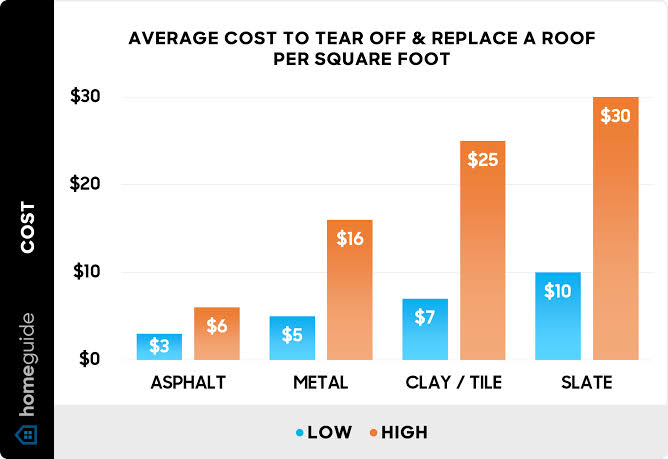
Choosing the right material is the biggest decision affecting your budget. Below is a detailed comparison of popular roofing materials available in the US market in 2026.
| Material Type | Average Cost per Square Foot | Lifespan | Pros | Cons |
|---|---|---|---|---|
| Asphalt Shingles | $3.50 – $5.50 | 15–30 Years | Affordable, easy to install, widely available | Shorter lifespan, susceptible to wind damage |
| Metal Roofing | $7.50 – $14.00 | 40–70 Years | Durable, energy-efficient, fire-resistant | Higher upfront cost, noisy during rain |
| Wood Shakes | $6.00 – $9.00 | 20–40 Years | Natural aesthetic, good insulation | Requires maintenance, fire risk (unless treated) |
| Clay/Concrete Tile | $10.00 – $20.00 | 50+ Years | Extremely durable, distinct look | Very heavy, requires reinforced framing |
| Slate | $15.00 – $30.00+ | 75–100+ Years | Premium look, lasts a lifetime | Extremely expensive, fragile, heavy |
Note: Prices include both materials and professional installation.
Why Asphalt Shingles Remain Popular
Despite the rise of metal roofing, asphalt shingles still account for over 70% of residential roofs in the US. They offer the best balance of cost and performance for the average homeowner. Architectural shingles, a thicker variant of asphalt, provide a dimensional look and better durability for only a slight increase in price compared to basic 3-tab shingles.
Labor and Additional Costs to Consider
When calculating how much does it cost to re roof a house, do not overlook the hidden or additional expenses. The material is only part of the equation.
1. Tear-Off and Disposal
Removing the old roof is labor-intensive. Expect to pay $1.00 to $5.00 per square foot for tear-off and disposal fees. This includes hauling away old shingles, nails, and underlayment. If your home has multiple layers of roofing, this cost will increase.
2. Underlayment and Decking Repair
Once the old roof is off, the contractor will inspect the wood decking. If there is rot or water damage, plywood replacement is necessary. This typically costs $70 to $100 per sheet of plywood. High-quality synthetic underlayment, which provides better moisture protection than traditional felt, may add $0.50 to $1.00 per square foot but is worth the investment for long-term protection.
3. Permits and Inspections
Most municipalities require a building permit for roof replacement. Permit fees vary by location but generally range from $150 to $500. This ensures the work meets local building codes and safety standards. You can read more about building code standards on Wikipedia.
4. Flashing and Ventilation
New flashing around chimneys, vents, and valleys is critical to prevent leaks. Upgrading to metal flashing instead of reusing old materials adds to the cost but prevents future water damage. Proper attic ventilation installation is also vital to extend the life of your new shingles.
Step-by-Step Guide to Budgeting Your Roof Replacement
To avoid surprises, follow this logical process when planning your budget:
- Measure Your Roof Area: While contractors do this professionally, you can estimate by measuring your home’s footprint and multiplying by a pitch factor (usually 1.2 to 1.5 for average slopes). Divide by 100 to get the number of “squares.”
- Choose Your Material: Decide between budget-friendly asphalt or long-term metal/slate based on how long you plan to stay in the home.
- Get Three Detailed Quotes: Ensure each quote includes tear-off, disposal, permits, and warranty details. Avoid vague estimates.
- Check for Insurance Coverage: If your roof was damaged by a storm (hail, wind), your homeowners insurance might cover part or all of the replacement. Review your policy deductible.
- Plan for Contingencies: Set aside an extra 10–15% of your budget for unexpected decking repairs or structural issues discovered during tear-off.
Frequently Asked Questions (FAQ)
1. Does homeowners insurance cover roof replacement?
Insurance typically covers roof replacement if the damage is caused by a sudden, covered peril like a storm, hail, or falling tree. It generally does not cover wear and tear, age-related deterioration, or lack of maintenance. Always check your policy specifics and document damage with photos before filing a claim.
2. How long does a roof replacement take?
For an average-sized home (2,000 sq. ft.), a professional crew can complete a roof replacement in 1 to 3 days. Larger homes, complex designs, or bad weather can extend this timeline. Metal roofs or tile roofs may take longer due to the intricacy of installation.
3. Is it cheaper to repair or replace a roof?
If your roof is less than 10 years old and the damage is localized (e.g., a few missing shingles), repair is cost-effective. However, if the roof is nearing the end of its lifespan (20+ years for asphalt) or has widespread leaks, replacement is more economical in the long run. Constant repairs add up quickly and do not solve underlying aging issues.
4. What is the best time of year to replace a roof?
Late spring to early fall is the peak season for roofing due to favorable weather. However, scheduling during the off-season (late fall or winter) can sometimes yield lower prices as contractors look to fill their schedules. Just ensure the temperature is above freezing for proper shingle adhesion.
5. Can I install a new roof over the old one?
While technically possible in some jurisdictions, it is generally not recommended. Installing over old shingles traps heat and moisture, leading to premature decay of the new roof and the decking below. It also makes it difficult to inspect for existing damage. Most professional roofers insist on a full tear-off for quality assurance.
Conclusion
Understanding how much does it cost to re roof a house empowers you to make smart financial decisions. While the average cost hovers between $8,500 and $14,500, your specific price depends on materials, size, and local labor rates. Investing in quality materials and reputable labor pays off through increased home value and peace of mind.
Don’t rush the process. Take the time to compare quotes, check references, and choose materials that fit your long-term goals. A new roof is a shield for your biggest asset—treat it with the care it deserves.
Found this guide helpful? Share it with friends or family who are planning home improvements!
Leave a Reply