Your home is likely your biggest investment, and the roof is its first line of defense against the elements. Ignoring minor issues can lead to catastrophic water damage, mold growth, and skyrocketing repair bills down the line. If you are staring at your ceiling wondering how to tell if a roof needs to be replaced, you are not alone; recognizing the early warning signs is crucial for protecting your property and your wallet.
In this guide, we will break down the definitive indicators that your roof has reached the end of its lifecycle. We will move beyond simple guesswork and provide you with actionable, professional insights to help you make an informed decision.
How Old Is Your Roof? Understanding Lifespan Expectations
The age of your roofing material is the single most significant factor in determining its remaining life. While some homeowners assume roofs last forever, every material has a finite lifespan dictated by weather exposure, installation quality, and maintenance.
Most standard asphalt shingle roofs—the most common type in the United States—last between 15 to 20 years. If your home was built or reroofed within this window, you should be conducting annual inspections. However, age alone isn’t a death sentence; it is a context clue.
| Roofing Material | Average Lifespan | Key Vulnerability |
|---|---|---|
| Asphalt Shingles | 15–20 Years | UV Radiation, Wind |
| Wood Shakes | 20–30 Years | Moisture, Rot, Insects |
| Metal Roofing | 40–70 Years | Corrosion (if uncoated) |
| Slate/Tile | 50–100+ Years | Weight, Impact Damage |
If your asphalt roof is approaching the 20-year mark, even if it looks “okay” from the ground, it is likely losing its granular protection. At this stage, proactive replacement is often cheaper than emergency repairs after a storm. For more detailed information on roofing materials and their historical development, you can refer to Wikipedia’s entry on roofing.
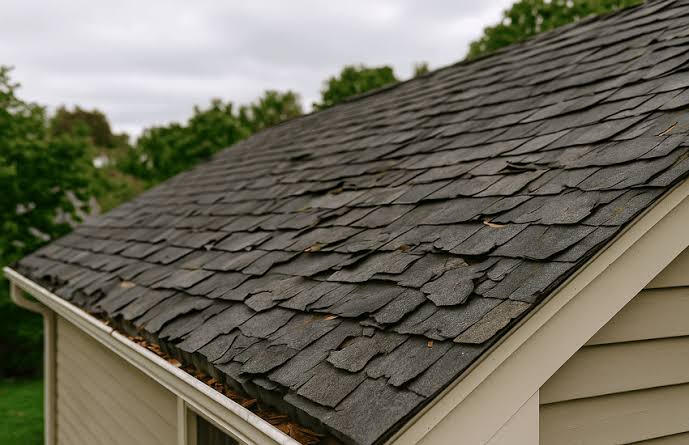
Are Your Shingles Curling, Cracking, or Missing?
Visual inspection from the ground can reveal a lot. You do not need to climb a ladder to spot major distress signals. Grab a pair of binoculars and look for these specific issues:
1. Curling Edges
Shingles may curl upward (cupping) or downward (clawing). This usually indicates that the shingles are drying out and losing their flexibility. Once shingles curl, they are prone to breaking off in high winds, exposing the underlayment to rain.
2. Cracked Shingles
Cracks occur due to thermal expansion and contraction. In climates with hot days and cold nights, shingles expand and contract repeatedly. Over time, this stress causes fractures. A cracked shingle cannot effectively shed water, leading to slow, hidden leaks.
3. Missing Granules
Asphalt shingles are coated with ceramic granules that protect them from UV rays. If you notice bare spots where the black asphalt base is visible, the shingle is deteriorating. You might also find an accumulation of these granules in your gutters. While some granule loss is normal in the first year, excessive loss in older roofs signals the end is near.
4. Missing Shingles Entirely
If you see patches of your roof deck or underlayment, you have an immediate problem. Missing shingles create direct pathways for water to enter your attic. This often requires immediate patching, but if it is widespread, it suggests the adhesive strips have failed, necessitating a full replacement.
What Do Dark Streaks and Moss Growth Indicate?
Aesthetics matter, but dark streaks and moss are more than just ugly; they are structural threats.
Dark Streaks: These are often caused by Gloeocapsa magma, a type of algae. While algae itself doesn’t eat the shingle, it retains moisture. This constant dampness accelerates the degradation of the roofing material. Furthermore, heavy algae growth can void certain manufacturer warranties.
Moss Growth: Moss is more dangerous than algae. Its root systems can lift shingles, breaking the seal and allowing wind-driven rain underneath. Moss also holds water against the roof surface for extended periods, which can rot wood decking beneath the shingles.
If you see significant moss coverage, especially in shaded areas, it is a sign that your roof is retaining too much moisture. Cleaning it might help temporarily, but if the underlying shingles are soft or spongy, replacement is the only safe option.
Is Your Attic Showing Signs of Water Intrusion?
Sometimes the roof looks fine from the outside, but the damage is happening internally. Your attic is the best place to diagnose hidden roof failures. Visit your attic during the day and look for:
- Daylight Through the Roof Boards: If you can see pinpricks of sunlight coming through the roof deck, you have gaps. These gaps allow water, air, and pests to enter.
- Water Stains or Mold: Look for dark streaks or discolored patches on the underside of the roof deck or on the insulation. Musty smells are also a strong indicator of trapped moisture.
- Sagging Decking: If the wooden boards between the rafters appear to sag or bow, this indicates long-term water saturation. This is a critical structural issue that requires immediate professional attention.
Pro Tip: Check your attic after a heavy rainstorm. Use a flashlight to trace any wet spots back to their source. Remember, water travels; the leak inside might not be directly below the hole outside.
Why Is Your Energy Bill Suddenly Spiking?
Your roof plays a vital role in your home’s thermal envelope. As roofs age, their ability to reflect heat and provide insulation diminishes.
If you notice your HVAC system working harder to maintain temperature, or if your energy bills have increased without a change in usage habits, your roof might be the culprit. Poor ventilation, often associated with aging roofing systems, can cause heat to build up in the attic. This “superheated” attic radiates heat into your living spaces in summer and allows heat to escape in winter.
Replacing an old roof with modern, energy-efficient materials can significantly improve your home’s insulation values. Many new shingles come with reflective coatings designed to lower cooling costs by up to 15%.
When Should You Repair vs. Replace?
This is the most common question homeowners face. Not every leak requires a full tear-off. Here is a simple framework to help you decide:
Choose Repair If:
- The roof is less than 10 years old.
- Damage is isolated to a small area (e.g., missing shingles from a fallen branch).
- There is no widespread granule loss or curling.
- The underlayment and decking are dry and solid.
Choose Replacement If:
- The roof is over 15–20 years old.
- More than 30% of the roof shows signs of wear (curling, cracking, missing shingles).
- You have multiple leaks in different areas.
- The shingles are blistering or balding extensively.
- You plan to sell the home soon (a new roof boosts curb appeal and value).
Attempting to patch a roof that is globally failing is often a “false economy.” You may spend thousands on repeated repairs over two years, only to replace the roof anyway. A full replacement provides a fresh warranty and peace of mind.
Frequently Asked Questions (FAQ)
1. Can I replace just one section of my roof?
Technically, yes, but it is rarely recommended. Matching the color and texture of old shingles with new ones is difficult due to weathering and manufacturing changes. Furthermore, blending old and new sections can create weak points at the seams. Most professionals advise replacing the entire roof plane for uniformity and warranty validity.
2. Does homeowners insurance cover roof replacement?
It depends on the cause of the damage. Insurance typically covers “sudden and accidental” damage, such as from a storm, hail, or falling tree. However, they generally do not cover wear and tear, age-related deterioration, or lack of maintenance. Always review your policy and document damage with photos immediately after a storm.
3. How long does a roof replacement take?
For an average-sized single-family home, a professional crew can typically complete a roof replacement in 1 to 3 days. Factors that may extend this timeline include complex roof architecture (multiple valleys, turrets), bad weather, or the discovery of rotted decking that needs repair.
4. What is the best season to replace a roof?
Late spring to early fall is ideal because roofing adhesives require warm temperatures to seal properly. However, reputable contractors work year-round. Winter replacements are possible but may take longer due to colder temperatures affecting material flexibility and worker safety. Avoid scheduling during peak hurricane or tornado seasons if possible.
5. Will a new roof increase my home’s value?
Yes. According to real estate experts, a new roof can offer a high return on investment (ROI), often recouping 60–70% of the cost upon sale. More importantly, it removes a major objection from potential buyers, making your home easier to sell.
Conclusion
Knowing how to tell if a roof needs to be replaced empowers you to protect your home proactively rather than reactively. By monitoring the age of your roof, inspecting for physical damage like curling or missing shingles, checking your attic for leaks, and watching for spikes in energy costs, you can avoid costly emergencies.
Remember, a roof is not just a covering; it is a critical system that ensures the safety and comfort of your family. If you suspect your roof is nearing the end of its life, do not wait for a leak to appear. Schedule a professional inspection today.
Found this guide helpful? Share it with your neighbors on social media to help them protect their homes too!
Leave a Reply