Have you ever looked at a blueprint or spoken with a contractor and felt confused by terms like “4/12 pitch”? You are not alone. Many homeowners struggle to visualize what these numbers mean in real life, especially when trying to plan for renovations or understand drainage capabilities. If you are asking, “What is the angle of a 4 12 pitch roof,” you have come to the right place to get a clear, accurate answer.
Understanding roof pitch is crucial not just for aesthetics, but for functionality, safety, and material selection. In this guide, we will break down the math, explain the practical implications, and help you determine if a 4/12 slope is the right choice for your project.
Understanding the Basics: What Does 4/12 Mean?
Before we dive into the specific angle, it is essential to understand how roof pitch is measured in the United States. Unlike many other countries that use degrees or percentages, the US construction industry primarily uses a ratio.
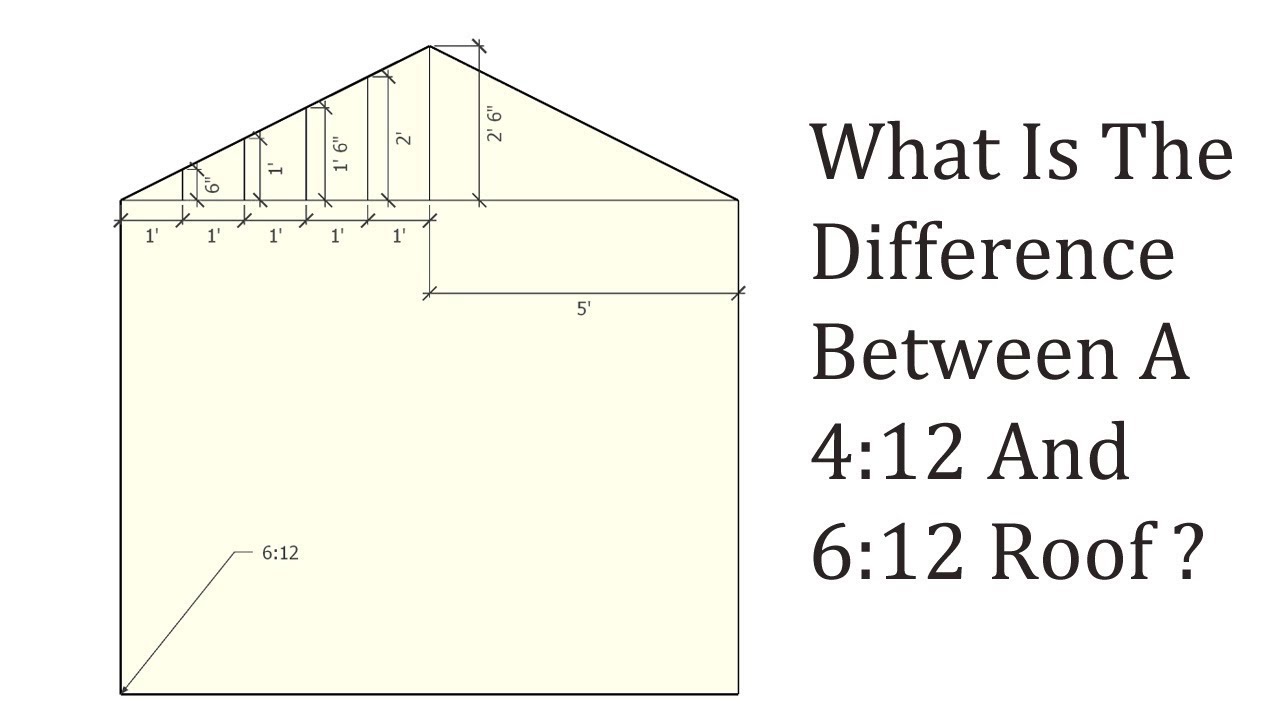
The notation 4/12 (often written as 4:12) represents a fraction:
- The first number (4) is the rise. This is the vertical height the roof gains.
- The second number (12) is the run. This is the horizontal distance.
Therefore, a 4/12 pitch means that for every 12 inches you move horizontally across the roof, the roof rises 4 inches vertically. This is a standardized measurement based on a 12-inch run, making it easy for carpenters and architects to communicate without complex calculations.
The Exact Angle Calculation
So, to answer the primary question: What is the angle of a 4 12 pitch roof?
A 4/12 pitch roof has an angle of approximately 18.43 degrees.
For most practical purposes, contractors and homeowners round this to 18.4 degrees or even 18 degrees. While this might seem like a small detail, knowing the precise degree is vital when ordering materials that require specific cutting angles or when installing solar panels that need optimal tilt.
You can calculate this using basic trigonometry. The tangent of the angle is equal to the rise divided by the run (tan(θ)=runrise). tan(θ)=124=0.3333 θ=arctan(0.3333)≈18.43∘
Why Is a 4/12 Pitch So Common?
A 4/12 pitch is often considered the “sweet spot” in residential roofing. It falls into the category of low-slope to conventional slope roofs. Here is why it is a popular choice among builders in the US:
1. Walkability and Safety
One of the biggest advantages of an 18.4-degree angle is safety. Roofs with pitches lower than 4/12 are often classified as “flat” or “low-slope,” which can still hold water if not installed perfectly. However, pitches steeper than 6/12 become difficult and dangerous to walk on without harnesses.
A 4/12 roof is generally considered walkable for experienced professionals. This makes inspections, cleaning gutters, and repairing shingles significantly easier and cheaper because it requires less specialized safety equipment.
2. Material Versatility
Most standard roofing materials are designed to work efficiently at this slope.
- Asphalt Shingles: The most common roofing material in the US works perfectly on a 4/12 pitch.
- Metal Roofing: Many standing seam metal roofs can be installed on slopes as low as 3/12, so 4/12 is well within the safe zone.
- Tile and Slate: While heavier, these materials can also be used, though they may require additional underlayment support compared to steeper pitches.
3. Cost-Effectiveness
Steeper roofs require more material because the surface area increases as the angle gets sharper. A 4/12 pitch uses less lumber and roofing material than a 6/12 or 8/12 pitch, keeping construction costs lower. Conversely, it is steep enough to shed water effectively, avoiding the expensive waterproofing membranes required for flat roofs.
4/12 Pitch vs. Other Common Pitches
To help you visualize where 4/12 stands, let’s compare it to other common roof slopes.
| Roof Pitch | Angle (Degrees) | Classification | Best For |
|---|---|---|---|
| 2/12 | ~9.5° | Low Slope | Modern styles, requires special membrane |
| 4/12 | ~18.4° | Conventional | Standard homes, balance of cost & function |
| 6/12 | ~26.6° | Conventional | Snowy areas, traditional aesthetics |
| 8/12 | ~33.7° | Steep | Victorian styles, heavy snow regions |
| 12/12 | 45.0° | Very Steep | A-frame houses, extreme weather |
As you can see, the 4/12 pitch offers a moderate angle that balances aesthetic appeal with practical engineering. It is steep enough to prevent water pooling but gentle enough to minimize wind resistance and material costs.
Practical Considerations for Homeownersi
If you are building a new home or replacing your roof, here are some critical factors to consider regarding a 4/12 pitch.
Water Drainage and Debris
While 18.4 degrees is sufficient for rain to run off, it is not as aggressive as steeper pitches. In areas with heavy leaf fall, debris may accumulate slightly more on a 4/12 roof than on a 6/12 roof. Regular gutter cleaning is essential to prevent backups.
However, according to general construction standards referenced by industry bodies, a 4/12 slope is adequate for preventing water intrusion when paired with proper overlapping shingles. For more detailed technical definitions of roof slopes, you can refer to resources like Wikipedia’s entry on Roof Pitch, which provides historical context and international variations.
Snow Load
If you live in an area with heavy snowfall, a 4/12 pitch might retain snow longer than a steeper roof. Snow does not slide off easily at 18 degrees. This means your roof structure must be engineered to handle the dead load of accumulated snow. Always consult with a structural engineer in snowy climates to ensure your trusses are rated for local weather conditions.
Aesthetic Appeal
Architecturally, a 4/12 pitch provides a subtle, modern look. It is less imposing than steep gables and works well with Ranch-style, Craftsman, and contemporary home designs. It creates a sense of horizontality, making the home appear wider and more grounded.
How to Measure Your Roof Pitch Yourself
If you are unsure if your roof is 4/12, you can measure it safely from inside your attic or carefully from the exterior.
Tools Needed:
- A 12-inch level
- A tape measure
- A pencil
Step-by-Step Guide:
- Go to the Attic: Locate a rafter or the underside of the roof deck.
- Place the Level: Hold the level horizontally against the rafter. Ensure the bubble is centered so it is perfectly level.
- Measure the Rise: At the 12-inch mark on the level, measure the vertical distance from the bottom of the level up to the rafter.
- Read the Result: If the vertical distance is 4 inches, you have a 4/12 pitch. If it is 6 inches, it is a 6/12 pitch.
Note: Always prioritize safety. If you cannot access the attic, hire a professional rather than climbing onto a slippery roof.
FAQ Section
1. Is a 4/12 roof pitch considered flat?
No, a 4/12 pitch is not considered flat. In the roofing industry, a “flat” roof typically has a pitch of less than 2/12. A 4/12 roof is classified as a conventional or low-slope roof. It has enough angle to shed water effectively using standard shingles, whereas flat roofs require specialized waterproofing systems.
2. Can I install solar panels on a 4/12 pitch roof?
Yes, absolutely. A 4/12 pitch (18.4 degrees) is actually quite good for solar panels in many parts of the US. Solar panels are often mounted on racks that can adjust the tilt. Since 18.4 degrees is close to the optimal latitude tilt for many southern and mid-latitude states, you may not even need extensive tilting adjustments, which can reduce installation costs.
3. What is the minimum pitch for asphalt shingles?
The general minimum pitch for standard asphalt shingles is 2/12. However, installing shingles on a 2/12 or 3/12 pitch requires special underlayment procedures (such as double-layered ice and water shield) to prevent leaks. A 4/12 pitch is well above this minimum, meaning standard installation methods apply, reducing the risk of installation errors.
4. Does a 4/12 pitch affect my home’s insurance?
Generally, no. Insurance companies look at the overall condition of the roof, the material used, and the age of the roof. A 4/12 pitch is a standard, accepted slope that does not typically raise red flags. In fact, because it is easier to inspect and maintain, it might be viewed favorably compared to extremely steep roofs that are difficult to assess for damage.
5. How much does a 4/12 pitch cost compared to a 6/12 pitch?
A 4/12 pitch is generally less expensive than a 6/12 pitch. The difference lies in the surface area. A steeper roof has more square footage for the same footprint, requiring more shingles, underlayment, and labor time. Additionally, working on a 6/12 roof is slower and requires more safety precautions, which increases labor costs.
Conclusion
Understanding what is the angle of a 4 12 pitch roof empowers you to make better decisions about your home. At 18.4 degrees, this pitch offers a perfect blend of affordability, safety, and functionality. It is steep enough to keep your home dry with standard materials but gentle enough to keep maintenance costs manageable.
Whether you are building a new custom home or replacing an old roof, the 4/12 pitch remains a top contender for good reason. It is versatile, widely supported by contractors, and aesthetically pleasing.
If you found this guide helpful, please share it with friends or family who are planning their next home improvement project. Knowledge is power, especially when it comes to protecting your biggest investment!
Leave a Reply