Choosing the right roofing material is one of the most significant financial decisions a homeowner can make. It protects your largest asset from the elements while defining your home’s curb appeal. Many homeowners find themselves stuck in a dilemma, asking the critical question: is it cheaper to get a metal roof or shingles?
The answer isn’t as simple as looking at the price tag at the hardware store. While asphalt shingles are famously affordable upfront, metal roofing offers durability that can save you money over decades. In this guide, we will dissect the true costs, longevity, and value proposition of both options to help you make an informed choice for your US home.
Understanding the Upfront Costs: The Initial Price Tag
When most people ask if metal or shingles are cheaper, they are referring to the installation cost. This is the “sticker shock” phase of any roofing project.
Asphalt Shingles: The Budget-Friendly Entry Point
Asphalt shingles remain the most popular roofing material in the United States, primarily due to their low initial cost. They are lightweight, easy to install, and widely available.
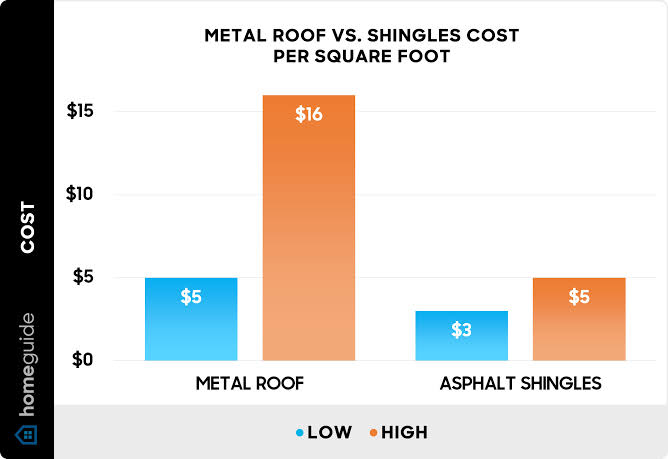
- Average Cost: Between $3.50 and $5.50 per square foot installed.
- Total Project Cost: For an average 2,000-square-foot home, you might pay between $7,000 and $11,000.
The labor required for shingles is less specialized, which keeps contractor fees lower. Additionally, the materials themselves are mass-produced at a very low cost.
Metal Roofing: The Premium Investment
Metal roofing (including steel, aluminum, and copper) requires more specialized labor and higher-quality materials. The installation process is more complex, often requiring specific fasteners and underlayment systems to prevent noise and condensation.
- Average Cost: Between $8.00 and $14.00+ per square foot installed.
- Total Project Cost: For the same 2,000-square-foot home, expect to pay between $16,000 and $28,000.
At first glance, metal appears to be two to three times more expensive than shingles. However, this is only half of the financial story. To truly understand which is cheaper, we must look beyond the installation day.
Long-Term Value: Lifespan and Replacement Cycles
This is where the math begins to shift in favor of metal. The concept of “cost per year” is far more accurate than “total installation cost.”
The Lifespan Gap
- Asphalt Shingles: Typically last 15 to 25 years, depending on climate and quality (3-tab vs. architectural). In hotter climates like Arizona or Texas, UV radiation can degrade them faster.
- Metal Roofs: Can last 40 to 70 years. High-quality standing seam metal roofs often come with warranties of 50 years or more.
The Replacement Factor
If you choose asphalt shingles, you will likely need to replace your roof two or even three times during the lifespan of a single metal roof.
Let’s do a quick calculation over a 50-year period:
- Metal Roof: One installation at $20,000. Total cost: $20,000.
- Asphalt Shingles: Three installations at $9,000 each (assuming slight inflation adjustments). Total cost: $27,000+.
In this scenario, the metal roof becomes the cheaper option over time, despite the higher initial barrier. Furthermore, you avoid the hassle, debris, and potential interior damage associated with multiple tear-off projects.
Maintenance and Repair Costs Over Time
Beyond replacement, daily maintenance plays a role in the total cost of ownership.
| Feature | Asphalt Shingles | Metal Roofing |
|---|---|---|
| Wind Damage | Prone to lifting/curling in high winds. | Highly resistant to wind uplift. |
| Impact Resistance | Can crack from hail or falling branches. | Dents may occur, but rarely leaks. |
| Moss/Algae | Susceptible; requires cleaning/treatment. | Resistant; rain usually cleans it. |
| Repair Complexity | Easy to patch individual shingles. | Harder to match panels; may require pro. |
While individual shingle repairs are cheap and DIY-friendly, metal roofs generally require less frequent attention. However, if a metal panel is severely damaged, repair costs can be higher because entire sections may need replacement to maintain aesthetic uniformity.
Energy Efficiency: Hidden Savings on Utility Bills
One often-overlooked factor in the “cheaper” debate is energy efficiency. Your roof acts as a massive solar collector, influencing your home’s internal temperature.
Metal roofs reflect solar radiant heat rather than absorbing it. According to studies, this can reduce cooling costs by 10–25%. In states with hot summers, this translates to significant annual savings.
Asphalt shingles, particularly darker ones, absorb heat. This increases the load on your air conditioning system. While cool-roof shingles exist, standard asphalt does not offer the same reflective properties as bare or coated metal.
If you live in a warm climate, the monthly utility savings from a metal roof can help offset the higher initial investment within the first decade of ownership.
Resale Value and Return on Investment (ROI)
Does a new roof add value to your home? Absolutely. But buyers perceive metal and shingles differently.
- Curb Appeal: Metal roofs are often associated with premium, modern, or rustic luxury homes. They can significantly boost curb appeal.
- Buyer Confidence: A home with a 10-year-old metal roof is seen as having “zero future liability” for roofing. A home with a 10-year-old shingle roof is seen as needing replacement soon.
Real estate data suggests that metal roofing can increase a home’s resale value by 1% to 6%. More importantly, it makes the property easier to sell. Buyers are willing to pay a premium for a home that won’t require a major capital expenditure immediately after purchase.
For more detailed information on roofing materials and their historical usage, you can refer to Wikipedia’s entry on Roofing.
Environmental Impact and Sustainability
For eco-conscious homeowners, “cost” also includes environmental impact.
- Asphalt Shingles: Are petroleum-based and contribute heavily to landfill waste. Approximately 11 million tons of asphalt shingle waste end up in US landfills annually. Recycling options exist but are not universally available.
- Metal Roofing: Often contains 25–95% recycled content. At the end of its life, metal is 100% recyclable.
Choosing metal reduces your carbon footprint and supports a circular economy. While this doesn’t put cash directly in your pocket today, it aligns with growing market trends and potential future green building incentives.
FAQ: Common Questions About Roofing Costs
1. Is metal roofing louder than shingles during rain?
This is a common myth. When installed correctly with solid sheathing and proper insulation, a metal roof is no louder than an asphalt shingle roof. In fact, many homeowners report that the sound of rain on metal is soothing rather than disruptive.
2. Will a metal roof interfere with my Wi-Fi or cell signal?
Generally, no. Modern metal roofs do not block signals significantly more than other building materials. If you have issues, they are likely due to other structural factors. However, if you have a weak signal, a signal booster may be helpful regardless of roofing type.
3. Can I install a metal roof over existing shingles?
In many cases, yes. This is called a “retrofit” or “overlay.” It saves on tear-off costs and landfill fees. However, local building codes vary, and you must ensure the roof structure can support the additional weight (though metal is lightweight). Always consult a local professional.
4. Do insurance companies offer discounts for metal roofs?
Yes, many insurance providers offer discounts ranging from 5% to 15% for metal roofs. This is because metal is fire-resistant and withstands severe weather better than shingles, reducing the insurer’s risk of paying out claims.
5. What is the cheapest type of metal roofing?
Corrugated galvanized steel is typically the most affordable metal roofing option. It is durable and functional, though it may not have the sleek aesthetic of standing seam aluminum or zinc. It is a great middle-ground option for budget-conscious buyers wanting metal benefits.
6. How does hail affect metal roofs compared to shingles?
Hail can dent metal roofs, but it rarely punctures them. Asphalt shingles, however, can lose granules or crack under hail impact, leading to immediate leaks and reduced lifespan. Most insurance policies cover hail damage for both, but metal is less likely to need a full replacement after a storm.
Conclusion: Making the Right Choice for Your Wallet
So, is it cheaper to get a metal roof or shingles?
If you are looking at the short term (next 1–5 years) and have a tight budget, asphalt shingles are the cheaper option. They allow you to protect your home with minimal upfront cash flow impact.
However, if you view your home as a long-term investment (15+ years), metal roofing is often the cheaper choice when factoring in longevity, energy savings, insurance discounts, and avoided replacement costs. It transforms a recurring expense into a one-time investment.
Consider your plans for the home. If you plan to sell in five years, shingles might make more financial sense. If you plan to stay for decades, metal pays for itself.
Found this guide helpful? Share it with friends who are planning home renovations on Facebook or Pinterest, and let us know in the comments which roofing style you prefer!
Leave a Reply