Every second counts when fighting a structure fire, but rushing into complex operations without adequate manpower is a recipe for disaster. Many fire departments struggle with staffing shortages, yet the dangers of vertical ventilation demand strict adherence to safety protocols. If you are planning your next drill or updating your standard operating guidelines (SOGs), you need to know exactly tactical ventilation roof crew members should have a minimum of four qualified personnel to ensure both operational success and firefighter survival.
This guide breaks down the “why” and “how” behind this critical staffing requirement, helping you build a safer, more effective team on the fireground.
Why Four Personnel? The Safety Imperative
When we discuss vertical ventilation, we are talking about one of the most hazardous tasks in firefighting. It involves working at heights, dealing with compromised structural integrity, and operating in close proximity to extreme heat and smoke. But why is the magic number four?
The primary reason is the Two-In/Two-Out rule, mandated by OSHA and supported by NFPA 1500. This regulation requires that at least two firefighters enter the hazardous area while two remain outside for rescue if needed. However, on the roof, the dynamics are slightly different but equally strict.
The Breakdown of Roles
A minimum crew of four allows for specific role allocation that prevents task saturation and ensures accountability:
- The Officer (Team Leader): Oversees the operation, communicates with Incident Command (IC), and assesses structural stability.
- The Saw Operator: Cuts the ventilation hole. This is a high-focus task requiring full attention to the saw and the roof surface.
- The Hook/Iron Man: Opens the cut, checks for fire extension, and assists with debris removal.
- The Safety/Backup Firefighter: Monitors conditions, manages the ladder placement, and serves as the immediate rescue resource if a member falls through or gets trapped.
If you drop below four members, someone has to double up on roles. For example, the officer might have to help cut, leaving no one dedicated to monitoring changing fire conditions or structural integrity. This division of attention can lead to fatal errors.
People Also Ask: Common Questions About Roof Crew Staffing
To deepen our understanding, let’s look at specific questions often asked by fire service professionals and students.
What Happens If You Only Have Three Members?
Operating with three members is a significant risk mitigation failure. In this scenario, you typically lose the dedicated safety/backup role. If one firefighter encounters trouble—such as falling through a weakened roof section—the remaining two must attempt a rescue while still managing the ventilation task. This splits their focus and reduces the effectiveness of the rescue attempt.
Furthermore, without a fourth person, there is no one to properly secure and foot the ladder at the base while two are working on the roof. An unsecured ladder is a leading cause of falls and injuries in the fire service.
Does Building Type Change the Minimum Requirement?
While four is the minimum for standard residential structures, larger commercial buildings or those with complex roof systems may require more. According to general fireground tactics, large flat roofs or truss-system roofs present higher collapse risks.
| Building Type | Recommended Minimum Crew | Key Risk Factor |
|---|---|---|
| Single-Family Residential | 4 Personnel | Standard pitch, wood framing |
| Multi-Family/Row House | 4-6 Personnel | Shared attics, rapid fire spread |
| Commercial Flat Roof | 6+ Personnel | Large surface area, heavy loads |
| Truss Construction | 6+ Personnel | Early collapse potential |
Note: Always consult your local SOGs and incident commander assessments.
How Does Experience Level Affect Crew Size?
Experience cannot replace manpower, but it influences efficiency. A crew of four veterans may complete the task faster than four rookies. However, the minimum staffing remains four regardless of experience. In fact, inexperienced crews may benefit from having a fifth member—a senior instructor or chief officer—to provide real-time guidance.
Relying on skill to compensate for low staffing is a dangerous gamble. Fatigue sets in quickly during forced entry and cutting operations. Having four people allows for rotation and rest, maintaining high performance throughout the operation.
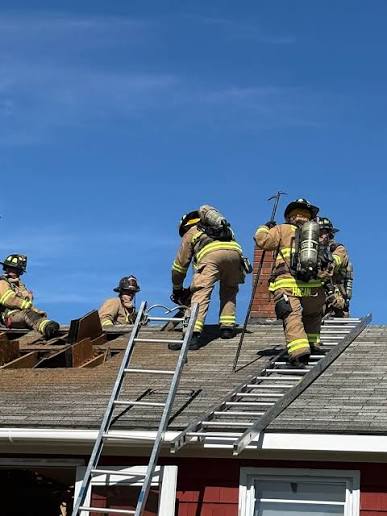
Step-by-Step: Executing Vertical Ventilation with a Full Crew
Let’s walk through how a four-person crew operates efficiently. This process highlights why each member is essential.
Step 1: Size-Up and Ladder Placement
The Officer conducts a 360-degree size-up if possible, identifying the fire location and roof type. They direct the Safety Firefighter to place the primary ladder. The ladder must extend at least 3-5 rungs above the roofline for safe transition. The Safety Firefighter stays at the base to foot the ladder, ensuring it doesn’t slip.
Step 2: Ascending and Assessment
The Saw Operator and Hook Man ascend the ladder. The Officer may follow or remain on the ground to communicate with IC, depending on department protocol. Once on the roof, the team moves away from the ladder to avoid overloading one section. They assess the roof for sponginess, indicating structural compromise.
Step 3: Cutting the Hole
The Saw Operator begins cutting the inspection hole or the main ventilation hole. The Hook Man stands ready with a pike pole or halligan bar. The Officer monitors smoke color and volume, directing the cut location for maximum efficiency. The Safety Firefighter maintains communication from the ground, watching for changes in building stability.
Step 4: Opening and Clearing
Once the cut is complete, the Hook Man opens the roof deck. They check for fire extension in the attic space. The Saw Operator assists in clearing debris. This teamwork ensures the hole is opened quickly, releasing heat and smoke before the fire can mushroom back down.
Step 5: Egress and Accountability
After the task is complete, the crew exits via the ladder. The Safety Firefighter continues to foot the ladder until all members are safely on the ground. The Officer reports “Ventilation Complete” to Incident Command.
The Role of Technology and Equipment
Modern firefighting isn’t just about manpower; it’s about using the right tools. A well-equipped crew can work faster and safer. Ensure your roof crew has:
- Chain Saws or Circular Saws: Properly maintained and fueled.
- Personal Protective Equipment (PPE): Full turnout gear, SCBA, and helmets.
- Thermal Imaging Cameras (TIC): To identify hot spots and fire location before cutting.
- Roof Hooks and Halligans: For opening cuts and probing the roof.
For more detailed information on standard firefighting operations and safety guidelines, you can refer to resources like Wikipedia’s page on Firefighting which provides a broad overview of historical and modern tactics.
FAQ Section
Q1: Can a two-person team perform roof ventilation?
A: No. A two-person team violates the Two-In/Two-Out principle and lacks the necessary support for ladder security, tool handling, and emergency rescue. It is strictly prohibited in most professional fire departments.
Q2: What if the roof is flat versus pitched?
A: The minimum staffing of four remains the same. However, flat roofs may require additional personnel if the surface area is large or if there are heavy HVAC units that need to be navigated. The core team of four handles the actual cutting and opening.
Q3: How long does vertical ventilation take with four people?
A: With a trained four-person crew, an inspection cut and main ventilation hole can typically be completed in 3–5 minutes. Delays usually occur due to poor ladder placement, equipment failure, or lack of coordination.
Q4: What is the biggest risk to roof crews?
A: Structural collapse is the primary risk. Other significant risks include falls from height, lacerations from saws, and being overcome by sudden vent-induced flashovers. Proper staffing mitigates these risks by ensuring constant situational awareness.
Q5: Do volunteer departments follow the same minimums?
A: Yes. While volunteer departments may face staffing challenges, the safety standards regarding vertical ventilation do not change. If four members are not available, alternative ventilation methods (such as horizontal ventilation via windows) should be considered instead of risking lives on the roof.
Conclusion
Understanding that tactical ventilation roof crew members should have a minimum of four personnel is not just about following rules—it’s about saving lives. This staffing level ensures that every critical role, from cutting to safety monitoring, is covered without compromising firefighter well-being.
By adhering to this standard, you protect your team from unnecessary risks and ensure that ventilation efforts effectively support fire suppression operations. Remember, a well-staffed crew is a confident crew.
Share this guide with your fellow firefighters and training officers to promote safer fireground operations!
Leave a Reply