Have you ever run your tongue over the roof of your mouth and suddenly stopped, startled by an unexpected lump? It is a surprisingly common experience that can range from a minor annoyance to a source of significant anxiety. If you are thinking, “I feel a bump on the roof of my mouth,” you are not alone, and in most cases, the cause is benign and temporary.
Understanding what lies beneath that small protrusion is key to finding relief and peace of mind. In this guide, we will explore the most likely culprits behind palatal bumps, offer practical home remedies, and clarify exactly when professional medical attention is necessary.
Why Did This Bump Suddenly Appear?
The roof of your mouth, known medically as the palate, is divided into two sections: the hard palate at the front and the soft palate at the back. Because this area is rich in nerve endings, salivary glands, and blood vessels, it is susceptible to various irritations and conditions.
When you notice a new growth, your brain immediately jumps to worst-case scenarios. However, statistical data from dental associations suggests that the vast majority of oral lumps are non-cancerous. They are often reactive responses to trauma, infection, or blocked glands. Identifying the specific type of bump is the first step toward effective treatment.
Common Causes of Palatal Bumps
To help you narrow down the possibilities, let’s look at the most frequent reasons for these oral anomalies.
1. Thermal Burns (Pizza Palate)
This is arguably the most common cause. Eating food that is too hot—like melted cheese or hot coffee—can scald the delicate tissue of the hard palate.
- Symptoms: A blister-like bump, redness, and tenderness.
- Healing Time: Typically 3–7 days.
- Action: Avoid hot foods and rinse with cool water.
2. Canker Sores (Aphthous Ulcers)
While canker sores usually appear on the inside of cheeks or gums, they can develop on the soft palate.
- Appearance: Small, shallow lesions with a white or yellow center and a red border.
- Trigger: Stress, minor injury, or acidic foods.
- Note: These are not contagious but can be painful.
3. Oral Mucoceles
These occur when a salivary gland becomes blocked or damaged, causing saliva to pool under the skin.
- Texture: Soft, fluid-filled, and often translucent or bluish.
- Location: More common on the lower lip but can appear on the palate.
- Outcome: They often rupture and heal on their own but may recur.
4. Torus Palatinus
If the bump is hard, bony, and located in the center of the hard palate, it might be a torus palatinus.
- Nature: This is a benign bony growth, not a disease.
- Prevalence: Affects approximately 20-30% of the population.
- Concern Level: Low. It requires no treatment unless it interferes with denture fitting.
5. Nasopalatine Duct Cyst
This is a rare developmental cyst that forms in the midline of the anterior hard palate.
- Symptoms: Often asymptomatic, but can cause swelling or discharge if infected.
- Diagnosis: Requires X-ray or CT scan by a dentist.
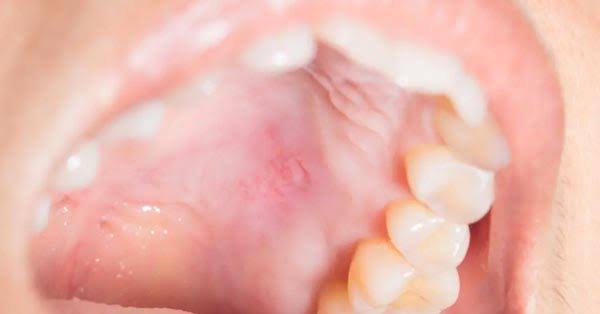
When Should You Worry? Red Flags to Watch For
While most bumps are harmless, some signs indicate a need for professional evaluation. Use this checklist to assess your situation:
| Symptom | Likely Cause | Action Required |
|---|---|---|
| Painful, white/yellow center | Canker Sore | Home care; wait 1-2 weeks |
| Blister after hot food | Thermal Burn | Cool rinses; avoid irritants |
| Hard, bony, painless | Torus Palatinus | No action needed |
| Persists > 2 weeks | Various | See a Dentist |
| Bleeding or rapid growth | Serious Condition | See a Doctor Immediately |
| Accompanied by fever | Infection/Abscess | Seek Urgent Care |
According to the National Institute of Dental and Craniofacial Research, persistent oral lesions should never be ignored. Early detection is crucial for any potential serious conditions, including oral cancer, although this is rare in young, healthy individuals without risk factors like smoking or heavy alcohol use.
Step-by-Step Home Relief Guide
If your bump is due to minor trauma or irritation, you can manage it at home. Follow these steps to promote healing and reduce discomfort.
- Salt Water Rinse
- Mix 1/2 teaspoon of salt into 8 ounces (240 ml) of warm water.
- Swish gently around the mouth for 30 seconds.
- Spit out. Repeat 2–3 times daily. This reduces inflammation and keeps the area clean.
- Cold Compress Application
- Suck on ice chips or eat cold foods like yogurt or smoothies.
- The cold temperature helps numb the area and reduces swelling.
- Avoid direct contact of ice cubes with the bump for prolonged periods to prevent further tissue damage.
- Dietary Adjustments
- Avoid spicy, acidic, or crunchy foods that could scratch or irritate the bump.
- Stick to soft foods like mashed potatoes, soups (cooled), and scrambled eggs.
- Stay hydrated with room-temperature water.
- Over-the-Counter Remedies
- Consider using oral gels containing benzocaine for temporary pain relief.
- Use antiseptic mouthwashes (alcohol-free) to prevent secondary infection.
Expert Insights on Oral Health
Dr. Emily Chen, a board-certified periodontist, notes, “Patients often panic when they feel a lump, but context is everything. Did you just eat a slice of hot pizza? Are you stressed? Most oral bumps are the body’s way of reacting to minor stressors. However, consistency is key. If it doesn’t go away in two weeks, get it checked.”
Maintaining good oral hygiene is also preventive. Brushing twice daily and flossing removes bacteria that could infect minor abrasions, turning a simple scratch into an abscess.
FAQ Section
1. Can a bump on the roof of the mouth be cancer?
While oral cancer can present as a lump, it is relatively rare compared to benign causes like burns or cysts. Oral cancer lumps are typically painless in early stages, do not heal within two weeks, and may be accompanied by unexplained bleeding or numbness. If you have risk factors like smoking or HPV, regular screenings are vital.
2. How long does it take for a burn bump to heal?
Minor thermal burns on the palate usually heal within 3 to 7 days. The mouth has an excellent blood supply, which accelerates healing. If the pain persists beyond a week or shows signs of infection (pus, increased swelling), consult a dentist.
3. Is it safe to pop a blister on the roof of my mouth?
No. Popping a blister or mucocele introduces bacteria into the open wound, significantly increasing the risk of infection. It can also delay healing and cause more pain. Let it rupture naturally or seek professional drainage if it is large and bothersome.
4. What is the hard bump in the middle of my roof mouth?
If the bump is hard, symmetrical, and located in the center of the hard palate, it is likely a Torus Palatinus. This is a benign bony exostosis (extra bone growth) and is completely normal. It does not require treatment unless it causes discomfort with eating or speaking.
5. Can allergies cause bumps on the roof of the mouth?
Yes. Allergic reactions to certain foods, medications, or oral care products can cause swelling or hives on the palate. This is often accompanied by itching or tingling. Antihistamines may help, but identifying and avoiding the allergen is the primary solution.
Conclusion
Finding a bump on the roof of your mouth can be alarming, but remember that “I feel a bump on the roof of my mouth“ is a search query driven by curiosity and caution, not necessarily crisis. Most causes are benign, such as thermal burns, canker sores, or natural bony structures.
By monitoring the bump for changes, practicing good oral hygiene, and using simple home remedies, you can often resolve the issue quickly. However, always prioritize professional advice if the lump persists for more than two weeks, grows rapidly, or causes significant pain.
Found this guide helpful? Share it with friends who might be worrying about their oral health. Knowledge is the best medicine for anxiety!
Leave a Reply