Replacing a roof is one of the most significant home improvement investments you will ever make. It is not just about aesthetics; it is about protecting your family, your belongings, and your largest asset from the elements. If you are staring at curled shingles or worrying about that persistent leak, you are likely asking yourself: How Much Does It Cost To Get A Roof Replaced?
The answer varies, but understanding the numbers empowers you to budget correctly and avoid being overcharged. In this guide, we break down the real costs for 2026, helping you navigate quotes with confidence.
What Is the Average Cost to Replace a Roof in 2026?
When homeowners search for roofing costs, they often find a wide range of prices. This variability can be confusing. For a standard single-family home in the United States, the national average for a full roof replacement typically falls between $8,500 and $14,500.
However, “average” is a tricky word. Your specific cost depends heavily on the size of your home, the pitch of your roof, and the materials you choose. Most homeowners spend roughly $4.50 to $7.50 per square foot for a complete tear-off and replacement using mid-range asphalt shingles.
To give you a clearer picture based on home size, consider these estimated ranges for a standard asphalt shingle roof:
| Home Size (Sq Ft) | Roofing Squares* | Estimated Cost Range |
|---|---|---|
| 1,200 sq ft | 12–14 squares | $5,400 – $8,500 |
| 1,500 sq ft | 15–17 squares | $6,750 – $10,500 |
| 2,000 sq ft | 20–22 squares | $9,000 – $14,000 |
| 2,500+ sq ft | 25+ squares | $11,250 – $18,000+ |
*Note: In roofing, one “square” equals 100 square feet of roof area.
It is crucial to remember that these figures include labor, materials, waste disposal, and permits. If you live in high-cost areas like California or New York, expect prices to be on the higher end due to labor rates and insurance requirements.
How Do Different Roofing Materials Affect the Price?
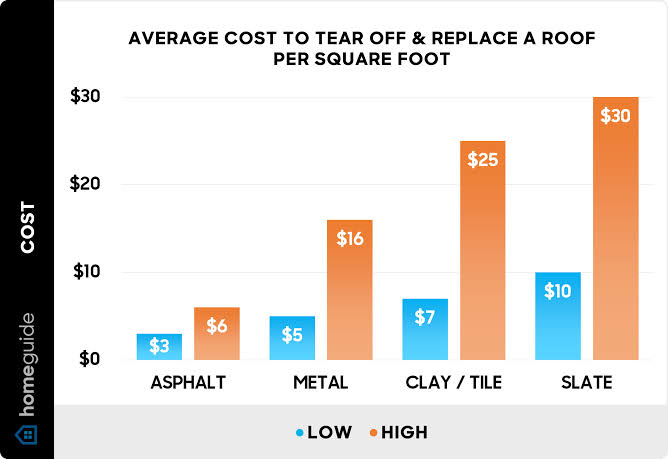
The material you choose is the single biggest factor influencing your final bill. While asphalt shingles remain the most popular choice due to their affordability, other materials offer different benefits and price points.
Asphalt Shingles
This is the go-to for most American homes. They are durable, easy to install, and come in various styles.
- 3-Tab Shingles: The most economical option. Expect to pay $3.50–$5.00 per sq. ft. installed.
- Architectural Shingles: Thicker and more dimensional, offering better wind resistance. Cost: $4.50–$7.50 per sq. ft.
Metal Roofing
Metal roofs are gaining popularity for their longevity (40–70 years) and energy efficiency. However, the upfront cost is significantly higher.
- Standing Seam Metal: Premium look and performance. Cost: $9.00–$14.00 per sq. ft.
- Corrugated Metal: More affordable but less common for residential aesthetics. Cost: $7.00–$10.00 per sq. ft.
Tile and Slate
For luxury homes or specific architectural styles (like Mediterranean or Colonial), tile and slate are unmatched in durability and curb appeal.
- Clay/Concrete Tile: Heavy and requires reinforced framing. Cost: $10.00–$18.00 per sq. ft.
- Natural Slate: The gold standard for longevity (100+ years). Cost: $15.00–$25.00+ per sq. ft.
Choosing the right material isn’t just about budget; it’s about matching your home’s structure and your long-term plans. If you plan to sell in five years, asphalt might be smarter. If this is your forever home, metal or tile could save money over decades.
What Hidden Costs Should You Watch Out For?
One of the most frustrating aspects of roofing projects is the “sticker shock” from unexpected add-ons. A reputable contractor will outline these in your initial estimate, but it is vital to know what to look for.
1. Tear-Off and Disposal Fees
Some quotes only cover installing new shingles over old ones (overlay). However, most building codes and manufacturers require a full tear-off. Removing old layers adds labor and dumpster fees, typically costing $1,000–$2,500 depending on the number of layers.
2. Decking Repair
Once the old shingles are removed, contractors inspect the wood decking underneath. If rot or water damage is found, plywood must be replaced. This is usually charged per sheet (4×8 ft), ranging from $75 to $150 per sheet.
3. Flashing and Ventilation
Old flashing around chimneys, vents, and valleys often needs replacement to prevent leaks. Upgrading ventilation (ridge vents, soffit vents) is also critical for warranty validation and energy efficiency. Budget an extra $500–$1,500 for these essential components.
4. Permit Costs
Local municipalities require permits for structural work. These fees vary widely by county but generally range from $150 to $500. Ensure your contractor handles this paperwork.
Does Roof Pitch and Complexity Increase Labor Costs?
Yes, significantly. A simple, low-pitch gable roof is straightforward to work on. However, if your home has a steep pitch, multiple dormers, skylights, or complex angles, the labor time increases.
Contractors charge more for steep roofs because they require special safety equipment, such as harnesses and scaffolding, and the work proceeds slower. A steep roof can increase labor costs by 20% to 50% compared to a walkable roof. Additionally, complex roofs generate more waste due to cutting shingles to fit angles, which raises material costs.
How Can I Save Money on Roof Replacement?
While you should never compromise on quality for a critical component like your roof, there are smart ways to manage costs.
- Time Your Project: Roofing demand peaks in late summer and early fall. Scheduling your replacement in late winter or early spring (weather permitting) may yield lower prices as contractors look to fill their schedules.
- Get Multiple Quotes: Always obtain at least three detailed estimates. Look for consistency in the scope of work. If one quote is significantly lower, ask why—they may be skipping essential steps like ice-and-water shield installation.
- Check for Insurance Coverage: If your roof damage was caused by a storm, hail, or falling tree branches, your homeowners insurance may cover part or all of the replacement. Review your policy and file a claim if applicable.
- Choose Local Contractors: Large national chains often have higher overhead costs. Local, well-reviewed contractors may offer more competitive pricing and personalized service. For more information on construction standards and safety, you can refer to general building guidelines on Wikipedia.
Frequently Asked Questions (FAQ)
How long does a roof replacement take?
For an average-sized home (1,500–2,000 sq. ft.), a professional crew can typically complete a full tear-off and replacement in 1 to 3 days. Complex roofs or larger homes may take up to a week. Weather delays are common, so build some flexibility into your schedule.
Should I repair my roof or replace it?
If your roof is under 10 years old and the damage is localized (e.g., a few missing shingles from a storm), repair is cost-effective. However, if your roof is over 20 years old, has widespread granule loss, or leaks in multiple areas, replacement is the better long-term investment. Constant repairs on an aging roof often cost more than a single replacement.
Does a new roof increase home value?
Yes. A new roof is a major selling point. According to real estate experts, a new roof can recoup 60% to 70% of its cost in increased home value. More importantly, it makes your home easier to sell, as buyers are often wary of immediate maintenance needs.
What warranties should I expect?
You should receive two types of warranties. First, the manufacturer’s warranty covers defects in the shingles (typically 20–50 years). Second, the contractor’s workmanship warranty covers installation errors (typically 2–10 years). Always read the fine print, as some manufacturer warranties are prorated after the first decade.
Can I stay in my house during the replacement?
In most cases, yes. However, be prepared for significant noise, vibration, and dust. If you work from home or have small children or pets sensitive to noise, you might consider staying elsewhere for the 1–3 days of active work. Ensure windows are closed to keep out debris.
Conclusion
Understanding how much does it cost to get a roof replaced is the first step toward a stress-free home improvement project. While the average cost ranges from $8,500 to $14,500, your final price will depend on materials, roof complexity, and local labor rates. By getting multiple quotes, checking for hidden fees, and choosing the right material for your needs, you can protect your home without breaking the bank.
Don’t let the fear of cost delay necessary repairs. A failing roof can lead to expensive interior damage down the line. Take action today, compare your options, and invest in your home’s future.
Found this guide helpful? Share it with your neighbors on Facebook or Pinterest to help them prepare for their own roofing projects!
Leave a Reply