Replacing a roof is one of the most significant home investments you will ever make. It protects your family, enhances curb appeal, and significantly impacts your property’s resale value. However, staring at blank contractor quotes can be overwhelming, leaving many homeowners asking the critical question: How much does a new roof cost per square foot?
Understanding this metric is essential for budgeting accurately and avoiding surprise fees. In this comprehensive guide, we will break down the current market rates for 2026, explain the variables that drive prices up or down, and help you make an informed decision without the stress.
Understanding the Basics: What Is a “Square” in Roofing?
Before diving into dollar amounts, it is crucial to understand how roofing professionals measure area. In the construction industry, a “square” is not a single square foot.
- 1 Roofing Square = 100 Square Feet
When contractors give you a price per square, they are quoting you for every 100 square feet of roof surface. To find the cost per square foot, you simply divide the price per square by 100.
For example, if a contractor charges $12,000 for a 20-square roof (2,000 sq. ft.), the cost per square foot is $6.00. Knowing this distinction prevents confusion when comparing bids from different companies.
Average New Roof Cost Per Square Foot in 2026
So, what is the actual number? As of late 2026, the national average for a new roof installation ranges between $4.50 and $15.00 per square foot.
This wide range exists because “roofing” is not a one-size-fits-all service. The final price depends heavily on the material chosen, the complexity of your roof’s design, and your geographic location.
Breakdown by Material Type
The material you choose is the biggest driver of cost. Here is a realistic look at the price per square foot for popular roofing materials in the US market:
| Material Type | Cost Per Sq. Ft. (Materials + Labor) | Lifespan | Best For |
|---|---|---|---|
| 3-Tab Asphalt Shingles | $4.50 – $6.50 | 15–20 Years | Budget-conscious homeowners |
| Architectural Shingles | $6.00 – $8.50 | 25–30 Years | Balance of cost and durability |
| Metal Roofing (Steel) | $9.00 – $14.00 | 40–70 Years | Long-term investment & snow areas |
| Clay/Concrete Tiles | $10.00 – $18.00+ | 50+ Years | Hot climates & specific aesthetics |
| Slate Roofing | $15.00 – $30.00+ | 75–100+ Years | Luxury homes & historic preservation |
Note: Prices include removal of old roofing, underlayment, and standard installation labor.
Key Factors That Influence Your Roofing Quote
While the material sets the baseline, several other factors can cause your final bill to fluctuate. Understanding these will help you anticipate potential extra costs.
1. Roof Pitch and Complexity
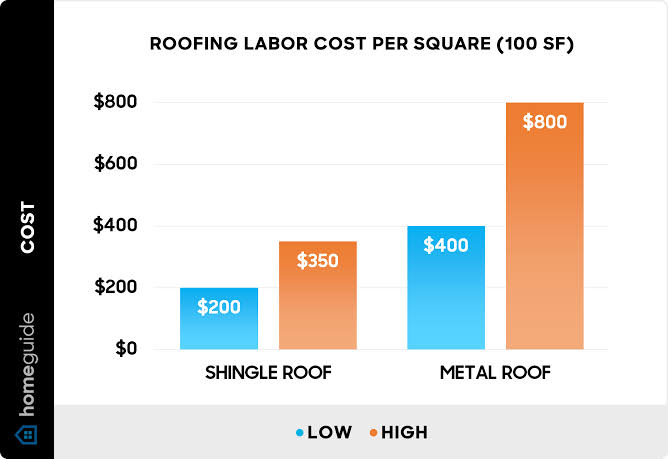
A flat or low-slope roof is easier and safer to work on, often costing less. Conversely, a steep-pitched roof requires special safety equipment, more labor time, and slower work pacing. If your roof has multiple valleys, dormers, chimneys, or skylights, the labor cost per square foot will increase due to the intricate flashing work required.
2. Geographic Location
Labor rates vary significantly across the United States. Homeowners in high-cost-of-living areas like California, New York, or Massachusetts will typically pay 20–30% more than those in the Midwest or South. Additionally, local building codes may require specific wind-resistant or fire-rated materials, which can affect pricing.
3. Removal of Old Roofing
Most quotes include the cost of tearing off the existing roof (“tear-off”). However, if you have multiple layers of old shingles (some homes have two or three layers), the disposal fees and labor hours increase. Always confirm if your quote includes tear-off and dumpster fees.
4. Underlayment and Ventilation
Never skimp on what lies beneath the shingles. High-quality synthetic underlayment and proper attic ventilation systems add to the upfront cost but prevent ice dams and mold growth later. Upgrading from felt paper to synthetic underlayment might add $0.50–$1.00 per square foot but offers superior protection.
Hidden Costs to Watch Out For
When asking how much does a new roof cost per square foot, be aware that the base price rarely tells the whole story. Here are common additional expenses:
- Decking Repair: If the wooden deck beneath your shingles is rotten, it must be replaced. This usually costs $40–$60 per sheet of plywood, plus labor.
- Permits: Local municipalities often require permits for roof replacement, ranging from $100 to $500 depending on the city.
- Warranty Upgrades: Standard manufacturer warranties cover material defects. Extended labor warranties or “no-leak” guarantees from the contractor may cost extra but provide peace of mind.
For more detailed information on roofing standards and material specifications, you can refer to Wikipedia’s article on Roofing.
How to Calculate Your Estimated Roof Cost
Want a quick estimate before calling contractors? Follow these steps:
- Measure Your Home’s Footprint: Measure the length and width of your home’s ground-level footprint. Multiply these to get the area.
- Account for Overhangs and Pitch: Add 10–20% to your footprint area to account for eaves overhangs and the slope of the roof. Steeper roofs have more surface area than the footprint suggests.
- Choose Your Material Price: Pick the average cost per square foot from the table above.
- Do the Math:
- Example: A 2,000 sq. ft. home with a moderate pitch might have a 2,400 sq. ft. roof surface.
- Using architectural shingles at $7.00/sq. ft.:
- 2,400 x $7.00 = $16,800 estimated total.
FAQ: Common Questions About Roofing Costs
Q: Is it cheaper to overlay shingles instead of tearing off the old roof?
A: While overlaying saves on tear-off labor and disposal fees initially, it is generally not recommended. It hides potential deck damage, voids many manufacturer warranties, and adds excessive weight to your structure. Most professional roofers insist on a full tear-off for long-term reliability.
Q: Does insurance cover the cost of a new roof?
A: Homeowners insurance typically covers roof replacement only if the damage is caused by a sudden, covered peril like a hailstorm, hurricane, or falling tree. It does not cover wear and tear or age-related deterioration. Check your policy’s “Actual Cash Value” vs. “Replacement Cost Value” clauses.
Q: What is the best time of year to replace a roof?
A: Late spring through early fall is the peak season, meaning prices may be higher due to demand. However, scheduling in late fall or winter (if weather permits in your region) can sometimes yield discounts as contractors look to fill their schedules. Avoid installing asphalt shingles in freezing temperatures, as they become brittle and difficult to seal properly.
Q: How long does a roof replacement take?
A: For an average-sized single-family home (2,000–2,500 sq. ft.), a professional crew can typically complete the job in 1 to 3 days. Larger homes or complex designs with slate or tile may take a week or more.
Q: Should I hire a local roofer or a national chain?
A: Local roofers often provide better personalized service and are more familiar with local building codes and weather challenges. National chains may offer standardized pricing but might subcontract the actual labor. Always check reviews, licensing, and insurance regardless of the company size.
Conclusion
Knowing how much does a new roof cost per square foot empowers you to navigate the hiring process with confidence. While the national average hovers between $4.50 and $15.00 per square foot, your specific project will depend on material choices, roof complexity, and location.
Remember, the cheapest bid is not always the best value. Prioritize quality materials, reputable contractors, and proper ventilation to ensure your roof lasts for decades. A well-installed roof is not just an expense; it is a vital asset that secures your home’s future.
If you found this guide helpful, please share it with friends or family who are planning their own home improvements. Knowledge is the best tool for a successful renovation!
Leave a Reply