Living in the Sunshine State means dealing with intense heat, humidity, and the ever-present threat of hurricanes. For homeowners, this often leads to a stressful question: how old can a roof be for insurance in Florida? Many residents find their policies non-renewed or premiums skyrocketing simply because their roof has crossed an arbitrary age threshold, even if it looks fine.
Understanding these rules is no longer just about maintenance; it is about financial survival. In this guide, we will break down the complex regulations, explain the “four-point inspection,” and provide actionable steps to help you secure affordable coverage regardless of your roof’s age.
The General Rule: The 15-Year Threshold
If you are shopping for new home insurance or renewing an existing policy in Florida, the magic number you will hear most often is 15 years.
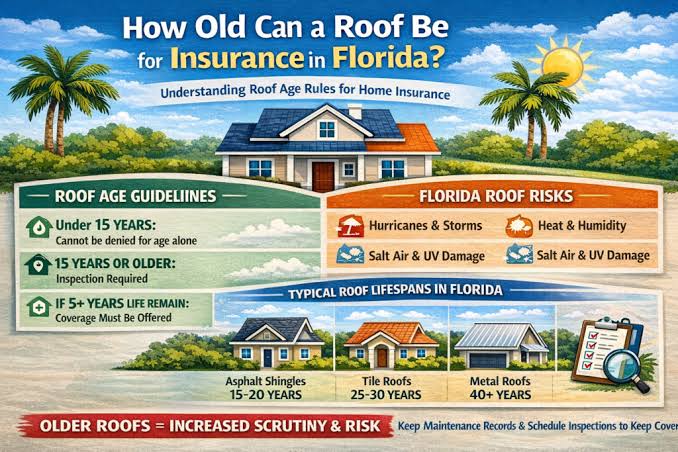
Most major insurance carriers in Florida will not issue a new policy for a home with a roof older than 15 years unless you can provide proof that the roof has at least five years of remaining useful life. This rule was solidified by recent legislative changes aimed at stabilizing the volatile Florida insurance market.
However, it is crucial to distinguish between new policies and renewals. If you already have insurance, your carrier may allow you to keep your policy even if your roof exceeds 15 years, provided it passes specific inspections. But if you switch carriers, you will likely face strict scrutiny.
Why Is Florida So Strict?
Florida’s insurance crisis is driven by litigation costs and hurricane damage. Roofs are the first line of defense against wind-driven rain. An older roof is statistically more likely to fail during a storm, leading to costly interior water damage claims. Insurers use age as a primary proxy for risk assessment.
Understanding the “Four-Point Inspection”
When your roof is over 15 years old, insurers typically require a Four-Point Inspection. This is not a full structural engineering report, but a targeted assessment by a licensed professional.
The inspection focuses on four critical areas:
- Roof Covering: Checking for missing shingles, curling, granule loss, or cracks.
- Electrical: Ensuring the panel and wiring meet current safety codes.
- Plumbing: Checking for leaks, pipe condition, and water heater status.
- HVAC: Verifying the heating and cooling systems are functional and safe.
For the purpose of insurance, the roof portion is the deal-breaker. The inspector must certify that the roof has a minimum of five years of remaining useful life. If they determine the roof only has two years left, the insurer will likely deny coverage until you replace it.
Pro Tip: Do not attempt to DIY this inspection. Insurance companies require the form to be signed by a licensed general contractor, roofer, or home inspector recognized by the state.
New Legislation: What Changed in 2023?
Florida lawmakers passed significant reforms to help homeowners. One of the most impactful changes prohibits insurers from denying coverage solely based on the age of the roof if it is less than 15 years old and passes inspection.
Furthermore, for roofs older than 15 years, insurers cannot deny renewal solely based on age if the homeowner provides a valid inspection report confirming the roof’s integrity. This shifts the focus from chronological age to physical condition.
However, getting that inspection approved is becoming harder. Insurers are increasingly skeptical of reports from unknown inspectors. They prefer reports from vendors within their own approved networks.
Material Matters: Not All Roofs Age the Same
While the 15-year rule is a general standard, the type of roofing material plays a significant role in how insurers view risk.
| Roofing Material | Typical Lifespan | Insurance Perception |
|---|---|---|
| Asphalt Shingles | 15–20 Years | High scrutiny after 10 years. Most common cause of denial. |
| Metal Roofing | 40–70 Years | Highly favored. Often qualifies for discounts. Less likely to be denied due to age. |
| Tile (Clay/Concrete) | 50+ Years | Excellent durability. Rarely denied unless there is structural damage. |
| Flat/Built-Up | 10–15 Years | High risk. Very difficult to insure without recent replacement. |
If you have an asphalt shingle roof approaching its 15th year, you are in the “danger zone.” Conversely, if you have a metal or tile roof that is 20 years old, you may still easily qualify for insurance because these materials withstand Florida’s weather better.
Steps to Secure Insurance with an Older Roof
If your roof is older than 15 years, do not panic. Follow these strategic steps to improve your chances of securing coverage.
1. Perform Pre-emptive Maintenance
Before calling an inspector, fix minor issues. Replace missing shingles, clean out gutters, and seal any visible cracks around vents. A well-maintained older roof looks significantly better than a neglected newer one.
2. Hire a Reputable Inspector
Choose an inspector who is familiar with insurance requirements. Ask them specifically: “Do you provide the standard OIR-B1-2402 form?” This is the standardized form many Florida insurers require. Ensure they document the remaining life expectancy clearly.
3. Shop Around with Independent Agents
Big direct-to-consumer carriers often have rigid automated underwriting systems that auto-reject older roofs. Independent agents can submit your inspection report to multiple carriers, including smaller regional companies that may be more flexible.
4. Consider a Wind Mitigation Inspection
This is different from a four-point inspection. A wind mitigation inspection identifies features that reduce wind damage, such as hip roofs, secondary water resistance, or reinforced garage doors. This can lead to significant premium discounts, offsetting the cost of an older roof.
Common Mistakes to Avoid
- Assuming “Good Condition” is Enough: Without a formal paper trail (inspection report), your opinion of the roof’s condition does not matter to the underwriter.
- Waiting Until the Last Minute: Inspections can take weeks to schedule and process. Start this process at least 60 days before your policy expires.
- Ignoring Local Codes: If your roof was repaired without proper permits, it may be deemed uninsurable regardless of its physical state. Always ensure work is permitted and finalized.
For more detailed information on building codes and construction standards, you can refer to general construction principles on Wikipedia.
FAQ Section
Q: Can I get insurance if my roof is 20 years old?
A: Yes, but it is challenging. You will almost certainly need a passing Four-Point Inspection certifying at least five years of remaining life. Some carriers may still decline, so you may need to shop through specialized independent agents or consider the Citizens Property Insurance Corporation (the state-backed insurer of last resort).
Q: Does replacing part of the roof reset the age?
A: Generally, no. Insurance companies usually consider the “effective age” of the entire roof. If you replace only 20% of the shingles, the insurer may still view the roof as old. However, a full reroof resets the clock to zero. Always provide receipts and warranties for any partial repairs.
Q: What is the “Citizens” insurance option?
A: Citizens Property Insurance Corporation is a not-for-profit, tax-exempt government entity created by the Florida Legislature. It serves as the insurer of last resort for homeowners who cannot find coverage in the private market. While it provides essential coverage, premiums can be high, and it is intended to be a temporary solution while you seek private coverage.
Q: Will a new roof lower my insurance premium?
A: Absolutely. A new roof (especially one with impact-resistant shingles) significantly lowers your risk profile. Many insurers offer discounts of 10% to 30% for new roofs or wind-mitigation features. It is one of the best ROI improvements for Florida homeowners.
Q: How long is a roof inspection valid for insurance purposes?
A: Most insurance companies accept inspection reports that are less than 12 months old. Some may require a newer report if the initial one is close to expiring when you apply for the policy. Always check with your specific agent for their validity window.
Conclusion
Navigating the question of how old can a roof be for insurance in Florida requires a proactive approach. While the 15-year mark is a significant hurdle, it is not an absolute dead end. By understanding the importance of the Four-Point Inspection, maintaining your roof diligently, and working with knowledgeable independent agents, you can protect your home and your wallet.
Don’t wait for a non-renewal notice to act. Assess your roof’s condition today, gather your documentation, and start shopping early. Your peace of mind during hurricane season is worth the effort.
Found this guide helpful? Share it with your Florida neighbors on Facebook or Twitter to help them navigate the insurance maze!
Leave a Reply