Walking up onto your roof for a quick inspection or cleaning can feel like a necessary DIY task, but the fear of causing expensive damage often holds homeowners back. Many people worry that a single misstep could ruin the aesthetic and structural integrity of their investment. The burning question on many minds is: can you walk on a metal roof without denting it? The short answer is yes, but it requires specific knowledge, the right technique, and an understanding of your roof’s unique construction.
In this guide, we will break down exactly how to navigate your metal roof safely. We will cover the science behind metal panel strength, the critical importance of footwear, and step-by-step instructions to ensure you leave no trace behind. Whether you have standing seam panels or exposed fastener sheets, understanding these nuances is key to maintaining your home’s value.
Understanding Metal Roof Durability and Panel Types
Not all metal roofs are created equal. The ability of your roof to withstand foot traffic depends heavily on the type of metal used, the gauge (thickness) of the material, and the profile of the panels.
Standing Seam vs. Exposed Fastener Panels
The design of your roof panels plays a massive role in how they handle weight.
- Standing Seam Roofs: These are generally more durable for walking. The seams are raised above the flat surface, providing structural rigidity. If you step directly on the flat area between the seams, there is a higher risk of oil-canning (a popping sound and slight deformation), but stepping on the seams themselves is usually safe if done carefully.
- Exposed Fastener (Corrugated) Panels: These are more common in agricultural buildings or older residential homes. They are typically thinner and more prone to denting. Walking on these requires extreme caution, as the screw heads can strip out, and the thin metal can easily buckle under concentrated weight.
The Importance of Metal Gauge
In the US market, metal roofing thickness is measured by gauge. The lower the number, the thicker the steel.
| Gauge | Thickness (Approx.) | Durability for Foot Traffic | Common Use |
|---|---|---|---|
| 24 Gauge | 0.0239 inches | Low – High Risk of Denting | Budget Residential/Agricultural |
| 26 Gauge | 0.0179 inches | Very Low – Avoid Walking | Sheds/Outbuildings |
| 22 Gauge | 0.0299 inches | Moderate – Careful Steps Only | Standard Residential |
| 20 Gauge | 0.0359 inches | High – Safer for Maintenance | Premium Residential/Commercial |
Most residential metal roofs in the United States are 24 or 26 gauge. At this thickness, the metal is designed to shed water and snow, not to support the concentrated pressure of a human foot. Therefore, technique matters more than brute force.
How to Walk on a Metal Roof Safely
If you must go up on your roof, following a strict protocol is non-negotiable. Here is how professionals minimize the risk of damage.
1. Wear the Right Footwear
This is the most critical factor. Never wear hard-soled shoes, boots with heavy treads, or high heels.
- Best Choice: Soft-soled rubber shoes, such as canvas sneakers or dedicated roofing shoes. These distribute your weight more evenly and provide grip without acting like a hammer against the metal.
- Avoid: Work boots with stiff shanks or deep lugs. These concentrate your entire body weight onto small points, significantly increasing the likelihood of creating a dent.
2. Step on the Screws, Not the Flat Pan
For exposed fastener roofs, always step directly over the screw lines where the metal is attached to the underlying structure (plywood or purlins). This area has structural support beneath it. Stepping in the middle of the panel span, where there is no support, is a recipe for disaster.
For standing seam roofs, try to step on the flat areas close to the seams, but avoid putting direct pressure on the seam caps themselves unless necessary, as you might distort the locking mechanism.
3. Distribute Your Weight
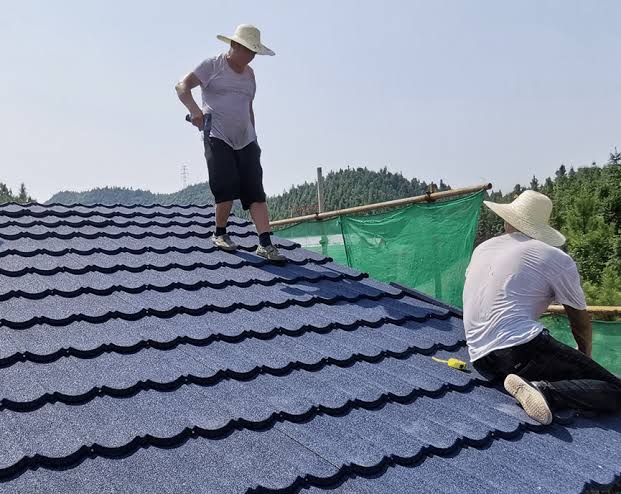
Keep your knees slightly bent and move slowly. Do not jump, run, or drag your feet. If you need to carry tools, use a backpack to keep your hands free for balance. Consider using a roof ladder or crawl board if you need to spend extended time on the roof. These devices spread your weight across a larger surface area, virtually eliminating the risk of denting.
Common Mistakes That Cause Dents
Even with good intentions, homeowners often make errors that lead to costly repairs. Understanding these pitfalls can save you hundreds of dollars.
- Dropping Tools: A dropped hammer or wrench from even a low height can puncture or deeply dent thin metal. Always tether your tools.
- Ignoring Debris: Leaves, branches, and dirt can hide uneven surfaces. Clear the path before walking to ensure stable footing.
- Walking in Extreme Heat: Metal expands when hot. Walking on a roof in direct midday sun can cause the panels to flex more than usual, making them more susceptible to temporary deformation or “oil-canning.” Early morning or late afternoon is ideal.
- Using Ladders Incorrectly: Resting a ladder directly on the metal edge can crush the eave. Use a ladder stabilizer or stand-off to protect the roof edge.
According to general engineering principles regarding sheet metal behavior, localized stress concentrations are the primary cause of permanent deformation. For more detailed information on material properties, you can refer to Wikipedia’s article on Sheet Metal.
When to Call a Professional
While minor inspections can be done by homeowners, certain situations require a licensed roofer.
- Steep Pitch: If your roof pitch is greater than 6:12, it is dangerous to walk on without fall protection gear.
- Old or Rusty Roofs: Corrosion weakens the metal. What looks solid might crumble underfoot.
- Warranty Concerns: Some manufacturers void warranties if untrained individuals walk on the roof. Check your warranty documentation first.
FAQ Section
1. Will walking on my metal roof void the warranty?
It depends on the manufacturer. Many warranties allow for occasional maintenance walking if done correctly, but they may exclude damage caused by improper footwear or negligence. Always review your specific warranty terms before climbing up.
2. Can I remove dents from a metal roof myself?
Minor oil-canning (popping sounds) often resolves itself with temperature changes. However, physical dents from impact are difficult to repair without professional tools. Attempting to hammer them out can worsen the damage and strip protective coatings, leading to rust.
3. Is it safer to walk on a wet metal roof?
No. Wet metal is extremely slippery, especially if there is any algae or moss growth. The risk of slipping and falling far outweighs the risk of denting. Always wait for the roof to be completely dry.
4. What is the best time of day to walk on a metal roof?
Early morning is best. The metal is cooler, reducing expansion issues, and dew has usually evaporated, providing better traction than a wet surface but avoiding the intense heat of midday.
5. Do rubber soles really prevent dents?
Yes, soft rubber soles help distribute weight more evenly compared to hard plastic or leather soles. While they don’t make the metal stronger, they reduce the point-load pressure that causes immediate indentation.
Conclusion
So, can you walk on a metal roof without denting it? Absolutely, provided you respect the material’s limitations. By wearing soft-soled shoes, stepping on supported areas, and moving with care, you can perform basic inspections without causing harm. Remember, your roof is a significant investment, and treating it with gentleness ensures it lasts for decades.
If you found this guide helpful, please share it with your friends and neighbors on social media. Helping others protect their homes creates a safer, more informed community. Stay safe, and keep your roof in top shape!
Leave a Reply