Standing on a burning roof is one of the most dangerous assignments in firefighting. The heat is intense, the structure is unstable, and visibility is often near zero. In these high-stakes moments, hesitation or understaffing can lead to catastrophic injuries or fatalities. You need a team that is not only skilled but also sufficiently sized to handle the physical and tactical demands of the job.
When planning your fireground strategy, a critical question arises: tactical ventilation roof crew members should have a minimum of how many firefighters? The answer isn’t just a number; it’s a lifeline. This article breaks down the industry standards, safety protocols, and operational reasons why staffing levels matter so much in vertical ventilation operations.
Why Staffing Levels Matter in Vertical Ventilation
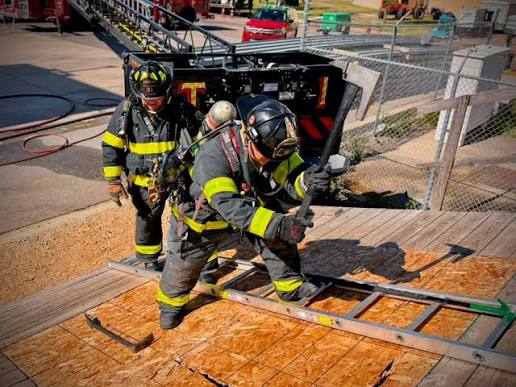
Vertical ventilation is the process of cutting holes in the roof to allow heat, smoke, and gases to escape. This improves visibility for interior crews and reduces the risk of flashover. However, it requires heavy tools, precise coordination, and constant situational awareness.
If a crew is understaffed, the time it takes to complete the vent increases. More importantly, the safety margin disappears. A lone firefighter cannot effectively monitor their surroundings while operating a chainsaw or axe. Therefore, understanding the minimum crew size is fundamental to firefighter safety and operational success.
The Standard Answer: How Many Members?
According to most modern fire service standards and the National Fire Protection Association (NFPA), a tactical ventilation roof crew should have a minimum of two firefighters.
However, many departments and incident commanders prefer a team of three or four for optimal safety and efficiency. Here is why two is the absolute floor, but more is often better:
- The Buddy System: Firefighting is never a solo act. On the roof, you need someone to watch your back, monitor structural integrity, and assist if you fall through or get trapped.
- Tool Management: Operating a power saw requires one person, but moving debris, checking for hot spots, and communicating with command requires another.
- Emergency Response: If one member gets into trouble, the other can initiate rescue procedures or call for help immediately.
Key Insight: While two is the minimum for entry and operation, a team of three allows for a dedicated safety officer role within the crew, significantly reducing risk.
People Also Ask: Common Questions About Roof Crews
To help you understand the nuances of this requirement, let’s address specific questions that firefighters and officers often ask.
What Does NFPA Say About Crew Size?
The NFPA 1500 (Standard on Fire Department Occupational Safety, Health, and Wellness Program) and NFPA 1710 (Standard for the Organization and Deployment of Fire Suppression Operations) emphasize the “Two-In/Two-Out” rule. This rule generally applies to interior attacks, but the principle extends to hazardous environments like roofs.
While NFPA does not always specify a rigid number for roof teams specifically in every clause, it mandates that no firefighter should operate in a hazardous area without a backup. For detailed definitions of hazardous environments, you can refer to Wikipedia’s page on Firefighting which outlines general safety frameworks adopted globally.
In practice, this means:
- Minimum 2 firefighters must work together.
- They must maintain visual or voice contact.
- They must have a means of emergency communication.
Why Can’t One Firefighter Do It Alone?
It might seem efficient to send one highly skilled veteran to cut a hole quickly. However, this is a severe violation of safety protocols for several reasons:
- Structural Failure: Roofs can collapse without warning. A single firefighter has no one to pull them out if they fall through.
- Tool Malfunction: If a chainsaw kicks back or fails, the operator is vulnerable. A partner can assist or take over.
- Situational Awareness: When focused on cutting, a firefighter’s tunnel vision increases. A partner monitors the fire conditions, wind direction, and structural sounds.
What Are the Roles Within a Roof Crew?
A well-structured roof crew divides tasks to maximize efficiency. Even with just two members, roles are clearly defined:
| Role | Responsibilities |
|---|---|
| Operator | Operates the chainsaw or axe. Cuts the ventilation hole. Focuses on precision and speed. |
| Safety/Support | Monitors structural integrity. Checks for fire extension. Manages hoses if needed. Communicates with Command. |
| Team Leader (if 3+) | Oversees the operation. Decides when to stop. Coordinates with interior crews. |
How Does Building Type Affect Crew Size?
Not all roofs are created equal. The complexity of the structure dictates whether the minimum of two is sufficient or if more hands are needed.
- Residential Wood Frame: Two firefighters are usually sufficient. The loads are lighter, and access is easier.
- Commercial Flat Roofs: These often require heavier equipment and may have HVAC units or parapets that obstruct movement. A team of three or four is recommended.
- Truss Roofs: These are highly dangerous due to rapid collapse potential. Extra caution and potentially additional personnel for rapid intervention are advised.
Step-by-Step: Executing Safe Tactical Ventilation
Knowing the number of tactical ventilation roof crew members should have a minimum of is just the start. Here is how that crew should operate step-by-step to ensure safety.
Step 1: Size-Up and Communication
Before stepping onto the roof, the crew must perform a 360-degree size-up.
- Identify the fire location.
- Determine wind direction (ventilate downwind).
- Check for structural stability (sagging roofs, cracks).
- Action: Report findings to Incident Command. Confirm the order to ventilate.
Step 2: Gear Up and Tool Check
Ensure all Personal Protective Equipment (PPE) is intact.
- SCBA masks on and sealed.
- Harnesses secured if working near edges.
- Chainsaws fueled and tested.
- Hooks and axes ready for debris removal.
Step 3: Access the Roof Safely
Use ladders properly secured at the peak or eave.
- Test the roof surface with a tool before committing weight.
- Move along load-bearing walls or beams if possible.
- Maintain contact with your partner.
Step 4: Cut the Ventilation Hole
- Location: Cut directly over the fire or slightly downwind.
- Technique: Start with a small inspection cut if unsure of conditions. Then expand to a standard 4×4 foot hole.
- Safety: The operator cuts while the support member watches for sagging or changing fire conditions.
Step 5: Clear and Monitor
- Remove debris immediately to prevent re-ignition or blockage.
- Monitor the hole for changes in smoke color and velocity.
- Stay on the roof until relieved or ordered off by Command.
The Risks of Understaffing: A Reality Check
Ignoring the minimum crew requirement has real consequences. Studies from the National Institute for Occupational Safety and Health (NIOSH) show that many firefighter line-of-duty deaths involve falls or structural collapses where isolation was a contributing factor.
When a crew is understaffed:
- Fatigue Sets In Faster: Rotating tasks is impossible with one person.
- Decision Making Suffers: Stress increases without a partner to validate observations.
- Rescue Becomes Impossible: If a firefighter goes down, there is no immediate rescue capability.
FAQ Section
Q1: Can a roof crew consist of only one firefighter if they are highly experienced?
A: No. Experience does not negate the need for a buddy system. NFPA standards and departmental SOPs universally prohibit solo operations in hazardous zones, regardless of rank or experience level.
Q2: What if we only have two firefighters available for the entire engine company?
A: If staffing is critically low, the Incident Commander must reassess the strategy. Vertical ventilation may need to be delayed until more resources arrive, or alternative horizontal ventilation methods might be used. Safety should never be compromised for speed.
Q3: Do ladder companies always provide the roof crew?
A: Typically, yes. Ladder or Truck companies are trained and equipped for vertical ventilation. However, in mutual aid situations or smaller departments, engine company members may perform this task if properly trained and staffed.
Q4: How long should a roof crew stay on the roof?
A: Only as long as necessary to complete the ventilation and ensure it is effective. Once the hole is cut and cleared, and conditions are reported, they should move to a safe area or be reassigned. Prolonged exposure increases risk.
Q5: What tools are essential for a minimum two-person roof crew?
A: At a minimum: one power saw (chainsaw or K-12), one pike pole or hook, one axe, and full PPE including SCBA. Communication radios are also mandatory.
Conclusion
Understanding that tactical ventilation roof crew members should have a minimum of two firefighters is a cornerstone of safe fireground operations. This standard ensures that the buddy system is maintained, allowing for immediate assistance in case of emergency and improving the efficiency of the ventilation process.
While two is the minimum, aiming for three or four members provides an even greater safety buffer, especially in complex commercial structures. Always prioritize life safety—both yours and your team’s—over speed.
Did you find this guide helpful? Share this article with your fellow firefighters and training officers to promote safer practices in your department. Let’s keep our crews safe, one roof at a time.
Leave a Reply