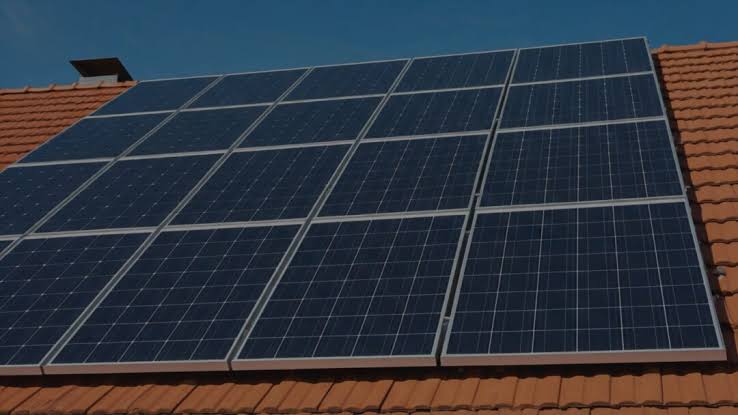
Have you ever looked at your rooftop and wondered if it could power your entire home? It is a common question for homeowners looking to reduce electricity bills and shrink their carbon footprint. If you are trying to calculate how many solar panels will fit on my roof, you are in the right place. This guide breaks down the math, the measurements, and the real-world factors that determine your solar potential.
Understanding Your Available Roof Space
Before we dive into complex equations, we need to look at the physical canvas: your roof. Not every square foot of your roof is usable for solar energy production. To get an accurate estimate, we must distinguish between gross roof area and net usable area.
Gross vs. Net Usable Area
Your gross roof area is the total surface area of your roof. However, solar installers cannot place panels everywhere. You must account for obstructions and safety setbacks.
- Obstructions: Chimneys, skylights, vent pipes, and HVAC units take up space.
- Safety Setbacks: Fire codes often require a clear pathway (usually 18–24 inches) around the edges of the roof and across the ridge for firefighter access.
- Shading: Areas shaded by tall trees or neighboring buildings are inefficient for solar generation.
Typically, only 70% to 80% of your gross roof area is actually usable for solar panels. For example, if you have a 2,000-square-foot roof, your usable space might only be 1,400 to 1,600 square feet.
Standard Solar Panel Dimensions
To calculate capacity, you need to know the size of the hardware. While technology evolves, most residential solar panels in the US market follow standard dimensions.
Common Panel Sizes
Most modern residential panels are “60-cell” or “72-cell” modules. Here is what you can expect:
| Panel Type | Typical Dimensions (Inches) | Area per Panel (Sq Ft) | Power Output (Watts) |
|---|---|---|---|
| Standard Residential | 65 x 39 | ~17.5 sq ft | 350W – 400W |
| High-Efficiency Premium | 61 x 41 | ~17.2 sq ft | 400W – 450W |
| Commercial/Large Format | 78 x 39 | ~21.1 sq ft | 500W+ |
Note: Always check the specific datasheet of the panel brand you are considering, as sizes vary slightly by manufacturer.
For our calculations, we will use the industry average: 17.5 square feet per panel.
Step-by-Step Calculation Guide
Now, let’s do the math. Follow these steps to get a realistic estimate of your system size.
Step 1: Measure Your Usable Roof Area
If you don’t have blueprints, you can use satellite imagery tools like Google Earth or specialized solar apps. Measure the length and width of each roof plane that faces South, East, or West. Avoid North-facing roofs if possible, as they receive less direct sunlight in the Northern Hemisphere.
Formula:
Length (ft) × Width (ft) = Total Area (sq ft)
Subtract 20% for obstructions and setbacks to get your Net Usable Area.
Step 2: Divide by Panel Size
Take your Net Usable Area and divide it by the area of a single panel (17.5 sq ft).
Formula:
Net Usable Area / 17.5 = Maximum Number of Panels
Example:
- Gross Roof Area: 1,000 sq ft
- Net Usable Area (80%): 800 sq ft
- Calculation:
800 / 17.5 = 45.7
In this scenario, you can physically fit approximately 45 panels.
Step 3: Check Your Energy Needs
Just because you can fit 45 panels doesn’t mean you need 45. A typical US home uses about 877 kWh per month. A 400-watt panel produces roughly 1.2–1.5 kWh per day depending on location.
If 45 panels produce more energy than you use, you may want to downsize to save on upfront costs, unless you plan to add an electric vehicle or battery storage later.
Factors That Influence Solar Capacity
Physical space is only one part of the puzzle. Several other variables affect how many panels you should install and how much energy they will generate.
1. Roof Orientation and Tilt
In the US, South-facing roofs are ideal. They receive the most consistent sunlight throughout the day.
- South: 100% efficiency baseline.
- East/West: ~80–85% efficiency. You may need more panels to generate the same amount of power.
- North: Generally not recommended unless you have no other option.
The tilt angle also matters. A pitch between 15 and 40 degrees is optimal for most US latitudes. Steeper roofs may require special mounting hardware, which can limit placement near edges.
2. Local Climate and Sunlight Hours
Solar panels need sunlight, not heat. In fact, extreme heat can slightly reduce efficiency. What matters is peak sun hours.
- Arizona/California: 5–6 peak sun hours/day. Fewer panels needed.
- New York/Massachusetts: 3–4 peak sun hours/day. More panels needed to achieve the same output.
You can check your local solar irradiance data on the National Renewable Energy Laboratory (NREL) website, which is a trusted government source for renewable energy data. For general scientific context on solar energy conversion, you can also refer to Wikipedia’s article on Photovoltaics.
3. Panel Efficiency
Not all panels are created equal.
- Monocrystalline Panels: Higher efficiency (20–23%). Best for small roofs.
- Polycrystalline Panels: Lower efficiency (15–17%). Cheaper, but require more space.
If your roof space is limited, investing in high-efficiency monocrystalline panels allows you to generate more power in fewer square feet.
Pros and Cons of Maximizing Roof Coverage
Should you fill every available inch of your roof with panels? Here is a quick comparison to help you decide.
| Feature | Maximize Coverage | Partial Coverage |
|---|---|---|
| Energy Production | Highest possible output | Meets basic needs only |
| Upfront Cost | Higher | Lower |
| ROI Speed | Slower (due to higher cost) | Faster (lower initial investment) |
| Future Proofing | Ready for EVs or batteries | May need expansion later |
| Aesthetics | Full black array look | More visible roof material |
Expert Tip: Most homeowners find that covering 60–70% of their usable roof space provides the best balance of cost savings and energy independence.
Frequently Asked Questions
1. Can I add more panels later if my energy needs increase?
Yes, but it is easier and cheaper to design your initial system with extra capacity in mind. Ensure your inverter can handle additional panels, or opt for a modular microinverter system. Adding panels later may require new permits and labor costs.
2. Do solar panels damage my roof?
When installed correctly by licensed professionals, solar panels do not damage your roof. In fact, they can protect the shingles underneath from UV rays and weather. However, improper installation can lead to leaks. Always hire certified installers who offer workmanship warranties.
3. What if my roof is too small for the number of panels I need?
If your roof space is limited, consider high-efficiency panels (like SunPower or LG). Alternatively, you can supplement with a community solar program or ground-mounted panels if you have yard space.
4. How much weight do solar panels add to my roof?
Solar panels typically add about 2–4 pounds per square foot. Most modern roofs are built to withstand much heavier loads (such as snow). However, an older roof may need a structural inspection before installation.
5. Does shading from trees really matter that much?
Yes. Even partial shading on one panel can significantly reduce the output of the entire string if you use a traditional string inverter. Microinverters or power optimizers can mitigate this issue by allowing each panel to operate independently.
Conclusion
Learning how to calculate how many solar panels will fit on my roof is the first step toward energy independence. By measuring your usable space, understanding panel dimensions, and considering your local climate, you can create a realistic plan for your home.
Remember, while DIY calculations are helpful for estimation, a professional site assessment is crucial for final design. They will account for structural integrity, electrical code requirements, and precise shading analysis.
Ready to take the next step? Share this guide with friends or family who are also considering going solar. Let’s build a cleaner, more sustainable future together—one roof at a time!
Leave a Reply