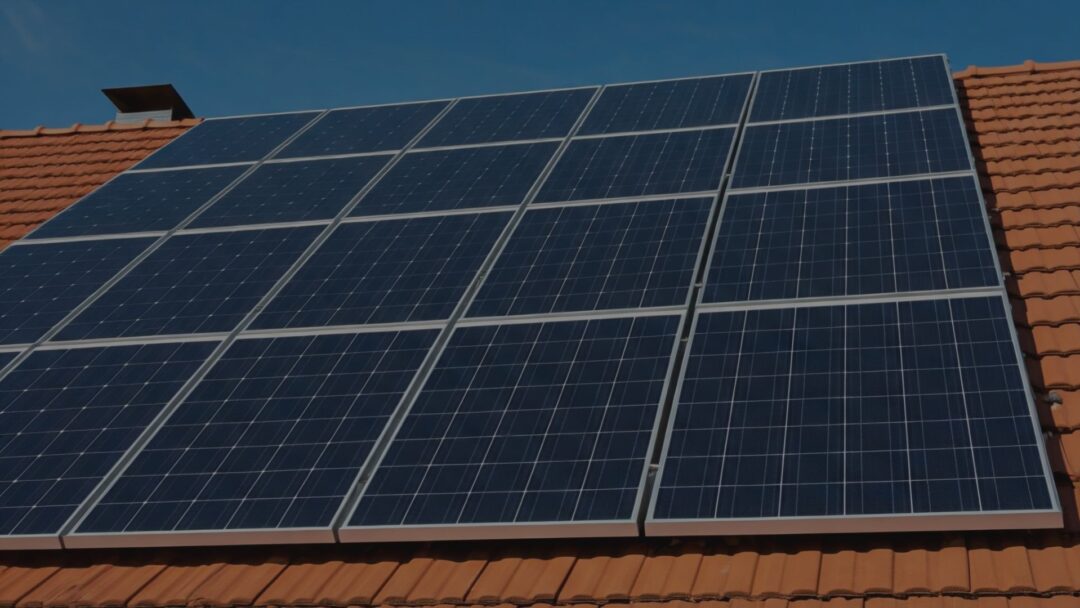
Are you staring at your rooftop, wondering if it’s big enough to power your entire home with clean energy? You are not alone; this is the most common question homeowners ask when considering the switch to renewable power. Determining how many solar panels can I fit on my roof is the critical first step in understanding your potential savings and environmental impact.
Let’s break down the math, the physical constraints, and the smart strategies to maximize your solar potential without overwhelming you with jargon.
Understanding Your Available Roof Space
Before we talk about kilowatts or efficiency ratings, we need to look at the physical reality of your home. Not every square foot of your roof is usable for solar installation.
Calculating Usable Square Footage
The total area of your roof is not the same as your usable solar area. Installers must leave space around the edges (known as “setbacks”) for safety, maintenance access, and wind uplift compliance. Additionally, any permanent structures like chimneys, vent pipes, or skylights reduce the available surface area.
A good rule of thumb for US homeowners is that only about 70% to 80% of your total roof area is actually usable for solar panels.
| Roof Feature | Impact on Solar Capacity |
|---|---|
| Chimneys & Vents | Reduces usable space; requires shading analysis. |
| Dormers | Creates complex angles; may reduce panel count. |
| Setbacks | Mandatory clearance from edges (usually 1-2 feet). |
| Shading | Trees or neighboring buildings can render areas useless. |
Standard Solar Panel Dimensions
To calculate the number of panels, you need to know the size of the hardware. Most residential solar panels in the US market today follow standard dimensions:
- Standard 60-cell panel: Approximately 3.25 feet by 5.5 feet (17.8 sq ft).
- High-efficiency 72-cell panel: Approximately 3.25 feet by 6.4 feet (20.8 sq ft).
For this guide, we will use the standard 17.8 square feet per panel as our baseline. This is the most common size for modern monocrystalline panels used in residential settings.
Factors That Influence Panel Count
It is not just about physical space. Several technical and environmental factors dictate how many panels you should install versus how many you can install.
Roof Orientation and Tilt
In the Northern Hemisphere, south-facing roofs are ideal because they receive the most direct sunlight throughout the day. However, east and west-facing roofs are also viable, though they may produce slightly less energy during peak hours.
- South-Facing: Maximum production.
- East/West-Facing: Good for morning/evening usage; may require 10-20% more panels to match south-facing output.
- North-Facing: Generally not recommended for solar in the US due to low efficiency.
The tilt (pitch) of your roof also matters. A pitch between 15 and 40 degrees is considered optimal for most US latitudes. If your roof is flat, installers will use racking systems to tilt the panels, which requires more spacing between rows to prevent shading.
Local Climate and Sunlight Hours
Your geographic location plays a massive role. A home in Arizona receives significantly more “peak sun hours” than a home in Seattle.
- High Sunlight States (AZ, CA, NV): You may need fewer panels to meet your energy needs because each panel produces more electricity.
- Lower Sunlight States (WA, NY, MA): You might need to maximize your roof space with more panels to compensate for lower daily irradiance.
You can check your specific location’s solar potential using tools provided by the National Renewable Energy Laboratory, which offers detailed insolation maps for the United States.
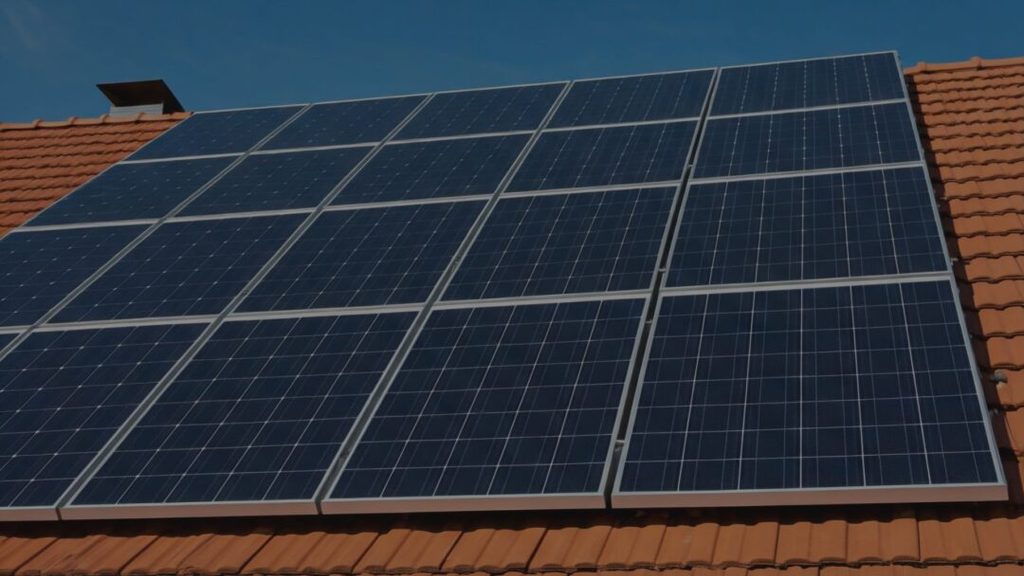
Step-by-Step Calculation Guide
Let’s do the math together. Here is a simple, three-step process to estimate your capacity.
Step 1: Measure Your Usable Roof Area
Take your total roof square footage and subtract non-usable areas.
- Example: Total Roof = 2,000 sq ft.
- Subtract 20% for setbacks/obstructions = 400 sq ft.
- Usable Area = 1,600 sq ft.
Step 2: Divide by Panel Size
Divide your usable area by the size of a standard panel (17.8 sq ft).
- 1,600 sq ft / 17.8 sq ft = 89.8 panels.
Note: This is the theoretical maximum. In reality, you will likely fit fewer due to irregular roof shapes.
Step 3: Adjust for Energy Needs
Just because you can fit 89 panels doesn’t mean you need them. Check your electric bill for your annual kWh usage.
- Average US home uses ~10,500 kWh/year.
- A typical 400-watt panel produces ~600-800 kWh/year depending on location.
- 10,500 kWh / 700 kWh (avg production) = 15 panels needed.
In this scenario, even though you could fit 89 panels, you only need 15 to offset your bill. This leaves room for future expansion, such as adding an electric vehicle charger.
Optimizing for Efficiency vs. Quantity
When space is limited, quality matters more than quantity.
High-Efficiency Panels
If you have a small roof but high energy demands, consider high-efficiency panels (22%+ efficiency). Brands like Maxeon or SunPower offer panels that produce more wattage per square foot. While they cost more upfront, they allow you to generate more power in a smaller footprint.
Microinverters vs. String Inverters
Shading is the enemy of solar production. If your roof has partial shading from trees:
- String Inverters: If one panel is shaded, the whole string’s performance drops.
- Microinverters: Each panel operates independently. Shading on one panel does not affect the others.
For complex roofs with multiple angles or shading issues, microinverters are often the better choice to maximize the output of every single panel you fit.
Common Mistakes to Avoid
- Ignoring Future Loads: Are you planning to buy an EV or install a heat pump? If so, calculate your future energy needs, not just current ones.
- Overlooking HOA Rules: Some Homeowners Associations have restrictions on panel visibility. Check your covenants before designing your system.
- Forgetting Maintenance Access: You need space to walk on your roof for cleaning and repairs. Never cover 100% of the usable space.
FAQ Section
How much weight will solar panels add to my roof?
Solar panels typically add about 2 to 4 pounds per square foot. Most modern US roofs are built to withstand much heavier loads (such as snow), but a structural assessment is always recommended for older homes.
Can I add more panels later if I have space left?
Yes, but it is easier and cheaper to install all planned panels at once. Adding panels later may require upgrading your inverter or electrical panel, which adds cost. However, leaving physical space on the roof is a smart strategy for future expansion.
Do solar panels work on flat roofs?
Yes, they do. Flat roofs require ballasted racking systems that tilt the panels toward the sun. These systems take up more space because you need gaps between rows to prevent panels from shading each other.
What happens if my roof is too small for my energy needs?
If your roof cannot accommodate enough panels to offset 100% of your usage, you can still offset a portion (e.g., 50-70%) and pay for the remainder. Alternatively, you might consider community solar programs if available in your state.
Does the color of my roof matter?
Dark roofs absorb more heat, which can slightly reduce panel efficiency since panels perform better in cooler temperatures. However, modern panels are designed to handle heat, and the difference is usually marginal compared to the benefits of going solar.
Conclusion
Determining how many solar panels can I fit on my roof is a balance of physics, geography, and personal energy goals. By measuring your usable space, understanding your local sunlight conditions, and choosing the right equipment, you can create a system that maximizes both your roof’s potential and your wallet’s health.
Remember, you don’t need to cover every inch of your roof to see significant savings. Often, a strategically placed, smaller system is more cost-effective than a massive one.
Ready to take the next step? Share this guide with friends who are curious about solar, or drop a comment below with your roof’s approximate square footage—we’d love to help you estimate your potential!