Are you staring at your aging shingles and wondering if switching to metal is worth the investment? You are not alone; many homeowners are making the switch for durability, but the upfront price tag can be intimidating. If you are asking, “How much does it cost to get a tin roof,“ you have come to the right place to break down the numbers clearly and honestly.
In this guide, we will dissect the real costs associated with installing a tin (metal) roof in 2026. We will move beyond vague estimates to provide you with actionable data, helping you make an informed decision that balances your budget with long-term value.
Understanding the True Cost of Tin Roofing
When homeowners ask about the cost of a tin roof, they are often surprised to learn that “tin” is a colloquial term. Modern residential roofs are rarely made of pure tin. Instead, they are typically made of steel coated with zinc (galvanized) or a mixture of zinc and aluminum (Galvalume), often finished with a protective paint system.
Understanding this distinction is crucial because the material quality directly impacts the price. In 2026, the national average cost to install a metal roof ranges significantly based on materials and labor complexity.
Average Cost Breakdown by Square Footage
To give you a realistic expectation, here is a general pricing structure for professional installation in the United States:
- Low-End (Corrugated Steel Panels): $7.50 – $10.50 per square foot.
- Mid-Range (Standing Seam Aluminum/Steel): $12.00 – $18.00 per square foot.
- High-End (Copper or Zinc Alloy): $20.00 – $35.00+ per square foot.
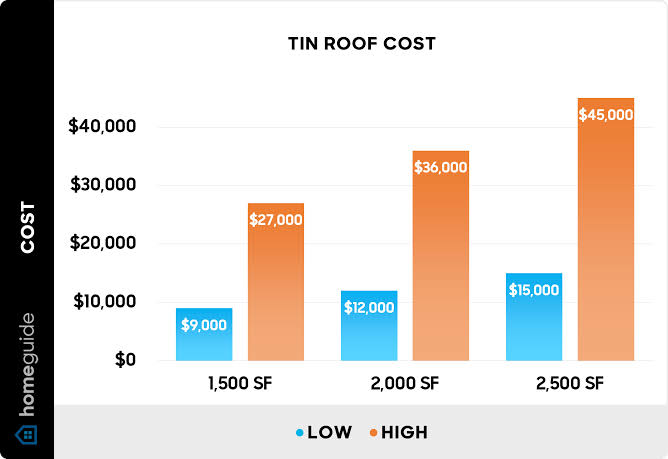
For an average-sized home of 2,000 square feet, you can expect the total project cost to fall between $15,000 and $36,000. While this is higher than traditional asphalt shingles (which typically cost $4–$7 per square foot installed), the lifespan difference is monumental.
What Factors Influence the Price of a Metal Roof?
Several variables can cause your final quote to fluctuate. Understanding these factors will help you negotiate better with contractors and avoid hidden fees.
1. Material Type and Gauge
Not all metal is created equal. The “gauge” refers to the thickness of the metal. A lower gauge number means thicker, more durable metal.
- 29-Gauge: Thinner, less expensive, prone to denting. Best for sheds or low-traffic areas.
- 26-Gauge: The standard for most residential homes. Good balance of cost and durability.
- 24-Gauge: Thicker, heavier, and more expensive. Ideal for areas with heavy hail or snow loads.
2. Roof Complexity and Pitch
A simple gable roof is far cheaper to install than a roof with multiple valleys, dormers, chimneys, and skylights. Steeper pitches also require more safety equipment and labor time, increasing the cost. Contractors often charge a premium for roofs with a pitch greater than 6:12.
3. Removal of Old Roofing
Does your old roof need to come off? Most local building codes allow for one layer of existing shingles to remain under the new metal roof, which can save you $1,000–$3,000 in disposal and labor fees. However, if there is rot or structural damage, a full tear-off is mandatory, adding to the total cost.
4. Geographic Location
Labor rates vary wildly across the US. Installing a roof in rural Ohio will generally cost less than in San Francisco or New York City due to differences in union labor rates, insurance costs, and local demand.
Tin Roof vs. Shingles: A Cost-Benefit Analysis
Many homeowners hesitate because of the initial sticker shock. However, when you look at the lifecycle cost, metal often wins. Let’s compare the two over a 50-year period.
| Feature | Asphalt Shingles | Metal (Tin) Roof |
|---|---|---|
| Initial Cost | Low ($4–$7/sq. ft.) | High ($7–$18+/sq. ft.) |
| Lifespan | 15–25 years | 40–70+ years |
| Maintenance | Moderate (prone to wind/algae) | Low (occasional inspection) |
| Energy Efficiency | Standard | High (reflects solar heat) |
| Resale Value | Neutral | Increases home value |
| Replacements Needed | 2–3 times in 50 years | 0–1 times in 50 years |
Note: Over 50 years, you might spend $15,000 initially on metal, whereas you could spend $12,000 initially on shingles, plus another $12,000–$15,000 to replace them twice. The metal roof becomes the cheaper option in the long run.
Step-by-Step: How to Budget for Your Project
If you are ready to move forward, follow these steps to ensure you get a fair price and high-quality work.
- Measure Your Roof Area: Use online satellite tools or hire a pro to get an accurate square footage measurement. Remember, roofing is measured in “squares” (100 sq. ft.).
- Choose Your Profile: Decide between exposed fastener (cheaper, industrial look) and standing seam (expensive, sleek, hidden fasteners). Standing seam is recommended for residential homes due to better leak protection.
- Get Three Quotes: Never accept the first bid. Ensure each contractor is licensed, insured, and has specific experience with metal roofing.
- Check for Warranties: Look for a manufacturer’s warranty on the paint finish (usually 20–40 years) and a separate workmanship warranty from the installer (usually 5–10 years).
- Verify Substrate Requirements: Metal roofs often require specific underlayment. Ensure your quote includes high-quality synthetic underlayment, not just felt paper.
For more detailed technical specifications on metal alloys and their properties, you can refer to this comprehensive resource on Metal Alloys and Properties to understand what you are buying.
Frequently Asked Questions (FAQ)
1. Is a tin roof louder than shingles during rain?
This is a common myth. When installed correctly with solid sheathing (plywood or OSB) and proper insulation, a metal roof is no louder than a shingle roof. In fact, many homeowners find the sound of rain on metal to be soothing rather than noisy. The key is ensuring there is an air gap or solid deck beneath the metal panels.
2. Does a tin roof attract lightning?
No, metal roofs do not attract lightning. Lightning strikes are determined by height and location, not material. However, if a house is struck, a metal roof is non-combustible and can actually dissipate the energy safely, reducing the risk of fire compared to wood shingles.
3. Can I walk on my tin roof?
It is not recommended. Walking on metal panels can cause dents, especially if they are thinner gauges (29 or 26). It can also void your warranty if you damage the protective coating. If maintenance is required, hire a professional who knows how to walk on metal roofs without causing damage.
4. How long does it take to install a tin roof?
For an average-sized home (2,000 sq. ft.), a professional crew can typically complete the installation in 2 to 4 days. This is often faster than shingle replacement because metal panels cover larger areas quickly. However, complex roofs with many penetrations (vents, chimneys) may take longer.
5. Will a metal roof interfere with my cell phone or Wi-Fi signal?
Generally, no. While metal can block radio waves, modern homes have signals entering through windows and other non-metallic parts of the structure. Most homeowners report no noticeable change in signal strength after switching to a metal roof. If you have a dedicated outdoor antenna, ensure it is mounted correctly.
Conclusion
So, how much does it cost to get a tin roof? While the initial investment of $15,000 to $36,000 for an average home is significant, it is essential to view it as a long-term asset rather than just an expense. With a lifespan that can exceed 50 years, minimal maintenance requirements, and potential energy savings, a metal roof offers unparalleled value.
By choosing the right gauge, profile, and installer, you can protect your home for decades while boosting its curb appeal and resale value. Don’t let the upfront cost deter you from a solution that could save you money in the long run.
Found this guide helpful? Share it with your friends on Facebook or Pinterest who are also considering a roof upgrade! If you have more questions about specific metal types, leave a comment below—we love hearing from our readers.
Leave a Reply