Choosing the right commercial roofing material can feel like navigating a maze of technical jargon and conflicting advice. You want a roof that lasts, protects your assets, and fits your budget, but the visual similarities between popular single-ply membranes make this decision difficult. Understanding How To Tell The Difference Between Tpo And Pvc Roofing is the first step toward making an informed investment that serves your building for decades.
Both Thermoplastic Polyolefin (TPO) and Polyvinyl Chloride (PVC) are dominant players in the commercial roofing industry. They look similar—often both are bright white—and they share some installation methods. However, their chemical compositions, performance under stress, and long-term maintenance needs differ significantly. In this guide, we will break down these differences clearly, helping you identify which material is on your roof or which one you should install next.
What Are the Core Chemical Differences?
To truly understand how to distinguish these materials, we must look beyond the surface. The fundamental difference lies in their molecular structure and how they are manufactured.
TPO (Thermoplastic Polyolefin) is a blend of polypropylene and ethylene-propylene rubber, reinforced with polyester mesh. It was developed as a more affordable, environmentally friendly alternative to older roofing systems. TPO does not contain chlorine, which makes it a favorite for those concerned about environmental impact during disposal.
PVC (Polyvinyl Chloride), on the other hand, is a thermoplastic material that has been used in roofing since the 1960s. It contains chlorine, which gives it inherent fire-resistant properties. PVC membranes are typically reinforced with polyester or fiberglass scrim to provide dimensional stability.
According to Wikipedia’s entry on Vinyl composition tile (which shares the base polymer chemistry with roofing PVC), the addition of plasticizers and stabilizers in PVC creates a flexible, durable material distinct from the rubber-blend nature of TPO. This chemical distinction drives most of the performance differences we will discuss below.
How Can You Visually Identify TPO vs PVC?
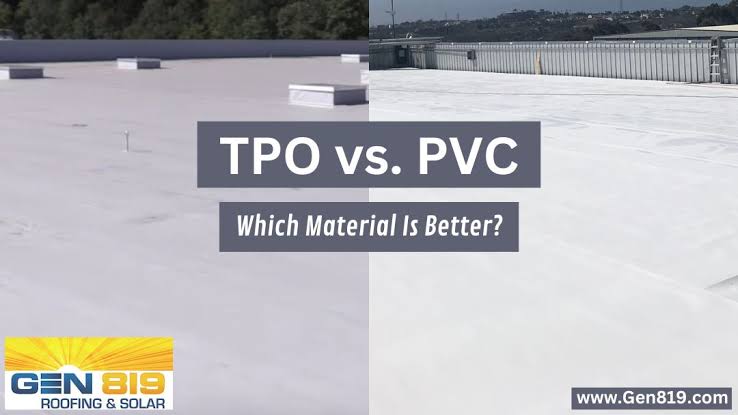
If you are standing on a roof or looking at photos, visual cues are your first line of defense. While both membranes are often white to reflect UV rays, there are subtle signs you can look for.
1. Surface Texture and Sheen
- PVC: Often has a slightly glossy or “wet” look when new. Over time, high-quality PVC may develop a slight chalky residue, but it generally retains a smoother, more plastic-like texture.
- TPO: Typically has a matte finish. It feels more like a heavy-duty plastic sheet or even a thin rubber. It lacks the high-gloss sheen of PVC.
2. Seam Appearance
The way the sheets are joined is a major giveaway.
- PVC Seams: These are usually heat-welded. The seams appear fused together, creating a continuous, homogeneous bond. If you run your finger along a well-installed PVC seam, it should feel smooth and uniform, almost as if the two sheets are one.
- TPO Seams: These can be heat-welded or taped. However, older TPO installations or specific brands might use adhesive tapes. If you see tape lines or if the seam looks slightly raised and less “melted” than PVC, it is likely TPO. Note: Modern TPO is also heat-welded, so this method requires checking the weld quality.
3. Flexibility and Stiffness
- PVC: Remains flexible in cold temperatures due to plasticizers. It drapes easily over irregularities.
- TPO: Can be stiffer, especially in colder weather. It may resist conforming to complex roof details unless specifically formulated for cold-weather application.
Performance Comparison: Durability and Lifespan
When evaluating How To Tell The Difference Between Tpo And Pvc Roofing, performance data is crucial. Here is a breakdown of how they handle real-world conditions.
| Feature | TPO Roofing | PVC Roofing |
|---|---|---|
| Lifespan | 20–30 years | 20–30+ years |
| Chemical Resistance | Moderate. Can degrade with exposure to oils, fats, and certain industrial chemicals. | Excellent. Highly resistant to oils, greases, and industrial pollutants. Ideal for restaurants. |
| Fire Resistance | Good (requires fire retardants). | Superior (inherent chlorine content provides self-extinguishing properties). |
| Puncture Resistance | High (due to thicker plies often used). | High, but depends on thickness. |
| Cost | Generally lower initial cost. | Higher initial cost, but potentially lower lifecycle cost in harsh environments. |
The “Restaurant Rule”
One of the easiest ways to determine which roof is better for a specific building is the type of business inside. If the building houses a restaurant, bakery, or any facility that vents cooking exhaust, PVC is the superior choice. The oils and fats in the exhaust can break down the polymers in TPO over time, leading to premature failure. PVC’s chemical resistance makes it impervious to these airborne contaminants.
Installation Methods: A Key Identifier
How the roof was installed can also help you identify the material. While both use similar mechanical fastening or fully adhered methods, the welding process differs slightly.
- Heat Welding Temperature:
- PVC requires precise temperature control during welding. If the heat is too high, the plasticizers can burn off, weakening the seam.
- TPO is generally more forgiving during the welding process, though it still requires skilled labor.
- Adhesive Use:
- While less common now, some TPO systems were historically installed using adhesives. If you find glue residues or tape at the seams, it is likely an older TPO system. PVC is almost exclusively heat-welded in modern applications.
Maintenance Requirements: What to Expect
Understanding maintenance needs helps you plan your budget.
- TPO Maintenance: TPO is prone to shrinking over time, especially if lower-quality formulations were used. This shrinkage can pull at the seams and flashings, causing tears. Regular inspections should focus on seam integrity and edge details. Cleaning is straightforward; mild soap and water work well.
- PVC Maintenance: PVC is less prone to shrinking. However, because it contains plasticizers, there is a theoretical risk of them migrating out over decades, though modern formulations have largely mitigated this. PVC roofs should be inspected for punctures and seam integrity. Like TPO, they are easy to clean.
Pro Tip: For both roofs, avoid using harsh solvents or abrasive cleaners. Stick to pH-neutral cleaners to preserve the membrane’s reflective coating.
Cost Analysis: Initial Investment vs. Long-Term Value
When asking How To Tell The Difference Between Tpo And Pvc Roofing, cost is often the deciding factor.
- Upfront Cost: TPO is generally 10–20% cheaper than PVC. This makes it attractive for large warehouses or buildings with tight budgets.
- Long-Term Value: PVC may offer better value for buildings in harsh chemical environments or where fire safety is a premium. The longer lifespan and lower repair frequency in specific conditions can offset the higher initial price.
FAQ Section
1. Can I put a new TPO roof over an existing PVC roof?
Generally, no. The two materials are chemically incompatible. Installing TPO over PVC can lead to adhesion failures and chemical reactions that damage both layers. Always consult a professional roofer before overlaying any membrane.
2. Which is better for cold climates: TPO or PVC?
PVC tends to perform better in extreme cold because it remains flexible due to its plasticizer content. TPO can become brittle in sub-zero temperatures, making it more susceptible to cracking during foot traffic or hail events. However, newer TPO formulations are improving in this area.
3. How do I know if my roof is leaking due to material failure?
If you see cracks around seams or flashings, it could be TPO shrinkage. If you see blistering or soft spots, it might be water trapped under a PVC membrane. For PVC, check for seam separation caused by poor welding. For TPO, look for tearing at the edges.
4. Is TPO or PVC more environmentally friendly?
TPO is often marketed as more “green” because it contains no chlorine and is easier to recycle. PVC recycling programs exist but are less widespread. However, PVC’s longevity and energy efficiency (high reflectivity) also contribute to its environmental profile.
5. Can I walk on both TPO and PVC roofs?
Yes, both are designed to withstand foot traffic for maintenance purposes. However, always wear soft-soled shoes to avoid puncturing the membrane. Avoid dragging heavy equipment across either surface.
6. What is the biggest weakness of TPO roofing?
The biggest historical weakness of TPO has been inconsistent quality among manufacturers and potential shrinkage. Early generations of TPO had issues with seam integrity, though modern, branded TPO products have largely resolved these issues.
Conclusion
Knowing How To Tell The Difference Between Tpo And Pvc Roofing empowers you to make smarter decisions about your commercial property. While they may look similar at a glance, their chemical makeup, resistance to chemicals, and behavior in different climates set them apart.
- Choose PVC if you need superior chemical resistance, fire safety, and flexibility in cold climates.
- Choose TPO if you are budget-conscious, prioritize environmental recyclability, and have a standard commercial application without heavy chemical exposure.
Always consult with a certified roofing contractor to inspect your specific situation. They can perform core cuts and seam tests to definitively identify your current roof and recommend the best path forward.
Found this guide helpful? Share it with your network on LinkedIn or Twitter to help other property managers make informed roofing decisions!
Leave a Reply