Replacing a roof is one of the most significant home improvement investments you will ever make. It is not just about aesthetics; it is about protecting your family, your belongings, and the structural integrity of your home from the elements. If you are staring at water stains on your ceiling or curling shingles, you are likely asking the critical question: how much does it cost to get your roof replaced?
The answer is rarely a single number. Costs vary wildly based on location, materials, and the complexity of your home’s architecture. However, understanding the financial landscape can empower you to budget effectively and avoid being overcharged by contractors. In this comprehensive guide, we will break down the real costs associated with roof replacement in 2026, helping you make an informed decision without the stress.
Understanding the National Average Costs
Before diving into specific materials, it is essential to establish a baseline. As of 2026, the national average cost to replace a roof on a standard 2,000-square-foot home ranges between $8,500 and $14,500. Most homeowners spend approximately $11,000 for a complete tear-off and replacement using mid-range asphalt shingles.
However, this figure is merely a starting point. Several factors influence where your project will fall within this range:
- Roof Size: Measured in “squares” (one square equals 100 square feet).
- Pitch and Slope: Steeper roofs require more safety equipment and labor time.
- Location: Labor rates in urban areas like New York or San Francisco are significantly higher than in rural Midwest regions.
- Material Choice: This is the biggest variable, ranging from economical asphalt to premium slate.
According to recent industry data, labor typically accounts for 60% to 70% of the total cost, while materials make up the remaining 30% to 40%. This highlights why choosing a reputable contractor is just as important as choosing the right shingle.
Cost Breakdown by Roofing Material
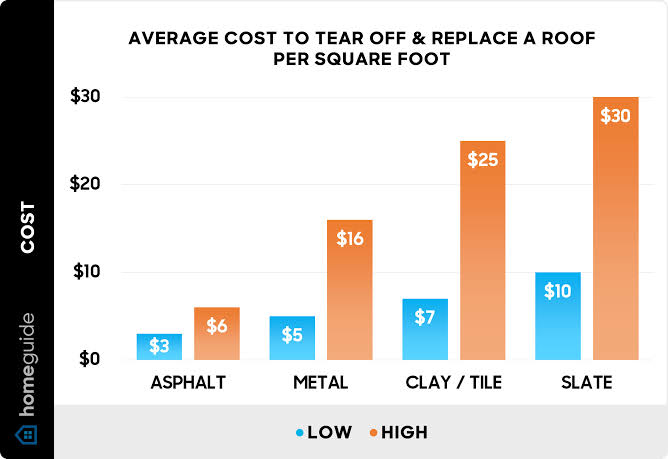
The type of material you choose is the primary driver of your final bill. Here is a detailed look at the most common roofing options available in the US market today.
1. Asphalt Shingles
Asphalt remains the most popular choice in the United States due to its affordability and ease of installation.
- 3-Tab Shingles: The most economical option. Expect to pay $3.50 – $5.50 per square foot installed. They typically last 15–20 years.
- Architectural (Dimensional) Shingles: These offer a thicker, more textured look and better durability. Costs range from $4.50 – $7.50 per square foot. They often come with 30-year warranties.
2. Metal Roofing
Metal roofs are gaining popularity for their longevity and energy efficiency. While the upfront cost is higher, the lifespan often exceeds 50 years.
- Steel Panels: $9.00 – $12.00 per square foot.
- Aluminum or Copper: $15.00 – $25.00+ per square foot. Copper is a luxury item that develops a distinct patina over time but requires minimal maintenance.
3. Clay and Concrete Tiles
Common in the Southwest and Florida, these tiles are heavy, durable, and fire-resistant.
- Cost: $10.00 – $18.00 per square foot.
- Note: Your home’s framing may need reinforcement to support the weight, which can add $1,000–$3,000 to the project.
4. Slate Roofing
Slate is the pinnacle of roofing elegance and durability, often lasting over 100 years.
- Cost: $20.00 – $40.00+ per square foot.
- Consideration: Installation requires specialized craftsmen, making labor costs significantly higher.
| Material | Avg. Cost Per Sq. Ft. | Lifespan | Best For |
|---|---|---|---|
| 3-Tab Asphalt | $3.50 – $5.50 | 15-20 Years | Budget-conscious homeowners |
| Architectural Asphalt | $4.50 – $7.50 | 25-30 Years | Balance of cost and aesthetics |
| Metal (Steel) | $9.00 – $12.00 | 40-50 Years | Long-term value & snow shedding |
| Clay/Concrete Tile | $10.00 – $18.00 | 50+ Years | Hot climates & Spanish styles |
| Slate | $20.00 – $40.00+ | 75-100+ Years | Historic homes & luxury estates |
Hidden Costs and Additional Factors
When calculating how much does it cost to get your roof replaced, many homeowners forget to account for the “hidden” expenses that appear once the old roof is removed.
Tear-Off and Disposal
You cannot install a new roof over multiple layers of old shingles in most jurisdictions. The old material must be removed and disposed of properly.
- Cost: $1.00 – $2.50 per square foot.
- This includes labor for removal and dumpster rental fees. If your roof has hazardous materials like asbestos (common in homes built before 1980), abatement costs can skyrocket to $5,000+.
Roof Decking Repair
Once the shingles are off, the wooden decking underneath is exposed. If rot or water damage is found, these boards must be replaced.
- Cost: $70 – $100 per sheet of plywood or OSB.
- Most contractors include a small allowance for minor repairs, but extensive rot will increase the bill. Always ask for a “per-sheet” price in your contract to avoid surprises.
Ventilation and Flashing
Proper ventilation is crucial for extending the life of your new roof. Upgrading ridge vents, soffit vents, and replacing rusted flashing around chimneys and skylights is essential.
- Cost: $500 – $1,500 for a comprehensive ventilation upgrade.
For more technical details on roofing standards and material specifications, you can refer to authoritative resources such as Wikipedia’s entry on Roofing.
How to Choose the Right Contractor
The lowest bid is rarely the best value. A poorly installed roof will leak regardless of how expensive the shingles are. Here is how to vet your roofer:
- Check Licensing and Insurance: Ensure they have general liability and workers’ compensation insurance. Ask for proof.
- Look for Manufacturer Certifications: Top brands like GAF, CertainTeed, and Owens Corning certify contractors who meet high installation standards. These certifications often extend the warranty period.
- Read Local Reviews: Check Google Maps and BBB ratings. Look for patterns in complaints regarding cleanup or communication.
- Get Three Quotes: Never settle for the first estimate. Compare the scope of work, not just the bottom line. Ensure each quote includes the same materials and warranty terms.
Frequently Asked Questions (FAQ)
1. Does homeowners insurance cover roof replacement?
Insurance typically covers roof replacement if the damage is caused by a sudden, accidental event like a hailstorm, windstorm, or falling tree. However, they generally do not cover wear and tear, age-related deterioration, or lack of maintenance. Always review your policy’s “Actual Cash Value” vs. “Replacement Cost Value” clauses.
2. How long does a roof replacement take?
For an average-sized home (2,000 sq. ft.), a professional crew can usually complete the job in 1 to 3 days. Larger homes, complex architectural features (like multiple turrets or steep pitches), or bad weather conditions can extend this timeline to a week.
3. Is it cheaper to repair or replace a roof?
If your roof is less than 10 years old and the damage is localized (e.g., a few missing shingles from a storm), repair is cost-effective. However, if your roof is nearing the end of its lifespan (15+ years for asphalt) or has widespread leaks, replacement is more economical in the long run. Constant repairs add up quickly and do not solve underlying structural issues.
4. What is the best time of year to replace a roof?
Late spring through early fall is the peak season, meaning prices may be higher due to demand. However, roofing can be done in winter as long as temperatures are above freezing (asphalt shingles need heat to seal properly). Scheduling in the off-season (late fall or winter) might yield better pricing and faster availability, provided the weather cooperates.
5. Can I stay in my house during the replacement?
Yes, most homeowners stay in their homes during the process. However, expect significant noise, vibration, and dust. It is advisable to remove fragile items from walls and attics. If you have sensitive pets or work from home, you might consider staying elsewhere for the 1–3 days of active construction.
Conclusion
Knowing how much does it cost to get your roof replaced is the first step toward protecting your home’s value. While the average homeowner spends between $8,500 and $14,500, your specific cost will depend on material choices, roof complexity, and local labor rates. Remember, a roof is not an expense to minimize, but an investment to optimize. Choosing quality materials and a certified installer ensures peace of mind for decades to come.
Don’t let uncertainty stall your project. Gather three quotes, check those credentials, and prioritize long-term durability over short-term savings. If you found this guide helpful, please share it with friends or neighbors who might be facing similar home improvement decisions. Together, we can build safer, stronger communities.
Leave a Reply