Dealing with a flock of pigeons roosting on your roof is more than just a nuisance; it is a genuine threat to your property’s structural integrity and your family’s health. The constant cooing, the mess, and the potential for disease can make you feel helpless in your own home. If you are wondering how do you get rid of pigeons on your roof, you are not alone, and there are effective, humane solutions available.
In this comprehensive guide, we will walk you through proven strategies to deter these persistent birds. We combine expert insights with practical, step-by-step instructions to ensure you can reclaim your roof safely and legally.
Why Are Pigeons Attracted to Your Roof?
Before we dive into removal tactics, it is crucial to understand why they are there. Pigeons, often called “rats with wings” by frustrated homeowners, are creatures of habit. They seek three main things: shelter, safety, and food.
Your roof offers an ideal vantage point. It provides protection from predators like hawks and cats, while also offering flat surfaces or nooks for nesting. According to urban wildlife studies, once a pair of pigeons establishes a nest, they will return to the same spot repeatedly, often bringing more birds with them.
Understanding this behavior is key. You cannot simply shoo them away once; you must make your roof an unattractive environment for the long term.
What Are the Most Effective Humane Deterrents?
When asking how do you get rid of pigeons on your roof, the first rule is to prioritize humane methods. In many parts of the US, harming migratory birds or their active nests can violate federal laws like the Migratory Bird Treaty Act. Therefore, exclusion and deterrents are your best friends.
1. Physical Barriers: Bird Spikes and Netting
Physical barriers are widely considered the gold standard in professional pest control. They do not harm the birds but simply make landing impossible.
- Bird Spikes: These are strips of plastic or stainless steel spikes that attach to ledges, rails, and roof peaks. Pigeons cannot land on them because there is no flat surface.
- Pros: Highly effective, low maintenance, invisible from the street if installed correctly.
- Cons: Requires professional installation for complex roofs; initial cost can be higher.
- Bird Netting: This involves covering large open areas (like under eaves or across courtyards) with durable mesh.
- Pros: Completely blocks access to specific zones.
- Cons: Can look unsightly if not tensioned properly; requires regular inspection for tears.
2. Visual and Auditory Scares
For smaller infestations, you might try scare tactics. However, pigeons are intelligent and quickly habituate to static objects.
- Reflective Tape and CDs: These create flashing lights and unpredictable movements that disorient birds.
- Decoy Predators: Plastic owls or hawks can work temporarily. Pro Tip: Move the decoy every few days, or the pigeons will realize it is fake.
- Ultrasonic Devices: These emit high-frequency sounds uncomfortable for birds but inaudible to humans. Effectiveness varies greatly depending on the environment and background noise.
| Method | Effectiveness | Cost | Maintenance Level |
|---|---|---|---|
| Bird Spikes | High | Medium-High | Low |
| Bird Netting | High | Medium | Medium |
| Visual Scares | Low-Medium | Low | High (must move often) |
| Ultrasonic | Variable | Medium | Low |
How Do You Clean Pigeon Droppings Safely?
One of the most dangerous aspects of a pigeon infestation is the waste. Pigeon droppings are acidic and can corrode roofing materials, but more importantly, they carry diseases such as histoplasmosis, cryptococcosis, and psittacosis.
Never dry-sweep pigeon droppings. This releases harmful spores into the air, which you can then inhale.
Follow this strict safety protocol for cleanup:
- Gear Up: Wear an N95 respirator mask, heavy-duty rubber gloves, and protective eyewear. Disposable coveralls are recommended.
- Wet the Area: Generously spray the droppings with a water and disinfectant mixture (a 10% bleach solution works well). Let it soak for 15–20 minutes to suppress dust and kill bacteria.
- Scrape Carefully: Use a plastic scraper to lift the waste. Avoid creating dust.
- Dispose Properly: Place all waste, including your gloves and mask, into double-sealed plastic bags. Check your local municipal guidelines for hazardous waste disposal.
- Sanitize: Wash the area thoroughly with hot water and detergent. For more detailed health guidelines, you can refer to resources from the Centers for Disease Control and Prevention (CDC) regarding environmental hygiene.
Can DIY Methods Really Work Long-Term?
Many homeowners ask if homemade remedies are effective. The short answer is: rarely for long-term solutions.
Common DIY myths include using mothballs, cayenne pepper, or vinegar. While strong smells may deter pigeons initially, rain washes these away quickly, and birds adapt to the scents. Furthermore, some DIY chemicals can damage your roof shingles or void your warranty.
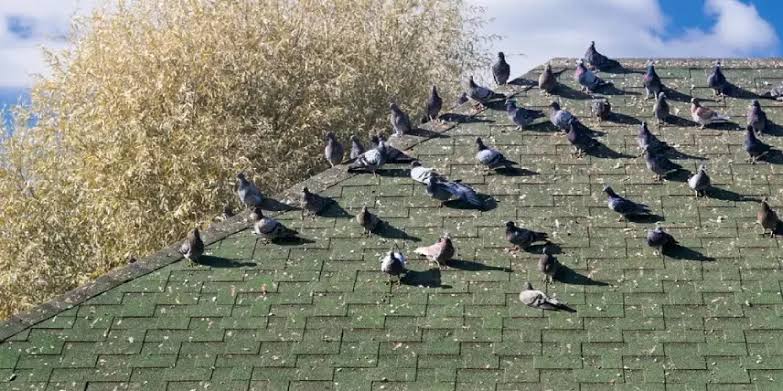
However, one DIY method has merit: Slope Modification. Pigeons prefer flat surfaces. If you have a flat section of roof where they gather, installing a simple wooden or metal slope (at least 45 degrees) can physically prevent them from standing comfortably. This is a cheap, effective, and permanent structural change.
When Should You Call a Professional?
While DIY methods are great for minor issues, there are times when you need expert help. Consider hiring a licensed wildlife control professional if:
- The infestation is large (more than 5–10 birds).
- There are active nests with eggs or chicks (legal restrictions apply).
- You are uncomfortable working at heights.
- Previous DIY attempts have failed.
Professionals have access to industrial-grade netting and gel repellents that are not available to consumers. They also carry insurance, protecting you from liability if an accident occurs during removal.
FAQ Section
1. Is it illegal to remove pigeons from my roof?
In the US, feral pigeons are generally not protected under the Migratory Bird Treaty Act. However, native wild pigeons (like band-tailed pigeons in the West) are protected. Always check your state and local wildlife regulations before taking action. Never destroy active nests of protected species.
2. Will bird spikes hurt the pigeons?
No. High-quality bird spikes are designed to be humane. They simply deny the birds a place to land or roost. They do not impale or injure the birds. Ensure you buy spikes with rounded tips for maximum safety and durability.
3. How long does it take to get rid of pigeons?
It varies. Visual deterrents may show results in a few days but often fail within weeks. Physical barriers like spikes or netting provide immediate and permanent results once installed. Consistency is key; if you stop your deterrent routine, they will return.
4. Can pigeons damage my roof structure?
Yes. Their droppings are highly acidic and can eat through metal flashing, wood, and even concrete over time. Additionally, their nests can block gutters, leading to water damage and roof leaks. The weight of large flocks can also stress weaker roof structures.
5. What is the best natural repellent for pigeons?
There is no single “best” natural repellent that works permanently. However, keeping your roof clean of food sources is the most effective natural deterrent. Ensure trash cans are sealed and avoid feeding birds anywhere near your property. Some homeowners find success with essential oils like peppermint or eucalyptus, but these require frequent reapplication.
Conclusion
Learning how do you get rid of pigeons on your roof is about combining immediate action with long-term prevention. While the sight of pigeons may seem harmless, the health risks and property damage they cause are significant. By starting with humane physical barriers like spikes or netting, maintaining strict hygiene during cleanup, and staying consistent with your deterrents, you can reclaim your home.
Remember, patience is vital. Pigeons are stubborn, but they are not invincible. Take action today to protect your investment and your peace of mind.
Did you find this guide helpful? Share it on Facebook or Twitter to help other homeowners tackle their pigeon problems!
Leave a Reply