Is your attic turning into a sauna during the summer, or are you struggling with stubborn moisture buildup in the winter? Poor ventilation doesn’t just make your home uncomfortable; it can lead to costly structural damage and skyrocketing energy bills. Finding a good roof fan to extract most air quietly while maintaining powerful performance is the ultimate solution for homeowners who value both efficiency and peace. In this guide, we will break down exactly what to look for, how to choose the right model, and why silence doesn’t mean sacrificing power.
Why Your Home Needs a High-Performance Roof Fan
Before diving into specific models, it is crucial to understand why extraction matters. Many US homeowners underestimate the role of attic ventilation. According to the U.S. Department of Energy, proper ventilation can significantly reduce cooling loads by removing superheated air that radiates down into living spaces.
A high-quality roof exhaust fan serves three primary purposes:
- Heat Reduction: It pulls out hot air that accumulates under the roof deck.
- Moisture Control: It prevents condensation that leads to mold and rot.
- Air Quality: It removes stale air, pollutants, and odors from the home ecosystem.
However, the common complaint with traditional fans is noise. A fan that sounds like a jet engine is rarely used consistently. This is where the balance of “quiet” and “powerful” becomes critical.
What Makes a Roof Fan “Good” for Maximum Air Extraction?
When searching for a good roof fan to extract most air quietly, you need to look beyond the price tag. The engineering behind the motor and the blade design dictates performance.
Key Metrics to Watch
- CFM (Cubic Feet per Minute): This measures volume. For an average 2,000 sq. ft. home, you generally need a fan capable of moving at least 1,000–1,500 CFM depending on the climate zone.
- Sones (Noise Level): This is the standard unit for measuring sound. A quiet fan should operate below 1.5 sones. For context, a whisper is about 0.5 sones, while a normal conversation is around 4 sones.
- Static Pressure: This determines how well the fan can push air through resistance (like ducts or screens). High static pressure capability ensures consistent airflow even in complex roofing structures.
Pro Tip: Always check the AMCA (Air Movement and Control Association) certified ratings. These provide unbiased data on performance, ensuring the manufacturer’s claims are backed by testing.
Quiet vs. Powerful: Can You Have Both?
Historically, there was a trade-off: high power meant high noise. However, advancements in motor technology have changed the game. Modern fans use DC (Direct Current) motors or advanced AC induction motors with variable speed controls.
Comparison: Traditional AC Fans vs. Modern DC Fans
| Feature | Traditional AC Fan | Modern DC Fan |
|---|---|---|
| Noise Level | Moderate to High (2.5+ Sones) | Very Low (<1.0 Sone) |
| Energy Efficiency | Standard | High (Up to 70% less energy) |
| Speed Control | Limited (On/Off or 3-speed) | Precise (Variable Speed) |
| Lifespan | 10–15 Years | 15–20+ Years |
| Initial Cost | Lower | Higher |
For those seeking a good roof fan to extract most air quietly, investing in a DC motor model is often the best long-term strategy. The initial cost is higher, but the energy savings and noise reduction provide immediate comfort.
Top Features to Look for in a Silent Exhaust Fan
To ensure you get the best performance, prioritize these features during your selection process:
1. Aerodynamic Blade Design
Look for fans with curved or angled blades rather than flat paddles. Curved blades cut through the air more smoothly, reducing turbulence—the primary cause of fan noise.
2. Insulated Housing
Some premium roof fans come with insulated housings or vibration-dampening mounts. These features absorb the mechanical hum of the motor, preventing it from resonating through the roof structure.
3. Weather-Resistant Construction
Since the fan is exposed to the elements, it must be built to last. Look for materials like powder-coated aluminum or high-grade UV-resistant plastics. Rust can unbalance the fan over time, leading to increased noise and decreased efficiency.
4. Smart Thermostat Integration
A powerful fan is useless if it runs when not needed. Models with built-in thermostats or humidity sensors automatically adjust speed based on real-time conditions. This ensures maximum extraction only when necessary, keeping noise levels low during mild weather.
Installation Tips for Optimal Performance
Even the best fan will underperform if installed incorrectly. Proper installation is key to achieving the “quiet powerful exhaust” goal.
Step-by-Step Installation Overview
- Choose the Right Location: Place the fan near the peak of the roof but away from obstructions like chimneys or trees. Ensure it is centered over the attic space for balanced airflow.
- Cut the Opening Carefully: Measure twice, cut once. Use a reciprocating saw to cut the hole in the roof deck. Ensure the opening matches the fan’s flange size exactly to prevent leaks.
- Seal Thoroughly: Apply a high-quality roofing cement or butyl tape around the flange before securing the fan. This prevents water intrusion, which can cause electrical shorts and corrosion.
- Secure Electrical Connections: Follow local electrical codes. If you are not comfortable working with wiring, hire a licensed electrician. Improper wiring can lead to motor failure or fire hazards.
- Test for Vibration: Once installed, turn the fan on. If you hear excessive rattling, check the mounting screws. Tighten them evenly to ensure the fan sits flush against the roof.
For more detailed information on building science and ventilation standards, you can refer to resources provided by Wikipedia regarding architectural ventilation principles.
Common Mistakes to Avoid
- Undersizing the Fan: Buying a fan with too low CFM for your attic size will result in inadequate ventilation. Always calculate your attic’s square footage first.
- Ignoring Intake Vents: Exhaust fans need intake vents (soffits or gables) to work effectively. Without proper intake, the fan creates negative pressure, which can pull conditioned air from your living space, increasing energy costs.
- Neglecting Maintenance: Dust and debris can accumulate on blades, causing imbalance and noise. Clean your fan blades annually to maintain optimal performance.
FAQ Section
Q1: How many sones is considered “quiet” for a roof fan?
A fan rated at 1.0 sone or lower is considered very quiet. Anything above 2.5 sones will be noticeable inside the home, especially in quiet rooms like bedrooms or libraries.
Q2: Can I install a roof fan myself?
While DIY installation is possible for those with roofing and electrical experience, it is often recommended to hire a professional. Improper sealing can lead to roof leaks, which are far more expensive to fix than the cost of professional installation.
Q3: Do solar-powered roof fans offer enough power?
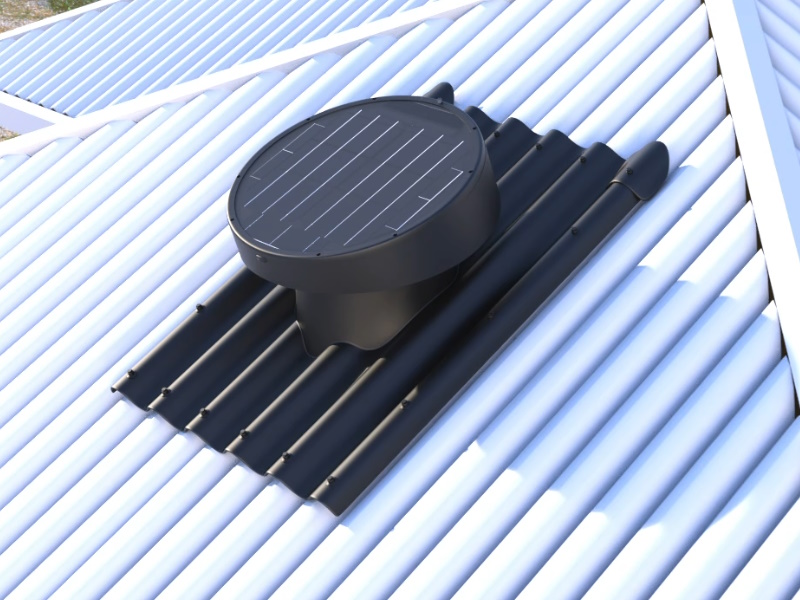
Solar fans have improved significantly, but they depend on sunlight. On cloudy days or at night, their performance drops. For consistent, powerful extraction regardless of weather, a hardwired electric fan with a thermostat is usually a better choice for maximizing air removal.
Q4: How often should I replace my roof exhaust fan?
Most high-quality roof fans last between 10 to 15 years. However, if you notice a significant increase in noise, a drop in airflow, or frequent motor failures, it may be time to replace it sooner.
Q5: Will a powerful roof fan cool my house?
A roof fan does not directly cool the air like an AC unit. Instead, it removes superheated air from the attic, reducing the heat load on your ceiling. This allows your air conditioner to work more efficiently, potentially lowering indoor temperatures by several degrees.
Conclusion
Finding a good roof fan to extract most air quietly is about balancing technical specifications with smart design choices. By prioritizing low sone ratings, high CFM output, and durable construction, you can transform your attic from a heat trap into a well-ventilated space. Remember, the right fan not only protects your home’s structure but also enhances your daily comfort.
Don’t let noise and inefficiency dictate your home’s climate control. Evaluate your current setup, consider upgrading to a modern DC motor model, and enjoy the benefits of a cooler, quieter home.
Did you find this guide helpful? Share it with your friends on social media who might be struggling with attic heat or moisture issues. Let’s help everyone breathe easier!
Leave a Reply