Are you standing in your driveway, looking up at your aging shingles, and wondering if it’s time for a change? You are not alone. Thousands of homeowners across the United States are considering switching to metal, but the decision isn’t always black and white. Understanding what are the pros and cons of a metal roof is crucial before you sign a contract, as this investment impacts your home’s value, comfort, and long-term maintenance for decades.
In this guide, we will cut through the marketing hype and provide a balanced, expert-backed look at metal roofing. Whether you live in the snowy peaks of Colorado or the humid heat of Florida, this analysis will help you determine if metal is the right shield for your castle.
Why Is Everyone Talking About Metal Roofing?
Metal roofing has evolved significantly from the corrugated tin sheds of the past. Today, it represents some of the most advanced building technology available, offering styles that mimic slate, tile, and wood shakes. According to the Metal Roofing Alliance, the market share for residential metal roofing has grown steadily, driven by homeowners seeking longevity and sustainability.
However, popularity doesn’t always equal perfection. To make an informed choice, we need to dissect the advantages and disadvantages with precision.
The Major Pros of Installing a Metal Roof
When weighing what are the pros and cons of a metal roof, the benefits often center on longevity and resilience. Here is why many experts recommend making the switch.
1. Unmatched Longevity and Durability
The most compelling argument for metal is its lifespan. While traditional asphalt shingles typically last 15–20 years, a properly installed metal roof can last 40 to 70 years. Some copper and zinc roofs can even last over 100 years.
- Weather Resistance: Metal roofs are rated for wind speeds up to 140 mph, making them ideal for hurricane-prone areas like the Gulf Coast.
- Fire Safety: They carry a Class A fire rating, the highest possible, which can sometimes lead to lower homeowners insurance premiums.
- Impact Resistance: High-quality steel or aluminum panels resist hail damage better than brittle asphalt shingles.
2. Energy Efficiency and Sustainability
Metal roofs reflect solar radiant heat rather than absorbing it. This can reduce cooling costs by 10–25%, according to studies cited by the Department of Energy. Furthermore, most metal roofing contains 25–95% recycled content and is 100% recyclable at the end of its life, unlike asphalt shingles which contribute significantly to landfill waste.
3. Low Maintenance Requirements
Once installed, metal roofs require minimal upkeep. There is no need for periodic sealing or treating. Occasional inspections for loose fasteners and cleaning gutters are usually sufficient. Unlike wood shakes, they do not rot, crack, or attract termites.
The Significant Cons of Metal Roofing
Despite the advantages, there are valid reasons why some homeowners hesitate. Let’s look at the downsides objectively.
1. Higher Upfront Cost
The initial investment is the biggest barrier. Metal roofing costs between $8 and $16 per square foot installed, compared to $3–$5 for asphalt shingles. For a typical 2,000-square-foot home, this means paying $16,000–$32,000 upfront versus $6,000–$10,000 for shingles.
- Note: While expensive initially, the “cost per year” of ownership is often lower due to the extended lifespan.
2. Noise Concerns (The Myth vs. Reality)
A common fear is that rain or hail will sound like a drum solo inside your house. This is largely a myth for modern installations. When metal roofing is installed over solid sheathing and proper insulation, it is no louder than other roofing materials. However, if installed over open purlins (common in barns or patios), noise can be an issue. Always ensure your contractor uses solid decking for residential homes.
3. Expansion and Contraction Issues
Metal expands and contracts with temperature changes. If the installer does not use the correct fasteners or allows insufficient room for movement, the screws can back out over time, leading to leaks. This highlights the importance of hiring a specialized contractor rather than a general roofer.
4. Denting Potential
While durable, thinner gauges of metal (like 29-gauge) can dent from large hail or falling branches. Opting for a thicker gauge (24 or 26-gauge) or stone-coated steel can mitigate this risk, but it adds to the cost.
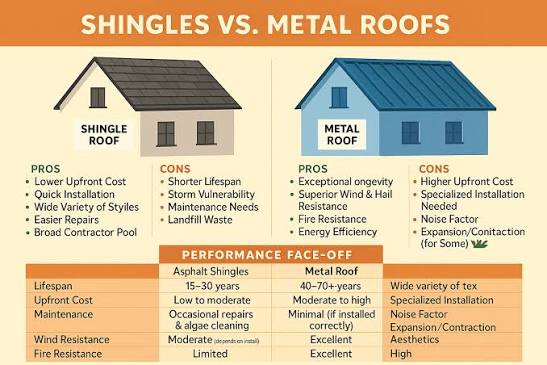
Quick Comparison: Metal vs. Asphalt Shingles
To visualize what are the pros and cons of a metal roof against the standard alternative, refer to the table below:
| Feature | Metal Roofing | Asphalt Shingles |
|---|---|---|
| Lifespan | 40–70+ Years | 15–20 Years |
| Upfront Cost | High ($8–$16/sq ft) | Low ($3–$5/sq ft) |
| Maintenance | Very Low | Moderate |
| Energy Efficiency | High (Reflective) | Low (Absorbs Heat) |
| Recyclability | 100% Recyclable | Mostly Landfill Waste |
| Installation Difficulty | Complex (Needs Pros) | DIY Friendly |
For more detailed technical specifications on material properties, you can review resources on Wikipedia.
Key Factors to Consider Before Buying
If you are leaning toward metal, keep these three critical factors in mind to avoid buyer’s remorse.
1. Choose the Right Material
Not all metal is created equal.
- Steel: The most common, affordable, and strong. Usually coated with Galvalume or Galfan to prevent rust.
- Aluminum: Lightweight and naturally rust-resistant, making it perfect for coastal homes near saltwater.
- Copper/Zinc: Premium options with beautiful patinas but extremely high costs.
2. Find a Certified Installer
Because metal requires precise detailing around chimneys, vents, and valleys, installation errors are the leading cause of leaks. Look for installers certified by manufacturers like standing-seam specialists. Ask for references and photos of previous jobs.
3. Check Local HOA Rules
Some Homeowners Associations restrict metal roofing due to aesthetic preferences. Ensure your chosen style (e.g., stone-coated steel that looks like tile) complies with local covenants before purchasing.
Frequently Asked Questions (FAQ)
1. Does a metal roof interfere with Wi-Fi or cell signals?
Generally, no. While metal blocks radio waves, your router and devices are inside the house, and the signal comes from outside towers. The roof acts as a shield, but signals enter through windows and walls. Most users report no noticeable difference in connectivity.
2. Can I walk on a metal roof?
Yes, but with caution. You should wear soft-soled shoes and walk on the flat parts of the panel, avoiding the ribs where fasteners are located. Walking on the ribs can damage the sealant. It is always safer to hire a professional for inspections.
3. Will a metal roof increase my home’s resale value?
Yes. According to Remodeling Magazine’s Cost vs. Value Report, metal roofing has a high return on investment (ROI), often recouping 60–85% of its cost upon sale. Buyers appreciate the “new roof” guarantee that lasts for decades.
4. How long does installation take?
For an average-sized home, a professional crew can complete a metal roof installation in 2 to 5 days. This is comparable to or slightly faster than asphalt shingle installation, depending on the complexity of the roofline.
5. Is metal roofing good for solar panels?
Absolutely. Metal roofs are excellent for solar integration. Clamps can attach solar racking directly to the seams without drilling holes into the roof, preserving the warranty and waterproof integrity.
Conclusion
Deciding what are the pros and cons of a metal roof ultimately comes down to your budget, location, and long-term plans. If you plan to stay in your home for 20+ years, the durability, energy savings, and low maintenance of metal make it a superior financial choice despite the higher upfront cost. However, if you are on a tight budget or plan to move soon, asphalt may still be the pragmatic option.
Metal roofing is not just a trend; it is a shift toward sustainable, resilient home building. By understanding both the strengths and limitations, you can choose a roof that protects your family and enhances your property value.
Found this guide helpful? Share it with friends who are renovating their homes on Facebook or Pinterest, and leave a comment below about your roofing experiences!
Leave a Reply