Have you ever taken a bite of your favorite hot pizza or crunchy chips, only to wince in sudden pain? It is a frustrating and surprisingly common experience that can turn a enjoyable meal into an uncomfortable ordeal. If you are asking yourself, “Why does the roof of my mouth hurt when eating,” you are not alone, and understanding the root cause is the first step toward finding relief.
The roof of your mouth, medically known as the palate, is sensitive tissue that plays a crucial role in chewing and swallowing. When it becomes irritated, inflamed, or injured, even soft foods can cause discomfort. In this guide, we will explore the most likely reasons for this pain, ranging from minor thermal injuries to underlying health conditions, and provide actionable advice on how to heal and prevent future issues.
1. Thermal Injury: The “Pizza Palace” Burn
The most frequent culprit behind a sore palate is a thermal injury, commonly known as a burn. This happens when you consume food or beverages that are too hot for the delicate mucous membranes lining your mouth.
How It Happens
The skin on the roof of your mouth is thinner than the skin on your hands or arms. When you eat something excessively hot—like fresh-out-of-the-oven lasagna or scalding coffee—the heat damages the top layer of cells. This triggers an inflammatory response, leading to redness, swelling, and pain.
Symptoms to Watch For
- Immediate stinging or burning sensation.
- Redness or blistering on the hard or soft palate.
- Peeling skin a day or two after the incident.
- Temporary loss of taste sensitivity in the affected area.
According to general medical consensus, these minor burns usually heal on their own within 3 to 7 days. However, during this period, eating can remain painful. To speed up recovery, avoid hot, spicy, or acidic foods that can further irritate the damaged tissue.
2. Mechanical Trauma from Hard or Sharp Foods
If you haven’t eaten anything hot, the pain might be physical rather than thermal. The roof of your mouth is susceptible to scratches and abrasions from certain textures.
Common Offenders
- Crunchy Snacks: Tortilla chips, hard pretzels, or toast crusts can scrape the palate.
- Sharp Foods: Fish bones, sharp edges of crackers, or hard candy.
- Aggressive Eating: Eating too quickly can lead to accidental pokes from utensils or food particles.
This type of injury creates a small open wound or ulcer. While not serious, it can be quite painful because every time your tongue touches the spot or you swallow, the area is stimulated. Keeping the area clean is vital to prevent secondary bacterial infection.
3. Oral Thrush (Candidiasis)
Sometimes, the pain isn’t from an external injury but an internal imbalance. Oral thrush is a fungal infection caused by an overgrowth of Candida alb yeast.
Who Is at Risk?
While anyone can get thrush, it is more common in:
- Infants and the elderly.
- People with weakened immune systems.
- Individuals taking antibiotics or steroids.
- Those with uncontrolled diabetes.
Identifying Thrush
Unlike a burn or scratch, thrush presents with distinct visual signs:
- Creamy white lesions on the roof of the mouth, inner cheeks, or tongue.
- Bleeding if the lesions are scraped.
- A cotton-like feeling in the mouth.
- Loss of taste or an unpleasant metallic taste.
If you suspect thrush, over-the-counter remedies may not be sufficient. You should consult a healthcare provider for antifungal medication. For more detailed information on fungal infections in the mouth, you can refer to Wikipedia’s page on Oral Candidiasis.
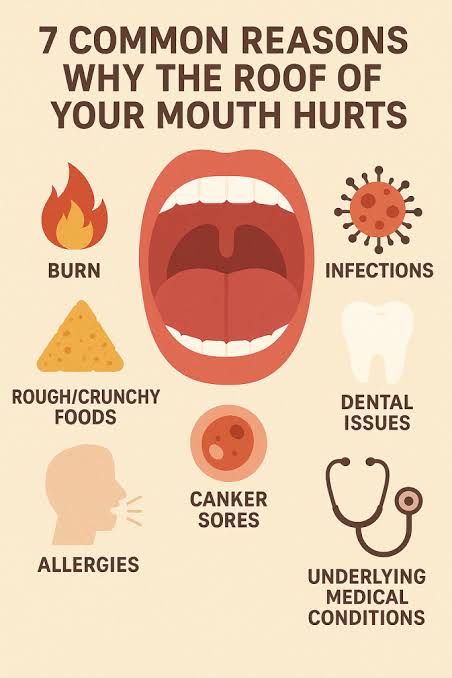
4. Allergic Reactions and Food Sensitivities
An unexpected cause of palate pain could be an allergic reaction or sensitivity to specific ingredients. This is often referred to as Oral Allergy Syndrome (OAS) or contact stomatitis.
Common Triggers
- Acidic Foods: Citrus fruits, tomatoes, and vinegar can cause a stinging sensation if the tissue is already sensitive or if you have a mild intolerance.
- Spicy Foods: Capsaicin in chili peppers can irritate the nerve endings in the palate.
- Allergens: Nuts, shellfish, or certain fruits may cause swelling and itching in the mouth shortly after consumption.
Differentiating Allergy from Irritation
| Feature | Irritation/Sensitivity | Allergic Reaction |
|---|---|---|
| Onset | Immediate upon contact | Minutes to hours after eating |
| Symptoms | Stinging, burning | Swelling, itching, hives, difficulty breathing |
| Duration | Lasts while eating or shortly after | Can persist and worsen without treatment |
If you experience swelling of the lips, tongue, or throat, seek emergency medical attention immediately, as this could indicate anaphylaxis.
5. Canker Sores (Aphthous Ulcers)
Canker sores are small, shallow lesions that develop on the soft tissues in your mouth or at the base of your gums. Unlike cold sores, they are not contagious and do not appear on the surface of your lips.
Why Do They Form?
The exact cause is unclear, but triggers often include:
- Minor mouth injury from dental work or brushing.
- Stress or hormonal shifts.
- Vitamin deficiencies (B-12, zinc, folate, iron).
- Acidic or spicy foods.
When a canker sore forms on the roof of your mouth, it appears as a white or yellow center with a red border. Eating, especially salty or acidic foods, will cause significant pain. These sores typically heal within one to two weeks without scarring.
How to Relieve Pain and Speed Up Healing
Now that we have identified potential causes, here is a step-by-step approach to managing the discomfort.
Step 1: Cool Down the Area
If the pain is due to a burn or acute irritation, apply cold to reduce inflammation.
- Sip ice-cold water.
- Suck on ice chips or popsicles.
- Avoid hot beverages for at least 24–48 hours.
Step 2: Maintain Oral Hygiene
Keep the mouth clean to prevent infection, but be gentle.
- Use a soft-bristled toothbrush.
- Rinse with a saltwater solution (mix 1/2 teaspoon of salt in 1 cup of warm water) three times a day. This helps soothe the tissue and kill bacteria.
Step 3: Adjust Your Diet
Give your palate a break by choosing soft, bland foods.
- Eat: Yogurt, mashed potatoes, smoothies, oatmeal, and scrambled eggs.
- Avoid: Chips, nuts, spicy curries, citrus juices, and carbonated drinks.
Step 4: Over-the-Counter Remedies
For persistent pain, consider using oral gels containing benzocaine or lidocaine. These numbing agents provide temporary relief, allowing you to eat more comfortably. Always follow the package instructions.
FAQ: Common Questions About Palate Pain
1. How long does it take for a burnt roof of the mouth to heal?
Most minor thermal burns on the palate heal within 3 to 7 days. The mouth has a rich blood supply, which promotes faster healing compared to other parts of the body. If pain persists beyond two weeks, consult a dentist.
2. Can dehydration cause pain in the roof of my mouth?
Yes, chronic dehydration can lead to dry mouth (xerostomia), making the tissues more susceptible to irritation and friction from food. Saliva acts as a lubricant and protective barrier; without it, the palate becomes more sensitive to heat and texture.
3. Is a sore roof of the mouth a sign of cancer?
While oral cancer can present as a non-healing sore, it is rare for palate pain alone to be the primary symptom without other signs like lumps, persistent bleeding, or numbness. However, any sore that does not heal within two weeks should be evaluated by a healthcare professional to rule out serious conditions.
4. What vitamins help heal mouth sores?
Deficiencies in Vitamin B12, Iron, Folate, and Zinc are linked to recurrent canker sores. Ensuring a balanced diet or taking supplements under medical guidance can help prevent future outbreaks.
5. Can stress cause the roof of my mouth to hurt?
Indirectly, yes. Stress weakens the immune system, making you more prone to infections like cold sores or thrush. It can also lead to behaviors like teeth grinding or cheek biting, which may cause trauma to the oral tissues.
Conclusion
Experiencing pain in the roof of your mouth can be distracting and uncomfortable, but in most cases, it is temporary and manageable. Whether it is a simple burn from hot coffee, a scratch from a chip, or a minor canker sore, understanding why does the roof of my mouth hurt when eating allows you to take the right steps for relief.
Remember to listen to your body. If the pain is severe, accompanied by fever, or lasts longer than two weeks, do not hesitate to seek professional medical advice. For now, stick to cool, soft foods, maintain good oral hygiene, and give your mouth the time it needs to heal.
Found this guide helpful? Share it with friends who love their pizza piping hot, or save it for the next time your mouth decides to protest your dinner choices!
Leave a Reply