Leaking ceilings and pooling water are more than just annoyances; they are urgent signals that your building’s protection is failing. If you are staring at water stains or noticing your energy bills creeping up, you are likely asking the critical question: how much does it cost to redo a flat roof?
Understanding the financial scope of this project is essential for effective planning. In this guide, we will break down the costs, materials, and labor factors specific to the US market in 2026, helping you make an informed decision without the stress of hidden fees.
Understanding the Average Cost Range
When homeowners and business owners ask about flat roof replacement costs, they are often looking for a single number. However, the reality is a range influenced by size, location, and material choice.
As of late 2026, the national average cost to replace a flat roof in the United States typically falls between $5,000 and $15,000 for standard residential sizes (approx. 1,000–1,500 sq. ft.). For larger commercial properties, costs can easily exceed $30,000.
On a per-square-foot basis, you can expect to pay anywhere from $4.00 to $12.00 per square foot. This wide variance exists because “flat roof” is a category that includes several distinct material types, each with different lifespans and installation complexities.
Key Cost Drivers
- Roof Size: Measured in “squares” (100 sq. ft.). Larger roofs benefit from economies of scale but require more labor hours.
- Accessibility: Is your roof on a single-story home or a five-story office building? Higher roofs require cranes or specialized safety equipment, increasing labor costs by 15–20%.
- Existing Layers: If your current roof has multiple layers of old material, removal and disposal fees will add significantly to the bill.
Material Choices: Which Option Fits Your Budget?
The material you choose is the single biggest factor in determining the final price. Here is a breakdown of the most common flat roofing materials used in the US today.
1. EPDM (Ethylene Propylene Diene Monomer)
Often called “rubber roofing,” EPDM is a popular choice for its durability and ease of installation.
- Cost: $4.00 – $8.00 per sq. ft.
- Lifespan: 20–30 years.
- Pros: Excellent resistance to UV rays and hail; flexible in cold temperatures.
- Cons: Can be prone to punctures; seams must be glued or taped carefully.
2. TPO (Thermoplastic Polyolefin)
TPO has gained massive popularity in recent years due to its energy efficiency and white reflective surface.
- Cost: $5.50 – $9.50 per sq. ft.
- Lifespan: 20–25 years.
- Pros: Highly reflective (lowers cooling costs); resistant to mold and algae; strong seam welding.
- Cons: Quality varies by manufacturer; thinner membranes may tear during installation if not handled properly.
3. PVC (Polyvinyl Chloride)
PVC is known for its chemical resistance and strength, making it ideal for restaurants or industrial buildings where grease or chemicals might be present.
- Cost: $7.00 – $12.00 per sq. ft.
- Lifespan: 20–30 years.
- Pros: Fire-resistant; highly durable against chemical exposure; strong welded seams.
- Cons: More expensive; can become brittle over time if plasticizers migrate out.
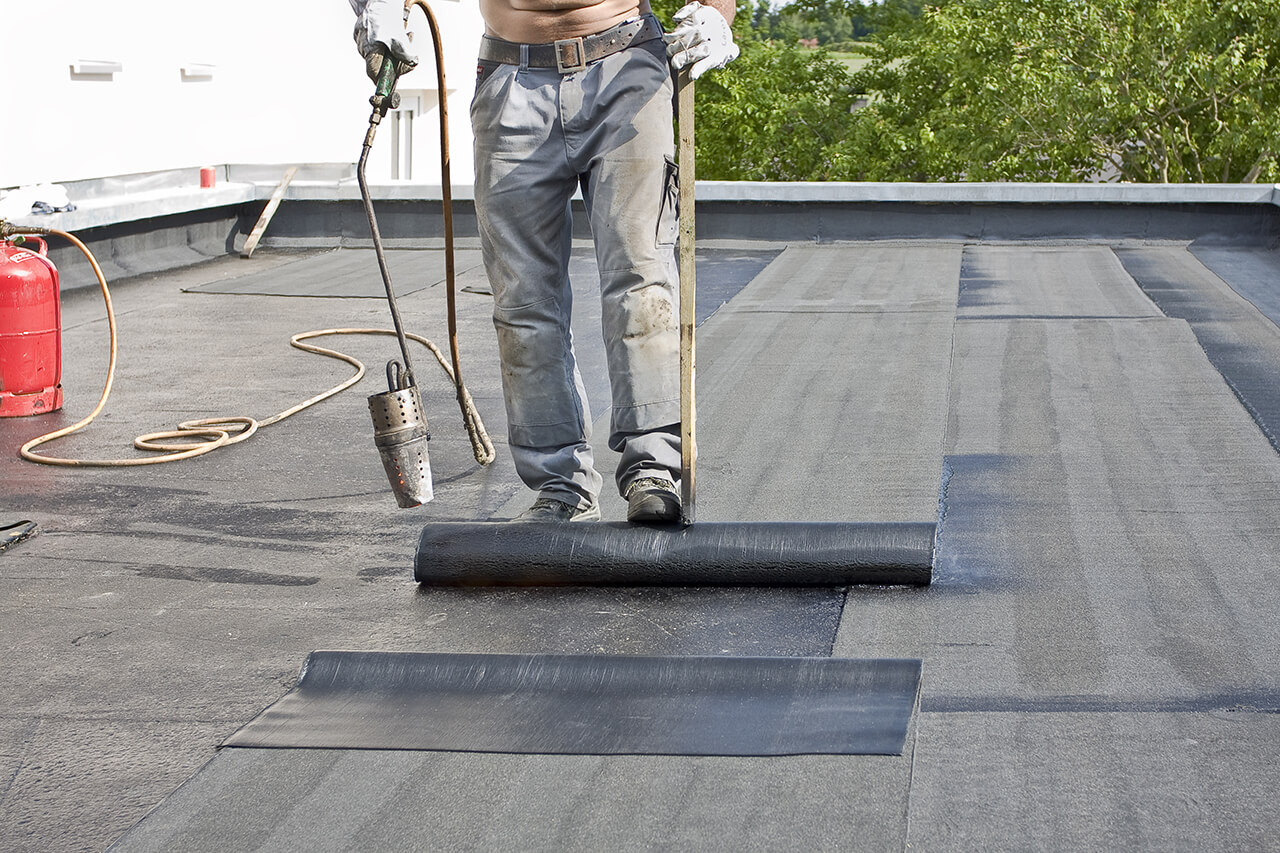
4. Modified Bitumen
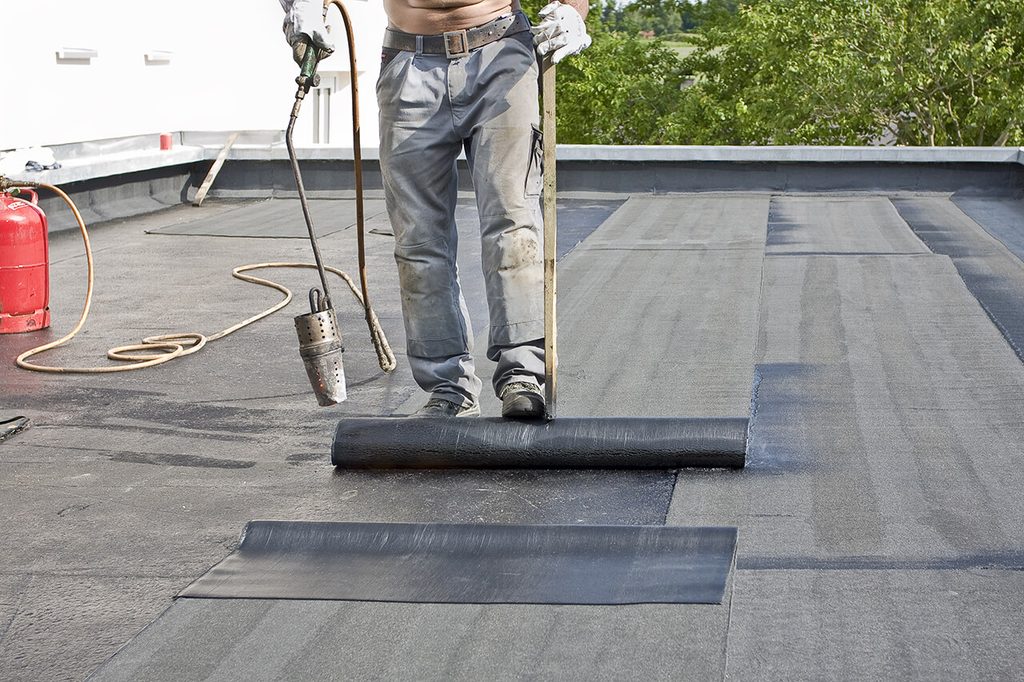
This is an asphalt-based product reinforced with fiberglass or polyester mats. It is often installed using torches or hot mops.
- Cost: $5.00 – $9.00 per sq. ft.
- Lifespan: 15–20 years.
- Pros: Familiar technology for many roofers; good puncture resistance.
- Cons: Heavy; installation involves open flames (fire risk); absorbs heat unless coated with reflective paint.
| Material | Avg. Cost per Sq. Ft. | Lifespan | Best For |
|---|---|---|---|
| EPDM | $4.00 – $8.00 | 20-30 Years | Residential & Small Commercial |
| TPO | $5.50 – $9.50 | 20-25 Years | Energy Efficiency Focus |
| PVC | $7.00 – $12.00 | 20-30 Years | Chemical/Grease Exposure |
| Mod. Bitumen | $5.00 – $9.00 | 15-20 Years | High Traffic Areas |
Labor and Additional Expenses
While materials account for roughly 40–50% of the total cost, labor and ancillary expenses make up the rest. It is crucial to account for these “hidden” costs to avoid budget overruns.
Removal and Disposal
If your existing roof is damaged beyond repair, it must be removed. Most local regulations prohibit installing new roofing over more than two existing layers.
- Cost: $1.00 – $3.00 per sq. ft.
- Note: Disposal fees vary by county. Always ask if the quote includes dumpster rental and landfill fees.
Insulation Upgrades
Modern building codes in many US states now require higher R-values for roof insulation. If your current insulation is wet or compressed, it must be replaced.
- Cost: $1.50 – $3.50 per sq. ft. depending on thickness and type (polyiso is common).
Flashing and Penetrations
Flat roofs are not perfectly flat; they have a slight pitch for drainage. They also feature vents, skylights, and HVAC units. Each penetration requires custom flashing.
- Cost: $150 – $300 per penetration.
- Tip: Poor flashing is the #1 cause of leaks. Do not skimp on high-quality metal or membrane flashing here.
The Installation Process: What to Expect
Understanding the workflow helps you verify that your contractor is doing the job correctly. A professional flat roof replacement generally follows these steps:
- Inspection and Measurement: The contractor measures the roof area accurately and inspects the deck (the wood or concrete base) for rot or damage.
- Removal of Old Material: Existing shingles or membranes are stripped away. The deck is swept clean.
- Deck Repair: Any rotten wood or cracked concrete is repaired. This is critical for the longevity of the new roof.
- Insulation Installation: New rigid foam boards are laid out and secured. Seams are taped to prevent thermal bridging.
- Membrane Installation:
- For EPDM, the rubber sheet is rolled out, cut to size, and adhered using contact cement or tape.
- For TPO/PVC, sheets are heat-welded together using a hot air gun to create a monolithic, watertight seal.
- Flashing and Detail Work: Metal or membrane flashing is installed around edges, walls, and penetrations.
- Final Inspection: The contractor checks all seams and drains to ensure proper water flow.
For more detailed technical standards on roofing materials, you can refer to general construction guidelines on Wikipedia.
Frequently Asked Questions (FAQ)
1. Can I install a new flat roof over the old one?
In many cases, yes. This is called a “roof-over.” It saves on disposal costs and protects the building from weather during installation. However, you can only do this if the existing roof has only one layer and the deck is structurally sound. Always check local building codes, as some jurisdictions limit the number of layers.
2. How long does it take to replace a flat roof?
For an average residential flat roof (1,000–1,500 sq. ft.), the process usually takes 2 to 4 days. Larger commercial projects can take 1–2 weeks. Weather delays are common, so build some buffer time into your schedule.
3. Is a flat roof more expensive than a sloped roof?
Generally, flat roofs are less expensive initially than complex sloped roofs (like slate or tile) because they require less material and simpler framing. However, maintenance costs can be higher if not inspected regularly, as flat roofs are more prone to pooling water.
4. What is the best flat roof material for heavy rain areas?
TPO and PVC are excellent choices for rainy climates because their seams are heat-welded, creating a continuous waterproof barrier. EPDM is also good but relies on adhesive tapes or glue, which can degrade faster in constant moisture if not maintained.
5. Does homeowners insurance cover flat roof replacement?
Insurance typically covers roof replacement only if the damage is caused by a sudden, covered peril like a storm, hail, or falling tree. It usually does not cover wear and tear, age-related deterioration, or lack of maintenance. Check your policy specifics.
Conclusion
Knowing how much does it cost to redo a flat roof empowers you to negotiate better with contractors and choose materials that align with your long-term goals. While the upfront cost ranges from $4 to $12 per square foot, investing in quality materials like TPO or PVC can save you money on energy bills and repairs for decades.
Don’t let the complexity of roofing projects overwhelm you. Start by getting three detailed quotes from licensed, insured professionals in your area. Compare not just the price, but the warranty terms and material specifications.
Found this guide helpful? Share it with your neighbors or on social media to help others navigate their roofing projects with confidence!
Leave a Reply