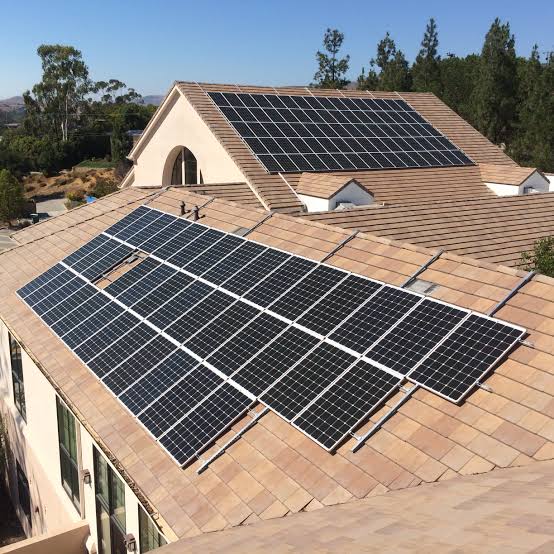
Have you ever looked at your roof and wondered if you’re missing out on half a day’s worth of sunlight? Many homeowners in the United States face this dilemma, especially those with east-west facing rooflines. The question “Can you put solar panels on both sides of roof“ is more common than you might think, and the answer isn’t just a simple yes or no—it depends on your energy goals, budget, and local climate.
In this guide, we will break down the technical feasibility, financial implications, and efficiency gains of installing solar arrays on multiple roof facets. Whether you are trying to maximize self-consumption or simply want to utilize every inch of your available space, understanding the dynamics of multi-directional solar installation is crucial for making an informed decision.
Is It Technically Feasible to Install Panels on Both Sides?
The short answer is yes. From a structural and electrical engineering standpoint, there is no physical barrier preventing you from installing solar panels on both the east and west faces (or north and south, though less common in the Northern Hemisphere) of your roof.
Modern racking systems are designed to be versatile. Installers can secure modules to any roof pitch that meets the minimum angle requirements for water shedding and structural integrity. However, “can you” doesn’t always mean “should you.” The feasibility largely depends on two factors:
- Roof Structure: Your roof must be able to support the additional weight of the panels, racking, and potential snow load on both sides.
- Inverter Capacity: Your inverter(s) must be sized correctly to handle the combined input from both arrays without clipping excess energy during peak production hours.
According to general principles of photovoltaic physics, solar panels generate electricity whenever photons hit the semiconductor material, regardless of the angle. Therefore, placing them on both sides captures morning sun on the east and afternoon sun on the west.
East vs. West: Which Side Produces More Energy?
In the United States, which lies in the Northern Hemisphere, the sun travels across the southern part of the sky. This makes south-facing roofs the gold standard for maximum total energy production. However, most residential roofs are not perfectly oriented south. They often have east and west facets.
Here is a breakdown of how orientation affects output:
- East-Facing Panels: These capture the morning sun. Production peaks before noon and drops off significantly in the afternoon. This is ideal for households that use more energy in the morning (e.g., running dishwashers, charging EVs overnight, or early work-from-home setups).
- West-Facing Panels: These capture the afternoon and evening sun. Production ramps up later in the day and peaks in the late afternoon. This aligns well with the “duck curve,” where energy demand spikes when people return home from work and turn on appliances.
- South-Facing Panels: These provide the highest total daily yield but have a sharp peak at midday.
Comparative Data: Orientation Impact
| Orientation | Peak Production Time | Total Daily Yield (% of South) | Best For |
|---|---|---|---|
| South | 12:00 PM – 1:00 PM | 100% (Baseline) | Maximum total kWh generation |
| West | 3:00 PM – 4:00 PM | ~85-90% | High evening usage, net metering credits |
| East | 9:00 AM – 10:00 AM | ~85-90% | Morning usage, reducing grid reliance early |
| North | Minimal | ~60-70% | Generally avoided unless necessary |
Note: Percentages are estimates based on average US latitudes and can vary by state.
The Financial Case: Net Metering and Time-of-Use Rates
Why would you choose to install on both sides if south-facing is more efficient? The answer lies in how you are billed for electricity.
1. Time-of-Use (TOU) Rates
Many utility companies in states like California, New York, and Massachusetts have shifted to Time-of-Use rates. Under TOU, electricity is more expensive during peak hours (typically 4 PM to 9 PM).
- West-facing panels generate power precisely when electricity prices are highest.
- By putting panels on both sides, you create a flatter production curve. You generate cheap power in the morning (East) and expensive-offsetting power in the evening (West). This can save you more money than a larger south-facing array that produces mostly midday energy when rates are lower.
2. Net Metering Policies
If your utility offers 1:1 net metering, you get full credit for every kWh you send to the grid. In this scenario, total production matters most. A south-facing array might produce more total kWh, but if you have limited roof space on the south side, utilizing the east and west sides allows you to install a larger system overall, maximizing your credits.
However, if your utility has avoided cost compensation (paying you wholesale rates for exports), self-consumption becomes key. Dual-sided installations help match your generation profile with your consumption profile, reducing the amount of cheap electricity you sell back and expensive electricity you buy.
Pros and Cons of Dual-Sided Installation
Before signing a contract, weigh these advantages and disadvantages.
Advantages
- Extended Production Window: You generate power from sunrise to sunset, rather than just a midday spike.
- Better Load Matching: Aligns better with typical residential usage patterns (morning and evening peaks).
- Maximized Roof Utility: Utilizes otherwise wasted roof space.
- Aesthetic Balance: Symmetrical installations can look more visually appealing on certain home architectures.
Disadvantages
- Higher Initial Cost: More panels, more racking, and potentially more complex wiring increase the upfront price.
- Lower Peak Efficiency: Neither side will reach the maximum theoretical output of a perfectly south-facing array.
- Shading Issues: If you have trees or chimneys, adding panels to both sides increases the risk of partial shading affecting the whole system (unless using microinverters).
- Maintenance Complexity: Cleaning and inspecting two different roof planes can be more difficult and costly.
Step-by-Step Guide to Planning a Dual-Sided System
If you decide to proceed, here is a logical workflow to ensure success.
- Conduct a Solar Site Assessment: Use tools like Google Project Sunroof or hire a professional to analyze shading on both roof facets. Ensure no large trees block the eastern morning sun or western afternoon sun.
- Analyze Your Energy Bill: Look at your usage patterns. Do you use more power in the morning or evening? This dictates the ratio of east-to-west panels. A common split is 50/50, but a 60/40 split might suit your lifestyle better.
- Choose the Right Inverter Technology:
- Microinverters: Highly recommended for dual-sided setups. Since each panel operates independently, shading on one side won’t drag down the performance of the other.
- String Inverters with Optimizers: A cost-effective alternative that also mitigates shading issues.
- Check Local Permits and HOA Rules: Some Homeowners Associations have strict guidelines on solar visibility. Installing on both sides might make the system more visible from the street. Verify zoning laws and local building codes early.
- Get Multiple Quotes: Ask installers specifically for simulations comparing a single-sided south array vs. a dual-sided east-west array. Compare the Levelized Cost of Energy (LCOE) for both scenarios.
FAQ Section
1. Does putting solar panels on both sides double my energy production?
No. While it increases total production compared to using only one non-south side, it does not double it. The total output will likely be less than a similarly sized south-facing system due to suboptimal angles. However, it significantly extends the duration of daily production.
2. Will dual-sided panels void my roof warranty?
Generally, no. Reputable solar installers use racking systems that do not penetrate the roof membrane improperly and often offer workmanship warranties that protect your roof’s integrity. Always confirm with your roofing manufacturer and solar installer that the installation method complies with warranty terms.
3. Is it better to use microinverters for a two-sided roof?
Yes, microinverters are typically the best choice for multi-directional arrays. Because east and west panels receive different amounts of sunlight at different times, string inverters might struggle to find the optimal operating point for both strings simultaneously. Microinverters allow each panel to perform at its maximum independent of the others.
4. How much more does it cost to install on both sides?
The cost increase is proportional to the number of additional panels. If you are adding 10 panels to the east side and 10 to the west, you pay for 20 panels plus associated labor. There is no specific “dual-side penalty,” but complex roofs may incur slightly higher labor costs due to safety requirements and accessibility issues.
5. Can I add panels to the second side later?
Yes, but it is more cost-effective to install them simultaneously. Adding panels later requires new permits, potential electrical upgrades, and another round of labor costs. If you anticipate expanding, ask your installer to size your main electrical panel and conduit for future expansion.
Conclusion
So, can you put solar panels on both sides of roof? Absolutely. For many US homeowners, especially those in regions with Time-of-Use rates or limited south-facing roof space, a dual-sided installation is not just feasible—it’s strategic.
By capturing morning and afternoon sun, you create a more consistent energy supply that aligns better with modern household consumption habits. While the total kilowatt-hours might be slightly lower than a perfect south-facing setup, the value of those kilowatt-hours can be higher.
Ready to optimize your home’s energy? Share this article with friends who are considering solar, or drop a comment below about your roof’s orientation. Let’s help each other make smarter, greener choices!
Leave a Reply