Have you noticed dark streaks or green patches creeping up your shingles? It’s not just an eyesore; it’s a sign that algae, moss, and debris are compromising your roof’s integrity. Many homeowners ask, “How much does it cost to power wash a roof,” only to discover that the answer involves more than just a simple price tag—it requires understanding the right method to avoid costly damage.
In this guide, we will break down the current market rates for 2026, explain why “soft washing” is often safer than high-pressure cleaning, and help you decide whether to hire a pro or tackle it yourself.
Understanding the Average Cost in 2026
When budgeting for exterior home maintenance, knowing the baseline numbers is crucial. As of late 2026, the national average cost to professionally clean a roof ranges between $350 and $600. However, this figure can fluctuate significantly based on your location, the size of your home, and the severity of the buildup.
For smaller roofs (under 1,500 square feet), you might pay as little as $250. Conversely, large, multi-story homes with complex architectural features can see bills upwards of $800 to $1,200.
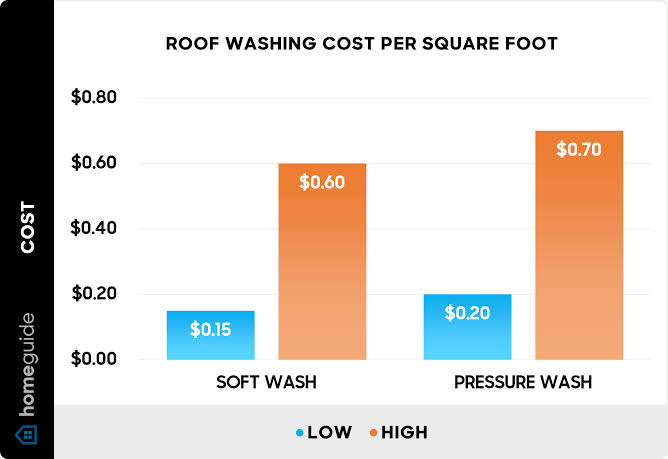
It is important to note that most professionals do not charge by the hour for this service. Instead, they use a per-square-foot pricing model, which typically ranges from $0.20 to $0.60 per square foot. This transparency helps homeowners estimate costs more accurately before signing a contract.
Key Factors Influencing Price
Several variables determine where your specific quote will fall within that range:
- Roof Material: Asphalt shingles are the most common and generally cheaper to clean. Tile, slate, or metal roofs require specialized care and often cost more.
- Pitch and Accessibility: A steep roof requires safety harnesses, scaffolding, and more labor time, increasing the price.
- Level of Contamination: Light dusting is easy to remove. Heavy moss growth or years of neglected algae require pre-treatment chemicals and multiple passes.
- Geographic Location: Labor costs in urban areas like New York or San Francisco are higher than in rural Midwest regions.
Why “Soft Washing” Is Often Better Than Power Washing
Before you hire someone, it is vital to clarify terminology. While many people search for “power washing,” most reputable roofing experts recommend soft washing for residential roofs.
Power washing uses high-pressure water (often 1,500–3,000 PSI) to blast away dirt. On a roof, this pressure can:
- Lift shingle granules, shortening the roof’s lifespan.
- Force water under the shingles, causing leaks.
- Void manufacturer warranties.
Soft washing, on the other hand, uses low pressure (below 500 PSI) combined with biodegradable cleaning solutions (usually sodium hypochlorite and surfactants). The chemical solution kills the organic growth at the root, allowing it to wash away gently with rain or low-pressure rinsing.
According to industry standards, soft washing is the preferred method for asphalt shingles because it preserves the structural integrity of the roofing material while effectively eliminating Gloeocapsa magma (the black algae responsible for those ugly streaks).
Breakdown by Roof Type
Different materials react differently to cleaning agents and pressure. Here is a quick comparison to help you understand potential cost variations.
| Roof Material | Estimated Cost Range | Recommended Method | Notes |
|---|---|---|---|
| Asphalt Shingles | $350 – $600 | Soft Wash | Most common; sensitive to high pressure. |
| Concrete/Clay Tile | $400 – $750 | Soft Wash/Low Pressure | Tiles are durable but can crack if walked on improperly. |
| Metal Roof | $300 – $550 | Soft Wash | Prone to scratching; avoid abrasive tools. |
| Slate | $500 – $900+ | Gentle Soft Wash | Fragile and expensive; requires highly skilled technicians. |
| Wood Shake | $450 – $700 | Specialized Treatment | Requires anti-fungal treatments to prevent rot. |
DIY vs. Hiring a Professional: Is It Worth It?
You might be tempted to rent a pressure washer and save money. However, roof cleaning is one of the most dangerous DIY home improvement projects.
The Risks of DIY
- Safety Hazards: Falls from ladders or roofs are a leading cause of home injury. Professionals carry liability insurance and workers’ compensation; you do not.
- Damage Liability: If you accidentally crack a tile or strip granules from your shingles, you will pay for repairs out of pocket. A professional mistake is covered by their insurance.
- Chemical Handling: The cleaners used to kill moss and algae are potent. Improper mixing or runoff can damage your landscaping, siding, or even local waterways.
When to Hire a Pro
If your roof is two stories high, has a steep pitch, or shows signs of significant moss buildup, hire a professional. The peace of mind and warranty protection are worth the extra cost. For single-story homes with mild discoloration, a careful DIY approach using a garden sprayer and soft-bristle brush might suffice, but proceed with extreme caution.
Step-by-Step: What to Expect During a Professional Clean
Understanding the process helps you verify that the job is being done correctly. Here is what a standard professional service looks like:
- Inspection: The technician inspects the roof for loose shingles, damaged flashing, or structural weaknesses. They should point these out to you before starting.
- Preparation: They will wet down surrounding plants and cover sensitive landscaping to protect them from cleaning solutions.
- Application: A biodegradable algaecide is applied evenly across the roof surface. This is allowed to dwell for 15–20 minutes to penetrate the organic growth.
- Rinsing: Using low-pressure water, the technician rinses the roof from the top down. This ensures dirty water doesn’t get trapped under upper shingles.
- Cleanup: Gutters are cleared of any dislodged debris, and the surrounding area is rinsed to neutralize any chemical residue.
For more detailed information on roofing materials and their maintenance requirements, you can refer to Wikipedia’s article on Roofing.
Frequently Asked Questions (FAQ)
1. How often should I power wash my roof?
Most experts recommend cleaning your roof every 2 to 3 years. However, if you live in a humid climate with heavy tree cover, you may need annual maintenance to prevent moss buildup.
2. Does roof cleaning void my warranty?
Not if done correctly. In fact, many manufacturers require regular maintenance to keep the warranty valid. However, using high-pressure washing on asphalt shingles often does void warranties. Always check your specific warranty terms and hire a certified soft-washing provider.
3. Can I power wash my roof myself?
While technically possible, it is not recommended for most homeowners. The risk of personal injury and property damage is high. If you must do it yourself, use a garden hose with a spray nozzle and a long-handled brush, never a high-pressure washer.
4. How long does it take to clean a roof?
For an average-sized home (2,000 sq. ft.), the process typically takes 2 to 4 hours. This includes setup, application, dwelling time for the chemicals, and cleanup.
5. Will the black streaks come back?
Yes, eventually. Algae spores are airborne. However, proper cleaning removes the current colony, and some professionals offer zinc-strip installations or preventative treatments that can delay regrowth for several years.
Conclusion
So, how much does it cost to power wash a roof? While the average falls between $350 and $600, the true value lies in protecting your home’s biggest asset. Regular cleaning prevents premature aging, improves curb appeal, and can even lower your energy bills by reflecting sunlight more effectively.
Remember, the cheapest option isn’t always the best. Prioritize companies that use soft washing techniques and carry proper insurance. Your roof protects everything underneath it—treat it with care.
Found this guide helpful? Share it with your neighbors on Facebook or Pinterest to help them keep their homes looking their best!
Leave a Reply