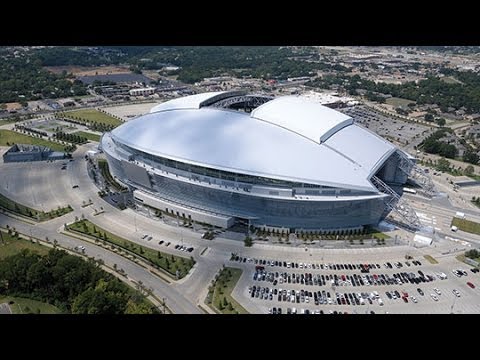
Have you ever sat in the stands at AT&T Stadium, looking up at the massive translucent panels, and wondered just how much engineering power it takes to move them? It is a common curiosity for fans attending games or concerts, especially when the Texas weather turns unpredictable. If you are asking how long it takes to open Cowboys Stadium roof, the answer might surprise you with its precision and speed.
This iconic venue, home to the Dallas Cowboys, features one of the most complex retractable roof systems in the world. Understanding the timing and mechanics behind this operation not only satisfies your curiosity but also helps you plan your visit better. Whether you are hoping for a breeze on a hot September afternoon or worrying about a sudden thunderstorm, knowing the roof’s operational window is key.
The Exact Timeframe: Speed Meets Precision
So, what is the magic number? According to official specifications and operational records, it takes approximately 12 to 15 minutes to fully open or close the roof of AT&T Stadium.
This timeframe is remarkably fast considering the sheer scale of the structure. The roof consists of two massive panels, each weighing thousands of tons. To put this in perspective, many older retractable roof stadiums, such as the original Minute Maid Park in Houston, could take up to 20–30 minutes to complete the same action. The engineers behind AT&T Stadium prioritized efficiency to ensure that game delays due to weather changes are minimized.
Why Does It Take This Long?
You might think, “Why not make it faster?” The answer lies in safety and mechanical integrity. Moving a structure of this magnitude requires synchronized movement of hundreds of motors and gears. Rushing the process could lead to mechanical stress, misalignment, or safety hazards for the spectators below. The 12–15 minute window is the “sweet spot” where speed meets structural safety.
Understanding the Mechanics Behind the Magic
To truly appreciate the time it takes, we need to look under the hood. The roof isn’t just sliding on a simple track; it is a feat of modern civil engineering.
The Weight and Scale
Each of the two roof panels weighs approximately 4,500 tons. That is roughly equivalent to the weight of 3,000 average-sized cars. These panels are made of a translucent ETFE (Ethylene Tetrafluoroethylene) plastic, which is lightweight compared to glass but still incredibly heavy in such large sheets. They allow natural light to flood the stadium when closed, reducing the need for artificial lighting during day games.
The Motor System
The movement is powered by a series of electric motors. Specifically, the system uses:
- 8 main drive units per panel.
- Each unit contains multiple high-torque motors.
- The system operates on a rack-and-pinion mechanism, ensuring smooth, linear motion.
The synchronization of these motors is controlled by a central computer system that monitors wind speed, position, and load distribution in real-time. If any sensor detects an anomaly, the system halts immediately to prevent damage.
Weather Rules: When Can the Roof Actually Move?
One of the most critical factors affecting the roof’s operation is the weather. You cannot simply open the roof whenever you feel like it. There are strict protocols in place.
Wind Speed Limits
The primary enemy of a retractable roof is wind. If the wind speed exceeds 20–25 mph, the roof will remain closed. High winds can create lift forces that could destabilize the panels or damage the tracking system. Even if it is a beautiful sunny day, a gusty breeze will keep the lid on.
Rain and Lightning
While the roof is designed to shed water, operating it during heavy rain is generally avoided to prevent water ingress into the mechanical pits. More importantly, lightning protocols take precedence. If lightning is detected within a certain radius, all outdoor operations cease, and the roof status is locked for safety.
| Weather Condition | Roof Status | Reason |
|---|---|---|
| Clear Sky, Low Wind | Open/Closed | Operational |
| Wind > 25 mph | Closed | Safety/Stability |
| Heavy Rain | Closed | Mechanical Protection |
| Lightning Nearby | Closed | Fan/Staff Safety |
Step-by-Step: The Opening Process
If you are lucky enough to witness the roof opening, here is what happens behind the scenes, step by step:
- Pre-Check Sequence: The control room initiates a diagnostic check. Sensors verify that the tracks are clear, the locking pins are disengaged, and wind speeds are within limits.
- Unlocking Mechanism: Hydraulic locks that secure the roof panels in the closed position are released. You might hear a distinct mechanical “clunk” as these disengage.
- Initial Movement: The motors engage slowly. The first few feet of movement are the slowest to ensure proper alignment with the guide rails.
- Acceleration Phase: Once aligned, the panels accelerate to their standard operating speed. This is the phase where the 12–15 minute timer really counts down.
- Mid-Travel Monitoring: As the panels slide over the stadium bowl, sensors continuously monitor for any obstruction or uneven movement.
- Final Positioning: As the panels reach the fully open position (stored at either end of the stadium), they slow down again.
- Locking and Confirmation: The panels lock into their open storage position. The system sends a “All Clear” signal to the stadium operations team.
For more detailed technical specifications on large-scale retractable structures, you can refer to general engineering principles documented on Wikipedia.
Common Misconceptions About the Roof
There are several myths surrounding the AT&T Stadium roof. Let’s clear them up.
- Myth 1: The roof opens partially.
- Fact: The roof is an all-or-nothing system. It does not have a “half-open” setting for partial ventilation. It is either fully closed, fully open, or in transit.
- Myth 2: It can open during a game easily.
- Fact: While it can open during a game, it rarely does so unless there is a significant break in play (like halftime) and the weather conditions are perfect. Opening it during active play can be distracting and poses a slight risk if debris were to fall (though highly unlikely).
- Myth 3: It is made of glass.
- Fact: As mentioned, it is made of ETFE plastic. This material is durable, self-cleaning, and allows UV light to pass through while blocking heat, making it ideal for Texas summers.
Why This Matters for Your Visit
Knowing how long it takes to open Cowboys Stadium roof can enhance your experience as a fan.
- Timing Your Arrival: If you want to see the roof open, arrive early. The decision to open the roof is usually made 2–3 hours before kickoff. If you arrive 30 minutes before the game, the roof status is likely already set.
- Comfort Planning: If the roof is closed, the stadium relies on its massive HVAC system. It is one of the largest air-conditioned spaces in the world. If the roof is open, expect ambient noise from outside and potential temperature changes.
- Photography Opportunities: The transition period offers unique photo opportunities as the light changes inside the bowl. The 12-minute window provides a dynamic backdrop for social media content.
FAQ Section
1. Can the roof be opened during a football game?
Yes, technically it can, but it is rare. It usually requires a stoppage in play and favorable weather conditions. Most often, the roof status is decided before the gates open to the public.
2. What happens if it starts raining while the roof is open?
The stadium has advanced weather monitoring systems. If rain is imminent, the crew will begin the closing process immediately. Since it takes 12–15 minutes, they rely on accurate forecasts to start the process before the rain hits. If caught off guard, the panels are water-resistant, but the priority is to close them as fast as safely possible.
3. Is the roof soundproof when closed?
Not entirely. While the ETFE panels and the enclosed structure reduce outside noise significantly, you can still hear some ambient sound from outside, especially during loud events like fireworks or nearby highway traffic. However, the acoustic design focuses on keeping crowd noise in to enhance the home-field advantage.
4. How often is the roof maintained?
The roof undergoes regular maintenance checks weekly. Major mechanical inspections happen during the NFL off-season. The motors, tracks, and sensors are lubricated and tested to ensure the 12–15 minute operation time remains consistent.
5. Does the roof affect the Wi-Fi or cell service in the stadium?
No. The ETFE material is transparent to radio waves. AT&T Stadium is known for having some of the best cellular connectivity in the NFL, regardless of whether the roof is open or closed. The network infrastructure is designed to handle high-density usage independently of the roof status.
Conclusion
The next time you find yourself gazing up at the massive panels of AT&T Stadium, you will know exactly what is happening behind the scenes. The answer to how long it takes to open Cowboys Stadium roof is a precise 12 to 15 minutes, a testament to the incredible engineering that keeps thousands of tons of material moving smoothly and safely.
This blend of speed, safety, and spectacle is part of what makes attending a Dallas Cowboys game such a unique experience. Whether the roof is open to let in the Texas sun or closed to keep out the storm, the stadium remains a marvel of modern architecture.
Did you find this guide helpful? Share this article with your fellow football fans on social media so they can impress their friends with these cool facts at the next tailgate! Don’t forget to comment below if you’ve ever seen the roof in action.
Leave a Reply