Have you ever looked up at your small home’s roof and wondered if switching to metal would be worth the investment? Many homeowners with compact residences struggle to find clear pricing because most online calculators focus on larger suburban houses. Understanding the Average Cost Of Metal Roof On $1000 Square Foot Homes is crucial for budgeting accurately without overpaying for materials you don’t need.
In this guide, we will break down exactly what you can expect to pay in 2026, explore the different types of metal available, and help you decide if this durable upgrade is right for your property.
Why Size Matters: Calculating Costs for 1,000 Sq Ft
When estimating roofing costs, it is vital to distinguish between your home’s floor area and your roof area. A 1,000-square-foot home does not necessarily have a 1,000-square-foot roof. Factors like pitch (slope), overhangs, and architectural complexity (such as dormers or valleys) increase the actual surface area requiring coverage.
However, for a standard single-story home with a simple gable or hip roof, the roof area might range from 1,100 to 1,300 square feet. For the sake of this guide, we will base our calculations on a projected roof area of approximately 1,200 square feet, which is typical for a 1,000 sq ft footprint. This distinction ensures you do not under-budget for materials.
The National Average Breakdown
As of 2026, the national average for installing a standing seam metal roof ranges from $9 to $14 per square foot. For exposed fastener panels (a more economical option), prices typically fall between $5 and $8 per square foot.
For a 1,000-square-foot home (assuming ~1,200 sq ft of actual roof area), here is what you can expect:
| Material Type | Low-End Estimate | High-End Estimate | Average Total |
|---|---|---|---|
| Corrugated Steel | $6,000 | $9,600 | $7,800 |
| Standing Seam Steel | $10,800 | $16,800 | $13,800 |
| Aluminum Panels | $8,400 | $14,400 | $11,400 |
| Copper/Zinc | $24,000+ | $36,000+ | $30,000+ |
Note: These prices include both materials and professional labor.
What Factors Influence the Final Price?
While the square footage provides a baseline, several variables can swing your final bill significantly. Understanding these helps you negotiate better with contractors.
1. Material Choice
Not all metal is created equal. Steel is the most common and affordable option, often coated with zinc (galvanized) or a mixture of zinc and aluminum (Galvalume) to prevent rust. Aluminum is lighter and naturally resistant to corrosion, making it ideal for coastal areas, though it costs about 20–30% more than steel. Premium metals like copper or zinc offer unparalleled longevity and aesthetics but come with a luxury price tag.
2. Roof Complexity
A simple gable roof (two sloping sides) is the cheapest to install. If your 1,000-square-foot home has multiple chimneys, skylights, or steep pitches, labor costs will rise. Steep roofs require additional safety equipment and more time, increasing the labor portion of your bill.
3. Removal of Old Roofing
If you are replacing an existing roof, you must factor in demolition and disposal fees. Removing old asphalt shingles typically costs $1 to $2 per square foot. Some local building codes allow metal to be installed over one layer of existing shingles, which can save you money on tear-off costs. However, this should only be done if the underlying structure is sound and local regulations permit it.
4. Geographic Location
Labor rates vary widely across the United States. In high-cost-of-living areas like California or New York, expect to pay the higher end of the spectrum. In the Midwest or South, labor may be more competitive. Additionally, shipping costs for heavy metal panels can affect prices in remote locations.
Standing Seam vs. Exposed Fastener: Which Is Better?
One of the most common questions homeowners ask is whether to choose standing seam or exposed fastener panels. Here is a quick comparison to help you decide.
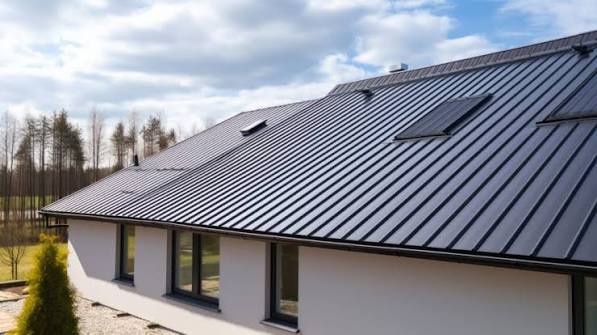
Standing Seam Metal Roofing
- Pros: Hidden fasteners reduce leak risks; sleek, modern appearance; allows for thermal expansion/contraction; longer lifespan (40–70 years).
- Cons: Higher initial cost; requires specialized installation tools.
- Best For: Homeowners planning to stay long-term who want maximum durability and curb appeal.
Exposed Fastener (Corrugated) Metal Roofing
- Pros: Lower upfront cost; easier to repair; widely available.
- Cons: Screws are exposed to weather and may loosen over time; rubber washers degrade every 10–15 years; less aesthetically refined.
- Best For: Budget-conscious projects, sheds, barns, or homes where ultimate longevity is less critical than immediate savings.
Step-by-Step: How to Budget for Your Project
To ensure you stay within budget, follow this logical process when planning your metal roof installation.
- Measure Accurately: Do not guess. Use a laser measure or hire a professional to get the exact square footage of your roof planes. Remember to add 10% for waste and cutting errors.
- Choose Your Profile: Decide between standing seam and exposed fastener based on your budget and aesthetic goals.
- Get Three Quotes: Contact licensed roofing contractors in your area. Ask for itemized quotes that separate material costs from labor. This transparency helps you identify hidden fees.
- Check for Rebates: In 2026, many energy-efficient metal roofs qualify for tax credits or utility rebates due to their reflective properties. Check the Database of State Incentives for Renewables & Efficiency for general policy frameworks, though specific local programs change frequently.
- Plan for Underlayment: Never skip high-quality underlayment. Synthetic underlayment costs slightly more than felt but offers superior protection against ice dams and wind-driven rain.
Long-Term Value: Is It Worth the Investment?
While the Average Cost Of Metal Roof On $1000 Square Foot Homes may seem higher than asphalt shingles initially, the long-term value is undeniable.
- Longevity: Asphalt shingles last 15–20 years. Metal roofs last 40–70 years. You will likely never need to replace your roof again.
- Energy Savings: Metal roofs reflect solar radiant heat, reducing cooling costs by 10–25%. Over 20 years, this can save thousands of dollars.
- Resale Value: Homes with metal roofs often sell faster and at a premium because buyers recognize the low maintenance and durability.
- Insurance Discounts: Many insurance companies offer discounts of 5–15% for homes with metal roofing due to their resistance to fire, wind, and hail.
Frequently Asked Questions
1. Can I install a metal roof myself on a 1,000 sq ft home?
While DIY is possible for experienced handymen, metal roofing requires precise cutting and flashing work. Mistakes can lead to leaks that damage your home’s structure. For standing seam systems, specialized machinery is required. We recommend hiring professionals for warranty protection and safety.
2. Does a metal roof make noise when it rains?
This is a common myth. When installed correctly with solid sheathing and proper insulation, a metal roof is no louder than an asphalt shingle roof. In fact, many homeowners find the sound of rain on metal soothing. The key is ensuring there is no air gap between the metal and the decking.
3. How long does installation take for a small home?
For a 1,000-square-foot home with a simple roof design, professional installation typically takes 2 to 4 days. This includes tear-off (if applicable), preparation, and panel installation. Complex designs may take up to a week.
4. Will a metal roof interfere with my Wi-Fi or cell signal?
Metal roofs can potentially weaken wireless signals, but they rarely block them entirely. Most modern routers and cell phones are powerful enough to penetrate or work around the shielding effect. If you experience issues, a Wi-Fi extender or external antenna usually resolves the problem.
5. What maintenance does a metal roof require?
Metal roofs are low-maintenance but not no-maintenance. Inspect your roof twice a year. Clear debris from valleys and gutters to prevent water pooling. Check for any loose screws (on exposed fastener systems) and tighten them. Wash the roof with mild soap and water if you live in an area with heavy pollen or industrial pollution.
6. Can I walk on a metal roof?
Yes, but with caution. Always wear soft-soled shoes to avoid scratching the coating. Walk on the flat areas of the panels, avoiding the ribs or seams where the metal is raised. Never walk on a wet or icy metal roof, as it becomes extremely slippery.
Conclusion
Investing in a metal roof for your 1,000-square-foot home is a decision that balances upfront cost with long-term peace of mind. While the Average Cost Of Metal Roof On $1000 Square Foot Homes typically ranges from $7,800 to $14,000 depending on materials and complexity, the durability, energy efficiency, and aesthetic appeal make it a smart financial move.
By understanding the difference between standing seam and exposed fastener options, and by getting accurate measurements, you can avoid surprise costs. Remember, this is not just a roof; it is a shield that will protect your home for decades.
Did you find this guide helpful? Share it with friends or family who are considering a roofing upgrade! Let’s help others make informed decisions about their homes.