Tag: roofing measurement

  • How Many Square Feet Are In A Square Of Roofing?

    How Many Square Feet Are In A Square Of Roofing?

    Planning a roof replacement or repair can feel overwhelming, especially when contractors start throwing around industry jargon that doesn’t quite make sense to the average homeowner. You might find yourself staring at a quote and wondering, “How many square feet are in a square of roofing?” It is a simple question with a critical answer that directly impacts your budget and material orders.

    Understanding this basic unit of measurement is the first step toward taking control of your home improvement project. In this guide, we will break down the math, explain why this unit exists, and show you how to calculate your needs accurately so you never overpay or under-order again.


    What Is a “Square” in Roofing Terminology?

    If you have never worked in construction, the term “square” can be misleading. In everyday language, a square is a geometric shape. However, in the roofing industry, it is a specific unit of area used to simplify calculations for large surfaces.

    A roofing square is equal to 100 square feet.

    This means that if your roof has an area of 2,500 square feet, it is considered a 25-square roof. This standardization helps contractors, suppliers, and manufacturers communicate efficiently. Instead of saying, “I need enough shingles to cover 1,850 square feet,” a pro will simply say, “I need materials for 18.5 squares.”

    Why Do Roofers Use Squares?

    The primary reason is simplicity and speed. Roofs are large, and dealing with thousands of individual square feet can lead to calculation errors during quick estimates. By grouping every 100 square feet into one “square,” the numbers become more manageable.

    • Easier Material Ordering: Shingles and underlayment are often sold by the square or in bundles that equate to a fraction of a square.
    • Standardized Pricing: Most contractors quote prices per square (e.g., $350 per square), making it easier for homeowners to compare bids.
    • Reduced Error: It minimizes the risk of misplacing zeros when calculating large areas.

    How to Calculate Your Roof’s Square Footage

    Before you can determine how many squares you need, you must accurately measure your roof’s total square footage. While it might seem tempting to just use your home’s floor plan, this method is often inaccurate because roofs extend beyond the walls (overhangs) and have complex pitches.

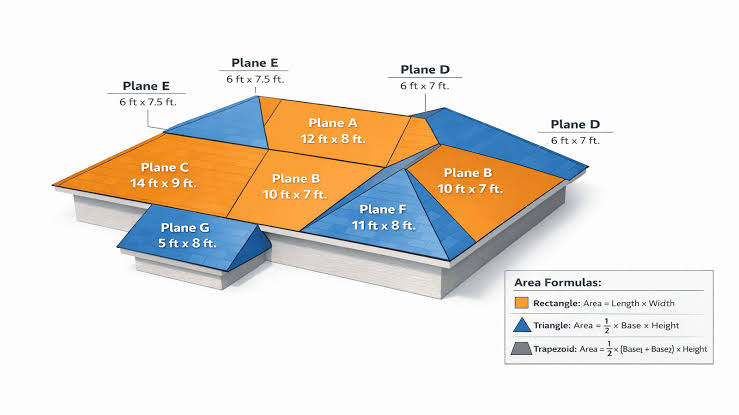
    Step 1: Measure Each Plane

    Break your roof down into individual rectangular planes. For each section:

    1. Measure the length from ridge to eave (or edge to edge).
    2. Measure the width along the eave.
    3. Multiply length by width to get the area of that plane.

    Example: If one section is 40 feet long and 20 feet wide, the area is 800 square feet.

    Step 2: Account for Overhangs

    Do not forget the eaves and rakes. Measure any overhanging sections separately and add them to your total. Even a small 6-inch overhang can add significant square footage across the perimeter of a large home.

    Step 3: Sum the Areas

    Add the square footage of all planes together to get your total gross square footage.

    Step 4: Convert to Squares

    Divide your total square footage by 100.

    Formula: Total Square Feet ÷ 100 = Number of Squares

    Example: 2,400 sq ft ÷ 100 = 24 Squares.
    How Many Square Feet Are In A Square Of Roofing

    The Critical Factor: Roof Pitch and Waste

    Knowing the flat footprint of your roof is not enough. The steepness of your roof, known as the pitch, dramatically affects the actual surface area. A steep roof has more surface area than a flat roof covering the same floor space.

    Understanding Roof Pitch

    Roof pitch is expressed as a ratio of vertical rise to horizontal run (e.g., 6/12). This means for every 12 inches you go horizontally, the roof rises 6 inches vertically.

    To get the true surface area, you must apply a pitch multiplier. You can find these multipliers in standard roofing charts or use the Pythagorean theorem.

    Roof PitchMultiplierImpact on Area
    4/121.054+5.4%
    6/121.118+11.8%
    8/121.202+20.2%
    12/121.414+41.4%

    Note: For detailed mathematical definitions of geometric slopes, you can refer to general resources on Wikipedia.

    Calculating Waste Factor

    You cannot buy exactly the amount of material needed for the exact square footage. Cutting shingles to fit valleys, hips, and ridges creates waste. Additionally, mistakes happen.

    • Simple Gable Roof: Add 10% waste factor.
    • Complex Roof (Multiple Valleys/Hips): Add 15–20% waste factor.

    Final Calculation Example:

    1. Flat Area: 2,000 sq ft (20 Squares)
    2. Pitch Adjustment (6/12 pitch): 2,000 x 1.118 = 2,236 sq ft
    3. Waste Factor (15%): 2,236 x 1.15 = 2,571 sq ft
    4. Total Squares Needed: 2,571 ÷ 100 = 25.71 Squares (Round up to 26 Squares)

    Materials Per Square: What Do You Actually Buy?

    Once you know your square count, you need to translate that into bundles of shingles or rolls of underlayment. This varies by material type, but here are the industry standards for asphalt shingles, the most common roofing material in the US.

    Asphalt Shingles

    • Bundles per Square: Typically 3 bundles make 1 square.
    • Shingles per Bundle: Usually contains 20–26 shingles, depending on the brand and style.
    • Weight: A square of asphalt shingles weighs between 200 to 350 pounds.

    Other Materials

    • Wood Shakes: Often require 4 bundles per square due to thicker spacing.
    • Metal Roofing: Sold by linear feet or panels, not typically by the “square” in the same way, though coverage is still calculated in square feet.
    • Slate/Tile: Much heavier and often requires specialized structural support. Coverage varies significantly by tile size.

    Pro Tip: Always check the manufacturer’s specifications on the bundle wrapper. Some architectural or premium shingles may require 4 or even 5 bundles to cover one square due to their thickness and exposure requirements.


    Common Mistakes When Estimating Roof Squares

    Even with the right formula, homeowners and DIYers often stumble. Here are the most frequent errors to avoid:

    1. Ignoring the Chimneys and Vents: While small, these penetrations require flashing and extra cutting. While they don’t add much area, they increase labor and waste.
    2. Using Floor Plan Square Footage: Your home’s living area is not your roof area. A two-story house with a 2,000 sq ft footprint might only have a 1,000 sq ft roof if it’s a simple gable, or much more if it’s complex. Never assume 1:1 correlation.
    3. Forgetting Dormers: Dormers add significant surface area. Measure each dormer face separately and add it to the total.
    4. Rounding Down: Always round up when ordering materials. Running short mid-project means delaying work while waiting for a new delivery, which risks weather exposure to the open roof deck.

    FAQ Section

    Q1: Does a square of roofing always equal 100 square feet?

    A: Yes. In the US roofing industry, a “square” is universally defined as 100 square feet. This standard applies regardless of the roofing material (asphalt, metal, tile, etc.).

    Q2: How many bundles of shingles do I need for one square?

    A: For standard 3-tab asphalt shingles, you typically need 3 bundles to cover one square (100 sq ft). For thicker architectural shingles, check the label, as some may require 4 bundles per square.

    Q3: Can I measure my roof from the ground?

    A: You can get a rough estimate using ground measurements and photos, but it is not accurate for ordering materials. Factors like pitch, overhangs, and complex angles are hard to judge from the ground. For precise quotes, professionals use laser measures or drone technology.

    Q4: Why do contractors charge per square instead of per square foot?

    A: Charging per square simplifies the billing process. It allows for quicker mental math during negotiations and aligns with how materials are packaged and shipped. It also helps buffer minor measurement discrepancies without renegotiating every single foot.

    Q5: How much does a square of roofing cost?

    A: Costs vary widely based on material and location. As of recent trends, asphalt shingles might range from $350 to $550 per square installed, while metal or slate can exceed $1,000 per square. Always get multiple local quotes for accurate pricing.

    Q6: Is there a difference between a “square” and a “bundle”?

    A: Yes. A square is a unit of area (100 sq ft). A bundle is a physical package of shingles. It usually takes 3 bundles to make one square, but this depends on the shingle type.


    Conclusion

    Understanding how many square feet are in a square of roofing is fundamental to any successful roofing project. Remember, one square equals 100 square feet. By accurately measuring your roof’s planes, adjusting for pitch, and adding a waste factor, you can order the right amount of material and avoid costly delays.

    Whether you are hiring a professional or tackling a small shed roof yourself, this knowledge empowers you to speak the same language as contractors and verify quotes with confidence. Don’t let measurement errors eat into your budget.

    Found this guide helpful? Share it with friends or family who are planning home improvements, and bookmark it for your next renovation project! Accurate measurements save money—start calculating today.
  • How Many Square Feet In One Square Of Roofing Shingles?

    How Many Square Feet In One Square Of Roofing Shingles?

    Have you ever stared at a roofing estimate and felt completely lost because the contractor kept talking about “squares” instead of just giving you the total area? You are not alone; this industry-specific terminology trips up countless homeowners who are trying to budget for a new roof or verify a quote. Understanding how many square feet in one square of roofing shingles is the single most important step to ensuring you aren’t overpaying for materials or labor.

    In this guide, we will break down the math, explain why this unit of measurement exists, and show you how to calculate your needs like a pro. By the end, you’ll feel confident discussing your project with any contractor.

    The Golden Rule: 1 Square Equals 100 Square Feet

    Let’s get straight to the answer that brought you here. In the roofing industry, one “square” is equal to 100 square feet of roof area.

    It is crucial to distinguish this from a square foot, which is a standard unit of area measuring 12 inches by 12 inches. A roofing “square” is a bulk unit used to simplify the ordering of large quantities of materials.

    Why Do Roofers Use “Squares”?

    You might wonder why we don’t just stick to square feet. The reason is practicality and historical convention. Roofs are large surfaces. Saying a roof is “25 squares” is much easier to communicate and write on an invoice than saying it is “2,500 square feet.” It reduces the chance of transcription errors when ordering bundles of shingles, underlayment, and nails.

    According to industry standards, this measurement applies regardless of the type of shingle you choose—whether it is asphalt, architectural, or luxury laminate. The coverage area remains the constant variable, even if the weight or thickness of the material changes.

    Calculating Your Roof’s Square Footage

    Now that you know the conversion rate, how do you apply it to your specific home? Most houses are not perfect rectangles, so calculating the exact area requires a bit of geometry. Here is a step-by-step approach to determining how many squares you need.

    Step 1: Measure Each Plane

    If you have a simple gable roof, you likely have two rectangular planes. If you have a hip roof or multiple gables, you will have several triangles and trapezoids.

    • For Rectangles: Multiply length by width.
    • For Triangles: Multiply base by height, then divide by two.

    Step 2: Sum the Areas

    Add up the square footage of every individual plane on your roof. Let’s say you have three sections:

    1. Main section: 1,200 sq. ft.
    2. Garage extension: 400 sq. ft.
    3. Dormer: 100 sq. ft.

    Total Area: 1,700 sq. ft.

    Step 3: Convert to Squares

    Divide your total square footage by 100. 1,700 sq. ft./100=17 squares1,700 sq. ft./100=17 squares

    So, your roof is 17 squares. This is the number you will use when talking to suppliers.

    How Many Square Feet In One Square Of Roofing Shingles

    From Squares to Bundles: The Material Math

    Knowing your roof is 17 squares is great, but you can’t buy “17 squares” off the shelf. You buy shingles in bundles. This is where many DIYers make costly mistakes.

    Standard Asphalt Shingles

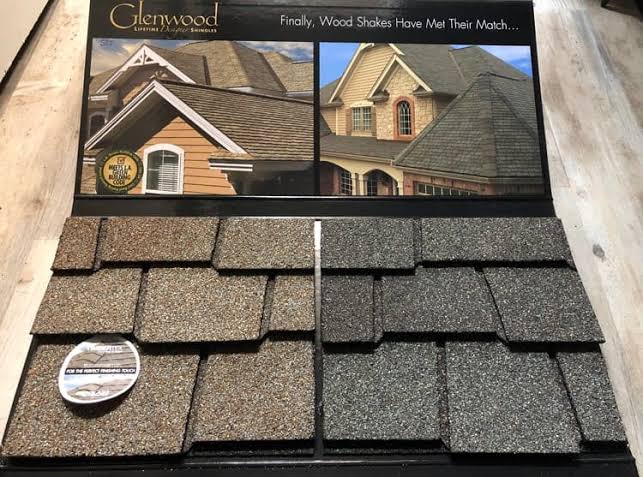
    For most standard 3-tab or architectural asphalt shingles, it typically takes 3 bundles to cover 1 square (100 sq. ft.).

    Therefore, the formula is: Number of Squares×3=Total Bundles NeededNumber of Squares×3=Total Bundles Needed

    Using our previous example: 17 squares×3 bundles/square=51 bundles17 squares×3 bundles/square=51 bundles

    Heavyweight and Luxury Shingles

    Be careful here. Not all shingles follow the 3-bundle rule.

    • Heavyweight Architectural Shingles: These are thicker and heavier. Some brands require 4 or 5 bundles per square to achieve the same coverage because each bundle covers less area due to the increased thickness.
    • Luxury/Designer Shingles: These may have unique dimensions or installation patterns that alter the bundle-to-square ratio.

    Pro Tip: Always check the label on the specific shingle bundle you intend to buy. It will explicitly state the coverage per bundle. Never assume it is 3 bundles per square without verifying.

    The Critical Factor: Waste and Overage

    If you order exactly 51 bundles for a 17-square roof, you will likely run out of materials before the job is done. Why? Because roofs are not perfect canvases, and shingles must be cut to fit edges, valleys, and around vents.

    How Much Waste Should You Add?

    Industry experts recommend adding a waste factor to your total square count.

    Roof ComplexityRecommended Waste FactorExample Calculation (for 17 Squares)
    Simple Gable10%17+1.7=18.717+1.7=18.7 (Round up to 19 squares)
    Moderate (Hips/Valleys)15%17+2.55=19.5517+2.55=19.55 (Round up to 20 squares)
    Complex (Turrets/Dormers)20-25%17+3.4=20.417+3.4=20.4 (Round up to 21 squares)

    Why is waste necessary?

    1. Cutting Losses: Shingles cut for hips and valleys cannot always be reused.
    2. Starter Strips: You need extra material for the eaves and rakes.
    3. Mistakes: Accidental damage during installation happens.
    4. Future Repairs: Having leftover shingles ensures color matching for future repairs.

    For more detailed information on roofing materials and their properties, you can refer to Wikipedia’s entry on Roofing, which provides a broad overview of global standards and material types.

    Cost Implications: Why Accuracy Matters

    Understanding how many square feet in one square of roofing shingles directly impacts your wallet. Roofing costs are usually quoted per square.

    If a contractor quotes you $400 per square for installation and materials:

    • 17 Squares: $6,800
    • 19 Squares (with waste): $7,600

    If you underestimate your square footage by failing to account for waste or complex geometry, you could face unexpected “change orders” mid-project. Conversely, if you overestimate significantly, you might pay for materials you don’t need, although most suppliers allow returns for unopened bundles.

    Hidden Costs to Consider

    • Underlayment: Also sold by the roll, but calculated based on square footage. One roll typically covers 4 squares (400 sq. ft.), but check the manufacturer specs.
    • Nails: A general rule of thumb is 4 pounds of roofing nails per square for standard asphalt shingles.
    • Ice and Water Shield: Required in valleys and eaves in colder climates, priced separately.

    Frequently Asked Questions (FAQ)

    1. Does a “square” of roofing mean the same thing for metal roofs?

    Yes, the term “square” always equals 100 square feet, regardless of the material. However, metal roofing is often sold by linear feet or panels rather than bundles, so the purchasing process differs even though the area measurement remains the same.

    2. How do I measure my roof if I can’t climb on it?

    You can use satellite imagery tools like Google Earth or specialized apps like RoofSnap or EagleView. These tools allow you to trace the perimeter of your roof from aerial photos to get a fairly accurate square footage estimate. For insurance claims or precise contracts, a professional drone measurement is recommended.

    3. What is the difference between 3-tab and architectural shingles in terms of coverage?

    There is no difference in coverage area per square. Both cover 100 square feet per square. The difference lies in the number of bundles required. 3-tab shingles usually take 3 bundles per square, while architectural shingles may take 3, 4, or 5 bundles per square depending on their thickness and brand.

    4. Can I reuse old shingles for patches?

    While possible, it is not recommended for large areas. Old shingles become brittle and lose their adhesive strip effectiveness. Furthermore, finding an exact color match for aged shingles is difficult. It is better to keep a few leftover bundles from your original installation for future repairs.

    5. How much does one square of shingles weigh?

    This varies significantly. Standard 3-tab shingles weigh approximately 200–250 lbs per square. Architectural shingles can weigh 300–400 lbs per square. Heavyweight designer shingles can exceed 500 lbs per square. This is important for structural integrity checks, especially if you are adding a second layer of shingles.

    Conclusion

    Mastering the concept of how many square feet in one square of roofing shingles empowers you to take control of your home improvement projects. Remember, 1 square = 100 square feet, and for standard asphalt shingles, you will typically need 3 bundles per square.

    Don’t forget to add a waste factor of 10–15% to your calculations to avoid running short on materials. By understanding these basics, you can communicate effectively with contractors, verify estimates, and ensure your roof is installed correctly without budget surprises.

    Found this guide helpful? Share it with your neighbors or friends who are planning their next home renovation on social media! Knowledge is power, especially when it comes to protecting your home.

  • How to Figure Out How Many Square a Roof Is

    How to Figure Out How Many Square a Roof Is

    Have you ever stared at your house, wondering just how much material you actually need for a new roof? It is a common source of anxiety for homeowners, as guessing wrong can lead to wasted money or dangerous delays. Learning how to figure out how many square a roof is empowers you to budget accurately and communicate effectively with contractors.

    In the roofing industry, precision is not just about numbers; it is about structural integrity and financial safety. This guide will walk you through the process with clarity, ensuring you understand every step from measuring pitch to calculating waste factors.

    What Is a “Square” in Roofing Terms?

    Before we grab the tape measure, we must clarify the terminology. In everyday language, a “square” might mean a 10×10 foot area. However, in professional roofing, a square is a specific unit of measurement equal to 100 square feet.

    This distinction is critical. If a contractor tells you your roof is 20 squares, they do not mean 20 square feet. They mean 2,000 square feet of roofing surface.

    Why Do Roofers Use Squares?

    Using squares simplifies the ordering process. Most roofing materials, such as asphalt shingles, are packaged and priced per square. For example:

    • One bundle of standard 3-tab asphalt shingles typically covers 33.3 square feet.
    • Therefore, you need three bundles to cover one roofing square (100 sq ft).

    Understanding this baseline prevents you from under-ordering materials, which can result in color mismatches if you have to buy a second batch later.

    Step-by-Step: How to Measure Your Roof’s Footprint

    The most accurate way to determine your roof size is to measure the footprint of your home and then adjust for the slope. You do not necessarily need to climb onto the roof, which can be dangerous. Instead, you can measure from the ground.

    Step 1: Measure the Length and Width

    Walk around your house with a long tape measure or a laser distance measurer.

    1. Measure the length of each side of your house.
    2. Measure the width of each side.
    3. Include any overhangs (eaves) that extend beyond the exterior walls. A typical overhang is between 12 to 24 inches.

    Example: If your house is 40 feet long and 30 feet wide, your base footprint is: 40 ft×30 ft=1,200 sq ft40 ft×30 ft=1,200 sq ft

    Step 2: Account for Complex Shapes

    Most homes are not perfect rectangles. You may have garages, dormers, or wings attached to the main structure.

    • Break your home down into simple geometric shapes (rectangles, triangles).
    • Calculate the area of each section separately.
    • Add them together to get the total flat footprint.

    Pro Tip: If you have a hip roof (slopes on all four sides), the calculation becomes more complex. In such cases, measuring individual planes from the ground using trigonometry or using satellite imagery tools is often more reliable.

    How To Figure Out How Many Square A Roof Is

    Adjusting for Roof Pitch: The Critical Factor

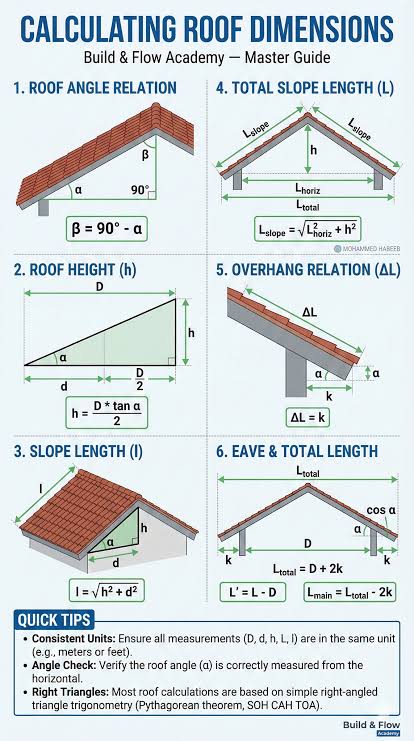
    A flat roof is easy to calculate because the surface area equals the footprint. However, most US homes have sloped roofs. The steeper the roof, the more surface area it has compared to its footprint. This is where the pitch comes in.

    Understanding Roof Pitch

    Roof pitch is expressed as a ratio of vertical rise to horizontal run (e.g., 6/12). This means for every 12 inches you go horizontally, the roof rises 6 inches vertically.

    To find your pitch:

    1. Go into your attic.
    2. Place a level against the bottom of a rafter.
    3. Measure 12 inches along the level.
    4. Measure the vertical distance from the 12-inch mark on the level to the rafter. This number is your rise.

    Using the Pitch Multiplier

    Once you know your pitch, you apply a multiplier to your footprint area. Here is a quick reference table for common pitches:

    Roof PitchMultiplierDescription
    4/121.054Low Slope
    6/121.118Medium Slope
    8/121.202Standard Slope
    10/121.302Steep Slope
    12/121.414Very Steep

    Calculation Example:

    • Footprint: 1,200 sq ft
    • Pitch: 6/12 (Multiplier: 1.118)
    • Total Surface Area: 1,200×1.118=1,341.6 sq ft1,200×1.118=1,341.6 sq ft

    To convert this to squares: 1,341.6÷100=13.42 squares1,341.6÷100=13.42 squares

    For more detailed mathematical explanations of roof geometry, you can refer to general principles of geometry on Wikipedia.

    Calculating Waste and Ordering Materials

    You never order exactly the amount of surface area you calculated. Roofing requires cutting shingles to fit valleys, hips, and ridges, which creates waste. Additionally, mistakes happen during installation.

    The Waste Factor Rule

    • Simple Gable Roof: Add 10% waste.
    • Complex Roof (Hips, Valleys, Dormers): Add 15–20% waste.

    Continuing our Example:

    • Base Squares: 13.42
    • Waste (15%): 13.42×0.15=2.0113.42×0.15=2.01 squares
    • Total Needed: 13.42+2.01=15.4313.42+2.01=15.43 squares

    Since you cannot buy partial squares easily, you would round up to 16 squares.

    Material Breakdown for 16 Squares

    If you are using standard asphalt shingles:

    • Shingles: 16 squares ×× 3 bundles/square = 48 bundles.
    • Underlayment: Typically sold in rolls covering 4 squares. You need 16÷4=16÷4= 4 rolls.
    • Nails: Approximately 1 pound of nails per square. You need 16 lbs of roofing nails.

    Common Mistakes to Avoid When Measuring

    Even experienced DIYers make errors. Here are the most frequent pitfalls:

    1. Ignoring Overhangs: Failing to include the eaves can underestimate your area by 5–10%. Always measure from the outer edge of the fascia board.
    2. Misidentifying Pitch: Guessing the pitch instead of measuring it. A 6/12 pitch looks significantly different from an 8/12 pitch, and the cost difference is substantial.
    3. Forgetting Chimneys and Skylights: While these subtract from the total area, the flashing and detailing around them require extra material and labor. It is often safer to ignore their subtraction and let the waste factor cover the complexity.
    4. Unit Confusion: Mixing up meters and feet if using digital tools. Ensure your calculator is set to imperial units for US-based projects.

    FAQ: Frequently Asked Questions

    1. Can I use Google Earth to measure my roof?

    Yes, satellite imagery tools like Google Earth or specialized roofing software (like EagleView) can provide highly accurate measurements. These tools use photogrammetry to calculate pitch and area. However, for small DIY projects, manual measurement is often free and sufficiently accurate if done carefully.

    2. Does the type of shingle change how many squares I need?

    No, a “square” is always 100 square feet of coverage. However, different materials have different packaging. Asphalt shingles usually come in 3-bundle squares, while metal roofing or slate may have different coverage per unit. Always check the manufacturer’s specifications for coverage per package.

    3. How do I measure a roof with multiple levels?

    Treat each level as a separate rectangle. Measure the footprint of the first floor, then the second floor, and any additional structures like porches. Calculate the area for each section based on its specific pitch, then sum them all up. Do not assume the entire house has the same pitch.

    4. What if my roof is too steep to measure safely?

    Safety is paramount. If your roof is steep (over 6/12 pitch) or high, do not climb it. Use the attic method to determine pitch and measure the exterior walls from the ground. Alternatively, hire a professional roofer for a measurement-only quote, which is often free or low-cost.

    5. Why do contractors sometimes give different square footage estimates?

    Discrepancies often arise from how waste is calculated or whether overhangs are included. Some contractors may also use different methods for measuring complex valleys. Always ask for a breakdown of their calculation: footprint, pitch multiplier, and waste percentage.

    Conclusion

    Knowing how to figure out how many square a roof is is a valuable skill that puts you in control of your home improvement project. By measuring your footprint, determining your pitch, and applying the correct waste factor, you can avoid costly overages or stressful shortages.

    Remember, accuracy in the planning phase saves time and money in the execution phase. Whether you are hiring a pro or tackling a small repair yourself, these calculations form the foundation of a successful roofing job.

    Did you find this guide helpful? Share it with your neighbors or on social media to help others navigate their roofing projects with confidence!