
Tag: Roof Replacement Tips

  • How Roof Age Impacts Insurance Rates

    How Roof Age Impacts Insurance Rates

    Have you ever opened your homeowners insurance renewal notice only to find a surprising spike in your premium? For many US homeowners, the culprit isn’t always claims history or location—it’s often the aging shingles above their heads. Understanding how does the age of a roof affect insurance rates is crucial for budgeting and maintaining adequate coverage without breaking the bank.

    In this guide, we will break down exactly why insurers care about your roof’s birthday, at what point costs become prohibitive, and actionable steps you can take to keep your premiums manageable.

    Why Do Insurance Companies Care About Roof Age?

    To an insurance underwriter, your roof is the first line of defense against weather-related claims. As a roof ages, its materials degrade, making it more susceptible to wind damage, hail impact, and water leakage.

    Insurers operate on risk assessment. An older roof represents a higher statistical probability of a claim. According to industry data, the majority of homeowners insurance claims are related to wind and hail damage, both of which disproportionately affect older roofing systems. Therefore, the age of your roof is a primary factor in determining your risk profile.

    The “20-Year Rule” Threshold

    While every carrier has different guidelines, a common benchmark in the industry is the 20-year mark.

    • 0–10 Years: Considered “new.” You typically qualify for the best rates and may even receive discounts for impact-resistant materials.
    • 10–20 Years: Considered “average.” Rates remain standard, but insurers may begin requiring inspections.
    • 20+ Years: Considered “high risk.” Many major carriers will either significantly increase premiums, require a full replacement, or refuse to renew the policy altogether.

    At What Age Will Insurance Companies Drop You?

    There is no single federal law dictating when an insurer must drop a homeowner based on roof age; it varies by state regulations and individual company policies. However, most major national carriers become increasingly restrictive once a roof hits the 25 to 30-year mark.

    If you have an asphalt shingle roof that is over 20 years old, you might face:

    1. Non-Renewal Notices: The insurer declines to renew your policy when it expires.
    2. Mandatory Inspections: A requirement for a professional 4-point inspection before renewal.
    3. Actual Cash Value (ACV) Policies: Instead of paying for a brand-new roof if damaged, they only pay for the depreciated value of the old one.

    Expert Insight: “We see many homeowners shocked when their carrier non-renews them simply because the roof is 22 years old, even if it looks fine from the street. It’s about actuarial risk, not just current appearance.” — Senior Underwriter, Major US Carrier.

    How Much More Does an Older Roof Cost to Insure?

    The financial impact can be substantial. While exact figures depend on your location and home value, studies suggest that homeowners with roofs older than 15 years can pay 15% to 30% more in annual premiums compared to those with new roofs.

    In some high-risk states like Florida or Texas, where hail and hurricane risks are prevalent, the difference can be even starker. Some insurers may charge a separate “wind mitigation” fee or deny wind coverage entirely for older roofs.

    Comparison: New vs. Old Roof Insurance Costs

    FeatureNew Roof (0-10 Years)Aging Roof (15-20 Years)Old Roof (20+ Years)
    Premium RateLowest / DiscountedStandard / Slightly HigherHigh / Surcharge Applied
    Coverage TypeReplacement Cost Value (RCV)RCV or ACVOften Actual Cash Value (ACV)
    Inspection Req.Rarely RequiredSometimes RequiredAlmost Always Required
    Claim ApprovalHigh ProbabilityModerate ScrutinyHigh Denial Risk
    How Does The Age Of A Roof Affect Insurance Rates

    Can You Get Insurance With an Old Roof?

    Yes, you can still get insurance, but your options may narrow. If major national carriers decline your application, you may need to look into:

    1. Specialty Carriers: Some companies specialize in high-risk homes or older properties.
    2. State FAIR Plans: In many states, if you cannot find private coverage, you can apply for the Fair Access to Insurance Requirements (FAIR) plan. These are state-mandated pools designed to provide basic coverage for those who are uninsurable in the standard market. Note: FAIR plans are often more expensive and offer less comprehensive coverage.
    3. Roof Repair Before Renewal: Fixing minor issues (missing shingles, cracked flashing) can sometimes satisfy an underwriter’s requirements without a full replacement.

    For more context on how property conditions influence risk modeling, you can refer to general principles of property insurance underwriting.

    Steps to Lower Insurance Rates for an Aging Roof

    If replacing your roof immediately isn’t in your budget, there are strategic moves you can make to mitigate rate hikes.

    1. Get a Professional Roof Certification

    A certified letter from a licensed roofer stating that your roof has at least 3–5 years of remaining life can sometimes convince an insurer to renew your policy. This document serves as proof that the roof is still functional despite its age.

    2. Perform Preventative Maintenance

    Document all maintenance. Clean gutters, trim overhanging tree branches, and replace any missing shingles. Send before-and-after photos to your agent. Proactive maintenance shows you are a responsible homeowner, which can positively influence underwriting decisions.

    3. Ask for an ACV vs. RCV Clarification

    Understand your policy type. Replacement Cost Value (RCV) pays to replace the roof with new materials. Actual Cash Value (ACV) pays what the old roof was worth at the time of damage (minus depreciation). If you are forced onto an ACV policy due to age, calculate if the premium savings are worth the potential out-of-pocket cost if a claim occurs.

    4. Shop Around Aggressively

    Not all insurers weigh roof age equally. Some regional carriers may be more flexible than national giants. Use an independent insurance broker who can compare multiple quotes specifically for homes with older roofs.

    5. Install Impact-Resistant Upgrades

    If you do replace the roof, choose materials rated for high wind and hail resistance (such as Class 4 impact-resistant shingles). Many insurers offer significant discounts (up to 20%) for these upgrades, which can offset the cost of the new roof over time.

    FAQ: Common Questions About Roof Age and Insurance

    1. Will my insurance pay for a roof replacement just because it is old?

    No. Homeowners insurance is designed for sudden, accidental damage (like a storm), not wear and tear. If your roof is failing simply due to age, you must pay for the replacement out of pocket. Insurance will only cover it if a covered peril (like wind) causes the damage.

    2. How do insurers determine the age of my roof?

    Insurers use various methods: county property records, previous inspection reports, satellite imagery analysis, and visual inspections by adjusters. If you bought the house recently, the closing disclosure may also list the roof’s age.

    3. What is a “4-Point Inspection” and why do I need it?

    A 4-point inspection evaluates four critical systems: Roof, Electrical, Plumbing, and HVAC. For older homes, insurers often require this to ensure the roof is watertight and structurally sound before issuing or renewing a policy.

    4. Does the type of roofing material matter?

    Absolutely. Metal, tile, and slate roofs generally last longer than asphalt shingles and may be viewed more favorably by insurers even as they age. Conversely, wood shake roofs may face stricter restrictions due to fire risk, regardless of age.

    5. Can I appeal a non-renewal notice based on roof age?

    You can try, but success is rare unless you can prove the insurer’s data is incorrect (e.g., they think it’s 25 years old, but you have receipts showing it was replaced 10 years ago). Providing a recent professional inspection report is your best chance for an appeal.

    Conclusion

    Understanding how does the age of a roof affect insurance rates empowers you to take control of your home’s financial health. While an aging roof inevitably leads to higher scrutiny and potentially higher premiums, it doesn’t mean you are helpless. By staying proactive with maintenance, securing professional certifications, and shopping around for flexible carriers, you can navigate these challenges effectively.

    Don’t wait for a leak or a non-renewal letter to act. Check your policy today, assess your roof’s condition, and talk to your agent about your options.

    Found this guide helpful? Share it with your neighbors on Facebook or Twitter to help them prepare for their next insurance renewal!
  • Do Gutters Have To Be Removed When Replacing A Roof?

    Do Gutters Have To Be Removed When Replacing A Roof?

    Replacing a roof is one of the most significant investments you can make for your home. It is a process filled with heavy materials, loud noises, and complex logistics that can feel overwhelming for any homeowner. One of the most common questions we hear from clients is: do gutters have to be removed when replacing a roof? The answer isn’t always a simple yes or no, but understanding the nuances can save you money and prevent damage to your property.

    In this guide, we will break down exactly what happens to your gutters during a roof replacement, why some contractors insist on removing them, and how you can ensure your drainage system remains intact. Whether you are planning a DIY project or hiring a professional, this information is crucial for protecting your home’s exterior.

    Why Roofers Often Recommend Removing Gutters

    When you hire a roofing contractor, they may suggest taking down your existing gutters before starting the tear-off process. This recommendation usually stems from a desire to protect both the new roofing materials and the gutter system itself.

    Preventing Damage to New Shingles

    The primary reason for removal is safety and precision. During a roof tear-off, old shingles, nails, and debris are stripped away rapidly. If gutters remain in place, there is a high risk that heavy debris will fall into them, causing dents or bending the fascia board behind them. More importantly, installers need clear access to the edge of the roof deck to install drip edges and flashing correctly.

    According to industry standards, proper flashing installation is critical to preventing water intrusion. If gutters are in the way, roofers might struggle to seal the edges properly, leading to leaks down the road.

    Protecting the Gutter System

    Gutters, especially older aluminum ones, are fragile. A falling bundle of shingles or a misplaced ladder can easily crush or detach them. By removing them, contractors eliminate the risk of accidental damage. If your gutters are damaged during the job, you would be responsible for the repair costs unless specified otherwise in your contract.

    When Can You Keep Your Gutters On?

    While removal is common, it is not strictly mandatory in every scenario. There are specific conditions where leaving gutters in place is feasible and sometimes preferred.

    Condition of the Existing Gutters

    If your gutters are relatively new (less than 5–7 years old), made of durable material like copper or heavy-gauge steel, and are securely fastened, they might survive the process. However, if they are old, sagging, or already leaking, it is often better to replace them simultaneously with the roof.

    Type of Roofing Material

    For lighter roofing materials, such as certain types of metal roofing or lightweight asphalt shingles, the risk of debris damage is lower. In these cases, careful contractors can work around the gutters without removing them. However, for heavy materials like clay tiles or slate, removal is almost always required due to the weight and fragility of the materials involved.

    Use of Protective Measures

    Some experienced roofing teams use protective covers or tarps to shield gutters during the tear-off. If your contractor offers this service and guarantees protection, you may be able to keep the gutters attached. Always ask for this guarantee in writing.

    The Pros and Cons: Removal vs. Keeping Them

    To help you make an informed decision, let’s look at a direct comparison of both approaches.

    FeatureRemoving GuttersKeeping Gutters
    CostHigher initial cost (removal + reinstallation)Lower initial cost
    Risk of DamageNear zero (if stored properly)High (dents, bends, detachment)
    Installation QualityBetter access for flashing/drip edgePotential gaps in sealing
    TimeAdds time to the projectFaster start time
    Debris CleanupEasier to clean roof edgeDebris may clog gutters

    As shown above, while keeping gutters saves money upfront, it carries higher risks. Most professionals agree that the long-term benefit of a properly sealed roof edge outweighs the temporary inconvenience of gutter removal.

    Do Gutters Have To Be Removed When Replacing A Roof
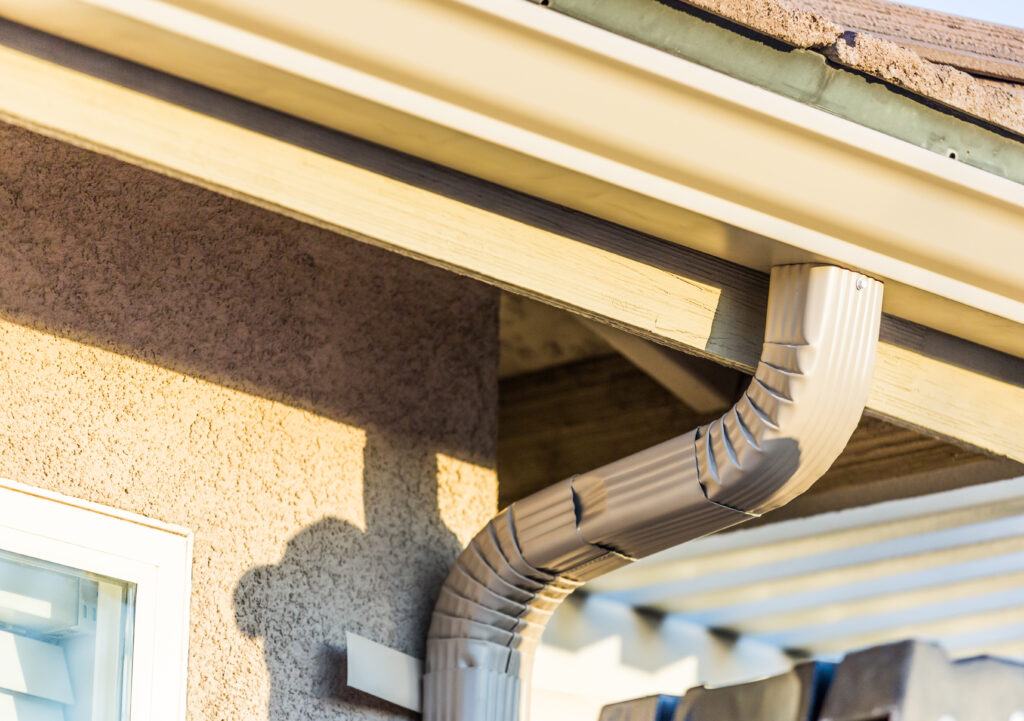
    House with New Seamless Aluminum Rain Gutters.

    Step-by-Step: What Happens If Gutters Are Removed?

    If you decide to proceed with removal, here is what the process typically looks like. Understanding these steps helps you verify that your contractor is following best practices.

    1. Detachment: The crew carefully unscrews or unclips the gutters from the fascia board. They take care not to pull on the downspouts too hard, which could damage the underground drainage pipes.
    2. Labeling and Storage: Each section of the gutter is labeled according to its position on the house (e.g., “North Side,” “Front Left”). They are then stacked horizontally in a safe, flat area to prevent warping.
    3. Roof Work: The roofers proceed with the tear-off, installation of underlayment, drip edge, and new shingles. With the gutters gone, they have unobstructed access to the eaves.
    4. Reinstallation: Once the new roof is complete, the gutters are reattached. The crew checks the pitch (slope) to ensure water flows correctly toward the downspouts.
    5. Sealing and Testing: All joints are re-sealed with high-quality silicone or gutter sealant. Finally, they run water through the system to check for leaks and proper flow.

    Expert Insight: The Importance of Drip Edge

    One technical aspect often overlooked by homeowners is the drip edge. This is a metal flashing placed along the edges of the roof to direct water away from the fascia and into the gutters.

    If gutters are not removed, installing a proper drip edge can be difficult. The existing gutter hangers may interfere with the placement of the metal. According to building codes and best practices referenced by Wikipedia, proper flashing integration is essential for moisture management. Without it, water can wick back under the shingles, rotting the wood decking and causing interior ceiling damage.

    Therefore, even if you want to keep your gutters, ensure your roofer can install a continuous drip edge without compromising the gutter’s position. If they cannot, removal is the safer option.

    Cost Implications

    Homeowners often worry about the extra cost. Typically, removing and reinstalling gutters adds between $200 to $500 to the total roofing bill, depending on the linear footage and complexity. However, consider this: if your gutters are damaged during the roof replacement, the repair or replacement cost could range from $500 to $2,000+.

    Paying for professional removal is essentially an insurance policy for your drainage system. It ensures that when the job is done, everything works as it should.

    FAQ Section

    1. Will my warranty be voided if I don’t remove my gutters?

    Not necessarily, but many roofing manufacturers require proper installation methods to honor their warranties. If improper flashing installation due to obstructed gutters leads to a leak, the warranty claim might be denied. Always check with your contractor about manufacturer requirements.

    2. Can I replace my gutters at the same time as my roof?

    Yes, this is often the best time to do it. Since the gutters are already off, you can upgrade to a newer, more durable system without paying extra labor for removal. Many homeowners choose to install seamless aluminum or copper gutters during a roof replacement.

    3. How long does it take to remove and reinstall gutters?

    For an average-sized home, removal takes about 1–2 hours, and reinstallation takes another 2–4 hours. This is usually done on the first and last days of the roofing project, so it doesn’t significantly delay the overall timeline.

    4. What if my gutters are glued or sealed to the roof?

    In some older installations, gutters may be adhered directly to the fascia or roof edge. In these cases, removal is mandatory and must be done carefully to avoid damaging the wood. Your contractor will need to scrape off old adhesive and prepare the surface for reinstallation.

    5. Do I need to clean my gutters after the roof is replaced?

    Absolutely. Even with protective measures, small granules from new shingles and dust will accumulate in the gutters. Schedule a cleaning within a week of project completion to ensure proper water flow.

    Conclusion

    So, do gutters have to be removed when replacing a roof? While not legally mandatory, it is highly recommended by professionals to ensure the highest quality installation and protect your investment. Removing gutters allows for proper flashing installation, prevents accidental damage, and ensures a cleaner, more efficient workflow.

    By understanding the process and weighing the pros and cons, you can make the best decision for your home. Remember, a roof replacement is a long-term investment. Taking the extra step to protect your gutters now will save you from costly repairs and leaks in the future.

    If you found this guide helpful, please share it with friends or family who are planning their own home improvements. Knowledge is power when it comes to protecting your biggest asset—your home!