Have you ever stared at your ceiling during a storm, worrying about leaks, only to hesitate on calling a roofer because you’re afraid of the disruption? You are not alone. Many homeowners delay necessary repairs because they dread the noise, the mess, and the uncertainty of the schedule. Understanding exactly how long does it take to install a new roof can help you plan your life around the project, minimizing stress and maximizing convenience.
In this guide, we will break down the typical timelines, the variables that speed up or slow down the process, and what you can expect from start to finish. Whether you have a modest ranch-style home or a sprawling two-story colonial, knowing the timeline empowers you to make informed decisions.
The Short Answer: Typical Roofing Timelines
If you are looking for a quick estimate, here is the general rule of thumb for residential roofing in the United States:
- Small to Medium Homes (1,500–2,500 sq. ft.): 1 to 2 days.
- Large or Complex Homes (3,000+ sq. ft.): 2 to 4 days.
- Complex Architectures (Multiple peaks, steep pitches): 3 to 5+ days.
For the most common roofing material in the US—asphalt shingles—a professional crew can typically complete a tear-off and replacement in one to three days. However, “typical” does not mean “guaranteed.” Several critical factors influence this window.
What Factors Influence Roof Installation Time?
When asking how long does it take to install a new roof, you must consider the unique characteristics of your property. A roofing contractor cannot give you an exact hour-by-hour schedule without inspecting these variables.
1. Roof Size and Complexity
The square footage is the most obvious factor. A simple gable roof is much faster to strip and replace than a hip roof with multiple valleys, dormers, and chimneys. Every penetration (like a vent pipe or skylight) requires careful flashing work, which adds time.
2. Type of Roofing Material
Not all materials are created equal when it comes to installation speed.
| Material | Estimated Installation Time | Difficulty Level |
|---|---|---|
| Asphalt Shingles | 1–3 Days | Low |
| Metal Roofing | 2–5 Days | Medium |
| Clay/Concrete Tile | 5–10 Days | High |
| Slate | 7–14 Days | Very High |
| Wood Shake | 3–6 Days | Medium-High |
Source: Industry standards based on average crew productivity.
Asphalt shingles are lightweight and easy to handle, allowing crews to work quickly. In contrast, slate and clay tiles are heavy, fragile, and require specialized labor, significantly extending the timeline.
3. Weather Conditions
Roofing is an outdoor job, making it highly susceptible to weather. Rain, high winds, or extreme heat can halt work entirely.
- Rain: Wet roofs are slippery and dangerous. Furthermore, you cannot install underlayment or shingles on a wet deck as it traps moisture, leading to mold and rot.
- Wind: High winds can blow away loose materials and make handling large sheets of underlayment impossible.
- Heat: Extreme heat can soften asphalt shingles, making them difficult to nail properly without damaging them.
4. Structural Repairs Needed
Once the old roof is torn off, the truth is revealed. If the roofing deck (the wood beneath the shingles) has rot, water damage, or structural weakness, it must be repaired before new materials can be installed. This unexpected step can add 1–2 extra days to your project.
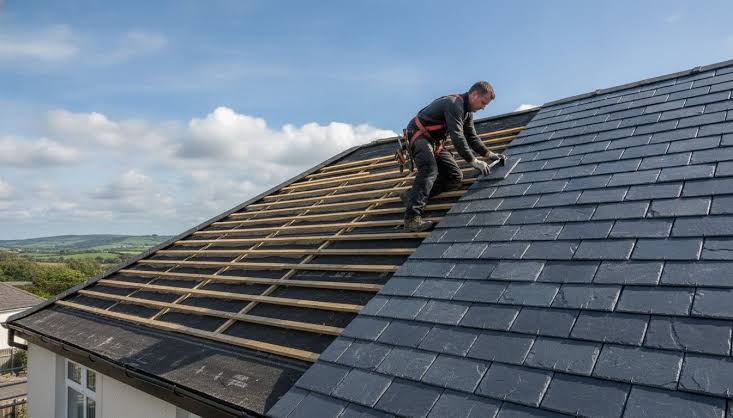
Step-by-Step: The Roof Installation Process
Understanding the workflow helps you see why each day is necessary. Here is a breakdown of a standard asphalt shingle replacement.
Day 1: Preparation and Tear-Off
The crew arrives early, usually between 7:00 AM and 8:00 AM. They will set up safety equipment, including ladders and harnesses. They also place tarps around your home to protect landscaping and catch falling debris.
The next phase is the tear-off. Workers remove the old shingles, underlayment, and nails. This is the noisiest part of the process. Once the roof is bare, they inspect the decking. If repairs are needed, they are completed immediately. By the end of Day 1, the roof deck should be clean, dry, and ready for new materials.
Day 2: Underlayment and Flashing
With the deck prepped, the team installs the ice and water shield along the eaves and valleys. This is a critical step for preventing leaks in areas prone to ice dams. Next, they roll out the synthetic underlayment over the entire roof surface.
Flashing is then installed around chimneys, vents, and walls. Proper flashing is essential; according to the National Roofing Contractors Association, improper flashing is one of the leading causes of roof leaks. This meticulous work ensures that water is directed away from vulnerable joints.
Day 3: Shingle Installation and Cleanup
This is the most visible phase. Crews start from the bottom edge (the drip edge) and work their way up, row by row. They ensure proper alignment and nailing patterns to meet manufacturer warranties.
Once the shingles are down, they install ridge vents for proper attic ventilation. Finally, the crew performs a thorough cleanup. They use magnetic rollers to pick up stray nails from your yard and driveway, ensuring your property is safe for pets and children.
Why Choosing the Right Contractor Matters
You might wonder why some quotes promise a one-day job while others say three. Experience plays a huge role. A well-coordinated crew with the right equipment can work efficiently without cutting corners.
However, beware of contractors who promise unrealistically fast timelines. Rushing can lead to:
- Missed nails or improper nailing depth.
- Poorly sealed flashing.
- Inadequate cleanup.
Always check reviews, ask for references, and verify licensing. A reputable contractor will provide a realistic timeline that accounts for potential weather delays and structural surprises.
Frequently Asked Questions (FAQ)
1. Can a roof be replaced in one day?
Yes, for smaller homes (under 2,000 sq. ft.) with simple rooflines and asphalt shingles, a large, experienced crew can complete the job in one day. However, this leaves little room for error or unexpected repairs.
2. Do I need to be home during the roof installation?
It is not strictly required, but it is recommended to be available for the initial walkthrough and final inspection. Ensure you have a way to contact the foreman if questions arise. Also, secure pets indoors, as the noise and open gates can be stressful for animals.
3. What happens if it rains during the installation?
If rain is forecast, contractors will monitor the weather closely. If the roof is torn off but not yet covered, they may use temporary tarps to protect the deck. However, most professionals will avoid tearing off a roof if heavy rain is imminent. Expect a possible delay of 1–2 days.
4. How long does a roof inspection take before installation?
A thorough pre-installation inspection usually takes 30 to 60 minutes. The inspector will check the current condition, measure the roof, and identify any potential structural issues. This step is crucial for an accurate quote and timeline.
5. Will my homeowner’s insurance cover the time it takes to install a new roof?
Insurance typically covers the cost of materials and labor for damage caused by covered perils (like hail or wind), not the duration of the work. However, if the installation is delayed due to additional damage discovered, your adjuster may need to re-evaluate the claim.
6. Is it normal for there to be noise inside the house?
Yes. Roofing involves hammering, walking on the deck, and dropping debris. The vibration can be felt throughout the house. If you work from home or have small children napping, consider planning alternative arrangements for the loudest days (usually Day 1).
Conclusion
So, how long does it take to install a new roof? For most American homeowners using asphalt shingles, the answer is 1 to 3 days. While this seems short, the preparation, execution, and cleanup involve significant labor and precision.
By understanding the factors that influence this timeline—such as roof complexity, material choice, and weather—you can set realistic expectations. Remember, a slightly longer timeline often indicates a contractor who prioritizes quality and safety over speed.
Don’t let the fear of disruption keep you from protecting your home. A new roof adds value, efficiency, and peace of mind. If you found this guide helpful, please share it on social media to help friends and family prepare for their own roofing projects!