Have you ever looked at your home’s flat or low-slope roof and dreamed of the durability and sleek aesthetic of metal? It is a common dilemma for homeowners who want the longevity of steel or aluminum but are stuck with a structure that wasn’t originally designed for it. The short answer to the question “Can you put a metal roof on a flat roof“ is yes, but it comes with significant engineering caveats that you cannot ignore.
Water is the enemy of any roofing system, and flat roofs are particularly vulnerable because they lack the natural gravity-assisted drainage of steep pitches. Installing metal on such a surface requires precise planning, specific materials, and often, a structural modification to ensure water sheds effectively rather than pools. In this guide, we will break down exactly how to do it right, avoiding costly leaks and structural failures.
Understanding the Critical Role of Roof Pitch
Before you buy a single sheet of metal, you must understand the concept of “pitch.” In roofing terms, pitch refers to the steepness of the roof. Traditional metal roofing panels, such as corrugated or exposed-fastener panels, rely heavily on gravity to move water off the roof quickly.
What Is the Minimum Slope for Metal Roofing?
Most manufacturers and building codes require a minimum slope for standard metal roofing. Typically, this is 3:12, meaning the roof rises 3 inches for every 12 inches of horizontal run. However, some specialized standing seam systems can go as low as 1/4:12 or 0.5:12 if installed with sealed seams and strict adherence to manufacturer guidelines.
If your roof is truly “flat” (0:12 pitch), you generally cannot install standard metal panels directly. Water will pool, leading to inevitable leaks, corrosion, and eventual collapse under the weight of standing water or snow.
Expert Insight: According to general construction principles detailed on Wikipedia’s Roof page, proper drainage is the primary function of any roof covering. Without adequate slope, the roofing material becomes secondary to the waterproofing membrane beneath it.
Methods to Install Metal on Low-Slope Roofs
If you are determined to have a metal look on a flat or near-flat roof, you have three primary pathways. Each varies in cost, complexity, and effectiveness.
1. Creating a Slope with Framing (The Best Option)
The most effective way to install a metal roof on a flat structure is to change the geometry of the roof itself. This involves building a new frame over the existing flat roof to create the necessary pitch.
- Step 1: Assess the structural integrity of your current roof to ensure it can hold the added weight of lumber and metal.
- Step 2: Install tapered insulation or wooden sleepers (framing) that are higher at the back and lower at the front (or vice versa) to create a slope.
- Step 3: Ensure the new slope meets the minimum 3:12 requirement for standard panels or 1/4:12 for specialized standing seam systems.
- Step 4: Install the metal roofing over this new framed structure.
This method ensures that water runs off efficiently, mimicking a traditional pitched roof while sitting atop your flat structure.
2. Using Standing Seam Metal Roofing
Standing seam metal roofs are different from traditional corrugated panels. The fasteners are hidden under the raised “seams,” and the panels are often mechanically locked or sealed. This design allows them to handle lower slopes better than exposed-fastener panels.
- Pros: Superior watertightness, thermal expansion accommodation, and sleek modern look.
- Cons: Higher cost, requires professional installation, and still requires some slope (usually minimum 1/4:12).
Note: Even with standing seam, a completely flat (0:12) roof is risky. Most engineers recommend a slight taper even for these systems.
3. Hybrid Systems: Metal Over Membrane
In some commercial applications, a metal roof is installed over a rigid insulation board that provides both thermal resistance and a slight slope. This is often called a “tapered insulation system.” The metal acts as the weather barrier, but the underlying insulation directs water to drains.
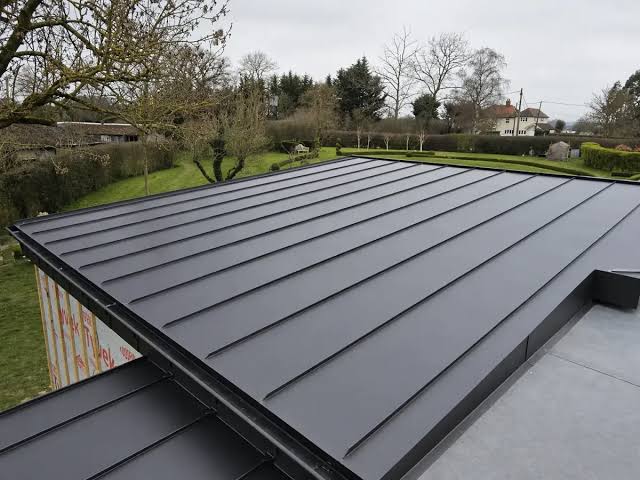
Comparison: Standard Panels vs. Standing Seam for Flat Roofs
To help you decide which route to take, here is a quick comparison of the two most common metal roofing types in the context of low-slope applications.
| Feature | Exposed-Fastener (Corrugated) | Standing Seam |
|---|---|---|
| Min. Slope Required | 3:12 (Recommended) | 1/4:12 to 1/2:12 |
| Water Tightness | Moderate (relies on gaskets) | High (mechanical locks/sealants) |
| Cost | Lower | Higher |
| Installation Difficulty | DIY-friendly | Professional Only |
| Suitability for Flat | Poor | Good (with minimal slope) |
| Lifespan | 20–30 Years | 40–50+ Years |
As you can see, if you are working with a very low slope, standing seam is the only viable metal option. Trying to force corrugated panels onto a flat roof is a recipe for disaster.
Step-by-Step Guide to Preparing Your Flat Roof for Metal
If you have decided to proceed, follow these general steps to ensure a high-quality installation. Remember, local building codes vary, so always consult a structural engineer first.
- Inspect the Existing Deck: Ensure the current flat roof deck is solid, dry, and free of rot. Repair any structural weaknesses.
- Install Vapor Barrier: Place a vapor barrier over the existing deck to prevent moisture from trapping between the old roof and the new metal system.
- Create the Slope: Install tapered rigid foam insulation or wood framing. Start with a thickness of 2 inches at the drain edge and increase by 1 inch for every foot of run until you reach your desired pitch.
- Add Sheathing: Install plywood or OSB sheathing over the tapered insulation to provide a nailing base for the metal panels.
- Apply Underlayment: Use a high-quality synthetic underlayment. For low slopes, consider an ice and water shield for extra protection against wind-driven rain.
- Install Metal Panels: Begin at the eave and work your way up. For standing seam, use a mechanical seamer to lock the panels together tightly.
- Seal All Penetrations: Use high-grade urethane sealant around vents, chimneys, and edges. Pay special attention to the ridge cap.
Common Mistakes to Avoid
Even with the best intentions, homeowners and contractors make errors that compromise the roof.
- Ignoring Drainage: Never assume water will evaporate. You must have scuppers, gutters, or internal drains.
- Using Wrong Fasteners: On low slopes, water moves slower. If you use screws with poor sealing washers, water will wick into the screw holes. Always use color-matched, rubber-washed screws designed for metal roofing.
- Skipping the Engineer: Flat roofs often have different load-bearing capacities than pitched roofs. Adding framing and metal adds weight. Always get a structural sign-off.
FAQ Section
1. Can I put metal roofing directly on a 0:12 flat roof?
No, it is highly discouraged. Without any slope, water will pool, leading to leaks, corrosion, and potential structural damage. You must create a slope using framing or tapered insulation before installing metal.
2. What is the cheapest way to put a metal roof on a flat roof?
The cheapest method is usually installing a standing seam system over a minimal tapered insulation layer. However, “cheap” can be relative; fixing leaks later is far more expensive. Avoid using cheap corrugated panels on low slopes as they will fail.
3. Does a metal roof make a flat roof hotter?
Metal reflects solar radiant heat, which can actually keep your attic or top floor cooler compared to asphalt membranes, especially if you choose a light-colored or “cool roof” coated metal. However, without proper ventilation and insulation, heat can still transfer.
4. How long does a metal roof last on a flat structure?
If installed correctly with adequate slope and drainage, a standing seam metal roof can last 40 to 70 years. This is significantly longer than traditional flat roof materials like EPDM or TPO, which typically last 15–25 years.
5. Do I need a permit to install a metal roof on my flat roof?
Yes, almost certainly. Changing the roofing material and potentially altering the structure (by adding framing for slope) requires a building permit. Check with your local municipality to ensure compliance with zoning and safety codes.
6. Can I install metal roofing over an existing EPDM rubber roof?
You should not install metal directly over EPDM. The rubber membrane needs to breathe, and friction between the metal and rubber can cause wear. Instead, remove the EPDM or install a separation layer and a new substrate (like plywood over framing) before installing the metal.
Conclusion
So, can you put a metal roof on a flat roof? Yes, but not directly. The key lies in creating adequate drainage through structural modifications like tapered insulation or framing. By opting for a standing seam metal roof and ensuring a minimum slope of 1/4:12, you can enjoy the durability, aesthetic appeal, and longevity of metal without the risk of water pooling.
Investing in professional design and installation is crucial. While the upfront cost may be higher than traditional flat roofing materials, the lifespan and low maintenance of metal make it a smart long-term investment for your home.
Found this guide helpful? Share it with your friends on Facebook or Pinterest who are considering their next roofing project!