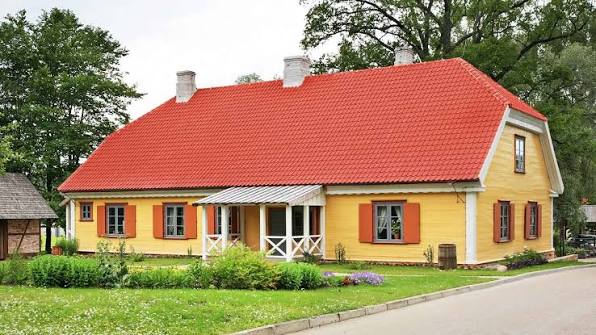
Choosing the right exterior paint when you have a distinctive architectural feature like a red roof can feel daunting. You want your home to look cohesive and stylish, not clashing or overwhelming. If you are wondering what color to paint a house with a red roof, you are in the right place to find harmonious and stunning solutions.
A red roof is a bold statement. It draws the eye immediately, which means the rest of your home’s exterior needs to balance that intensity rather than compete with it. Whether you have a traditional brick home, a modern farmhouse, or a rustic cottage, the right wall color can transform your property from “busy” to “beautiful.”
In this guide, we will break down the science of color theory, explore top-tier color combinations, and provide actionable tips to help you make the perfect choice for your home.
Why Is Choosing Paint for a Red Roof So Challenging?
Before diving into specific colors, it is essential to understand why this task feels difficult. Red is a “warm” color with high visual weight. When paired incorrectly, it can make a house look dated or visually chaotic.
However, when paired correctly, a red roof adds warmth, character, and a touch of traditional charm. The key lies in understanding the undertones of your specific red roof. Not all reds are the same. Some lean towards orange (terracotta), while others lean towards purple (burgundy) or brown (rust).
- Orange-based Reds: Pair best with warm neutrals, creams, and earthy greens.
- Purple/Brown-based Reds: Pair beautifully with cool grays, crisp whites, and deep blues.
Ignoring these undertones is the most common mistake homeowners make. By identifying your roof’s specific hue, you narrow down your options significantly.
Top 5 Color Palettes That Complement a Red Roof
Here are the most effective color strategies used by professional exterior designers. These combinations have stood the test of time and continue to boost property value.
1. Crisp White: The Timeless Classic
There is a reason why white houses with red roofs are iconic, particularly in Colonial and Cape Cod styles. White provides the highest possible contrast against a red roof, making both elements pop without clashing.
- Why it works: White acts as a neutral canvas. It reflects light, making the home feel larger and brighter, while allowing the red roof to serve as the primary accent.
- Best Shade: Avoid stark, clinical whites. Opt for off-whites or creamy whites (like Benjamin Moore’s White Dove or Sherwin-Williams’ Alabaster) to soften the contrast and add warmth.
- Trim Advice: Use a slightly darker shade of white or a soft gray for trim to add depth.
2. Warm Beige and Taupe: The Earthy Harmony
If white feels too stark, beige and taupe are excellent alternatives. These earth tones share the same warm family as many red roofs, creating a seamless and inviting look.
- Why it works: Beige bridges the gap between the ground and the sky. It creates a monochromatic warmth that feels grounded and stable.
- Best Shade: Look for beiges with yellow or pink undertones. Avoid beiges that are too gray, as they might clash with the warmth of the red.
- Ideal For: Ranch-style homes and suburban neighborhoods where blending in is preferred over standing out.
3. Soft Gray: The Modern Contrast
Gray has become increasingly popular in the last decade. However, not all grays work with red. You must choose carefully.
- Why it works: A cool, light gray provides a sophisticated, modern counterpoint to the traditional feel of a red roof. It updates the look of an older home instantly.
- Best Shade: Stick to light to medium grays with cool undertones. Dark charcoal can sometimes feel too heavy when paired with a bright red roof, unless the roof is a dark burgundy.
- Caution: Ensure the gray does not have strong blue undertones if your roof is orange-red, as this can create visual vibration.
4. Sage and Olive Green: The Natural Blend
Green and red are complementary colors on the color wheel, meaning they sit opposite each other. This makes them natural partners, provided you adjust the saturation.
- Why it works: This combination mimics nature (think red berries on green leaves). It is incredibly pleasing to the human eye and works exceptionally well for homes surrounded by landscaping.
- Best Shade: Avoid bright Kelly green. Instead, choose muted, desaturated greens like sage, olive, or eucalyptus. These softer greens allow the red roof to shine without fighting for attention.
- Expert Tip: This palette is perfect for Craftsman and Bungalow style homes.
5. Navy and Slate Blue: The Bold Statement
For those who want a dramatic, high-end look, blue is a surprising but effective choice.
- Why it works: Blue is a cool color that balances the heat of the red roof. Deep navy creates a regal, stately appearance, while slate blue offers a more relaxed, coastal vibe.
- Best Shade: Navy blue pairs beautifully with dark red or burgundy roofs. Slate blue works well with brighter terracotta roofs.
- Trim Advice: Keep trim white or cream to prevent the house from looking too dark.
Comparison Table: Quick Reference Guide
To help you visualize these options, here is a quick comparison of the top contenders.
| Wall Color | Best Roof Undertone | Vibe/Style | Maintenance Level |
|---|---|---|---|
| Crisp White | Any (Especially Burgundy) | Traditional, Clean | High (shows dirt) |
| Warm Beige | Orange/Terracotta | Cozy, Suburban | Low |
| Light Gray | Purple/Brown Red | Modern, Sophisticated | Medium |
| Sage Green | Brick Red/Rust | Rustic, Natural | Medium |
| Navy Blue | Dark Red/Burgundy | Bold, Dramatic | Low |
Understanding Color Theory for Exteriors
To make an informed decision, it helps to understand the basics of color theory. According to principles documented in resources like Wikipedia’s entry on Color Theory, colors interact in specific ways that affect human perception.
- Complementary Colors: As mentioned, green and red are opposites. Using muted versions of both creates balance.
- Analogous Colors: These are next to each other on the wheel (e.g., red, orange, yellow). Using beige (which has yellow/orange tones) with a red roof creates harmony.
- Monochromatic: Using different shades of the same hue. A dark red house with a lighter red roof is risky but can work if done with extreme precision.
Pro Tip: Always consider the 60-30-10 rule.
- 60% of your exterior should be the main wall color.
- 30% should be the trim, doors, and shutters.
- 10% should be the accent (often the roof or front door).
Since the roof is already a dominant 10-20% of the visual field, your wall color (the 60%) must support it, not fight it.
Step-by-Step Guide to Testing Your Color Choice
Do not buy gallons of paint based on a small chip at the hardware store. Exterior lighting changes dramatically throughout the day. Follow these steps to ensure success:
- Identify the Roof Undertone: Look at your roof in direct sunlight. Does it look more orange, purple, or brown? Write this down.
- Buy Sample Pots: Purchase small sample sizes of your top 3 choices.
- Paint Large Swatches: Paint at least a 2×2 foot square on different sides of your house (north, south, east, west).
- Observe at Different Times: Check the colors in the morning, noon, and evening. Note how artificial lighting affects them at night.
- Check Against Fixed Elements: Ensure the paint looks good against your brick, stone, or landscaping, not just the roof.
Frequently Asked Questions (FAQ)
Q: Can I paint my house black with a red roof?
A: Yes, but it is a bold choice. Black walls with a red roof create a high-contrast, modern industrial look. It works best if the red roof is dark (burgundy or maroon) rather than bright cherry red. Ensure you have ample white trim to break up the darkness.
Q: What color trim goes best with a red roof and beige walls?
A: White trim is the safest and most classic choice. It provides a clean separation between the beige walls and the red roof. Alternatively, a dark brown trim can anchor the look if you want a more rustic, earthy feel.
Q: Does the style of my house matter when choosing paint?
A: Absolutely. A Victorian home can handle complex, multi-color schemes, while a Mid-Century Modern home looks best with simple, solid blocks of color. Always respect the architectural integrity of your home.
Q: Will a dark paint color make my house hotter?
A: Yes, darker colors absorb more heat. If you live in a hot climate, lighter colors like white, beige, or light gray are more energy-efficient. However, modern reflective paints can mitigate this issue even with darker shades.
Q: How often should I repaint my exterior?
A: Most high-quality exterior paints last between 5 to 10 years. Factors like sun exposure, humidity, and paint quality will affect longevity. Regular inspections can help you catch fading or peeling early.
Conclusion
Deciding what color to paint a house with a red roof does not have to be stressful. By focusing on the undertones of your roof and choosing a wall color that either harmonizes (beige, sage) or contrasts elegantly (white, gray, blue), you can achieve a stunning curb appeal.
Remember, the goal is balance. Let the red roof be the star, and let your wall color be the supporting actor that makes it shine.
Did you find this guide helpful? Share this article with friends or neighbors who are planning their next home improvement project! Don’t forget to pin your favorite color combinations to Pinterest for future reference.
Leave a Reply