Have you ever looked at the sleek rain gutters on your Volkswagen T1N (Transporter) and wondered if they could double as sturdy anchor points for your gear? It is a common question among van lifers and outdoor enthusiasts who want to maximize storage without drilling into their vehicle’s roof. The short answer regarding whetherT1N can you use roof gutters to mount roof rack is complex: while physically possible with specific adapters, it is generally discouraged by experts due to significant structural and safety risks.
In this guide, we will dismantle the myths, explore the engineering realities, and provide you with safe, reliable alternatives to keep your adventures secure and your warranty intact.
Why Do People Want to Use Rain Gutters for Mounting?
The appeal is obvious. Drilling holes into the roof of a brand-new or well-maintained van feels invasive. Many owners fear leaks, rust, and voided warranties. The rain gutter, which runs along the edge of the roof, seems like a pre-existing, robust metal channel designed to handle weight and weather.
However, automotive design does not always align with aftermarket accessory needs. To understand why this is a contentious topic, we must look at how these components are engineered.
The Engineering Mismatch
Vehicle rain gutters are primarily designed for water management, not structural load-bearing. Their main job is to channel rainwater away from the doors and windows. While they are made of steel or aluminum, they are often thin-gauge metals attached to the body panel with spot welds or adhesives.
According to general automotive engineering principles, structural integrity relies on the vehicle’s frame and reinforced pillars, not the exterior trim. When you clamp a heavy roof rack onto a gutter, you introduce two dangerous forces:
Vertical Load: The weight of the rack and cargo pushing down.
Leverage/Torque: Wind resistance and dynamic movement while driving create a prying effect that can rip the gutter away from the roof skin.
Most modern vans, including the VW T1N series, have roofs made of relatively thin sheet metal to save weight and improve fuel efficiency. The gutters are often just folded edges of this sheet metal or separate strips welded on.
Deformation: Heavy clamps can crush the gutter, leading to poor water drainage and eventual rust.
Detachment: In high-wind conditions or during off-road driving, the vibration can loosen clamps. If the gutter tears, you are left with a damaged roof that requires expensive bodywork.
Warranty Voidance: Most manufacturers, including Volkswagen, explicitly state that modifications causing damage to body panels are not covered. If a gutter rips off because of an improperly mounted rack, your insurance may deny the claim.
Expert Insight: Automotive safety engineers consistently recommend using designated mounting points. As noted in general vehicle safety standards documented on Wikipedia, roof racks should be anchored to the vehicle’s structural frame to withstand dynamic loads during emergency maneuvers.
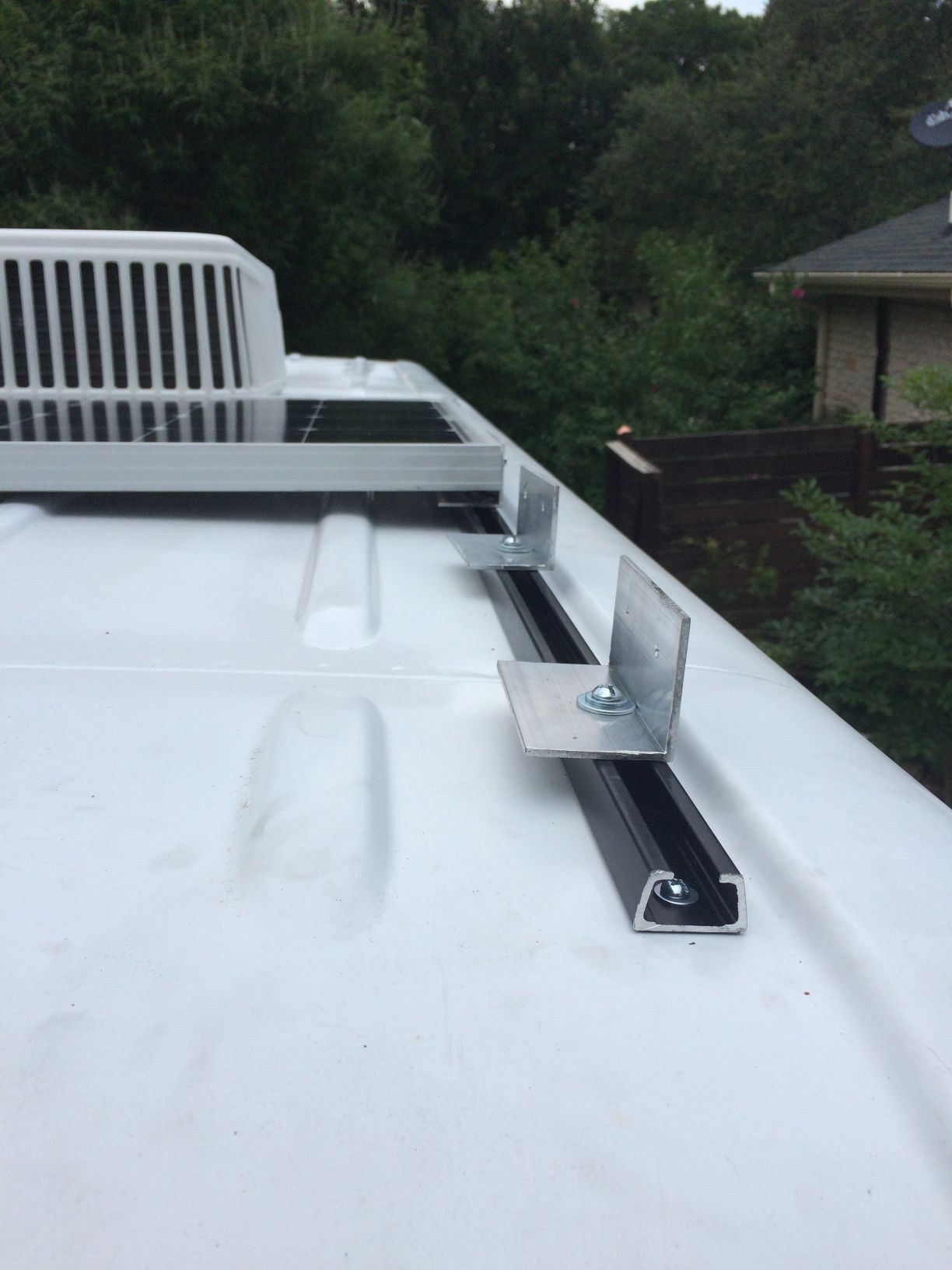
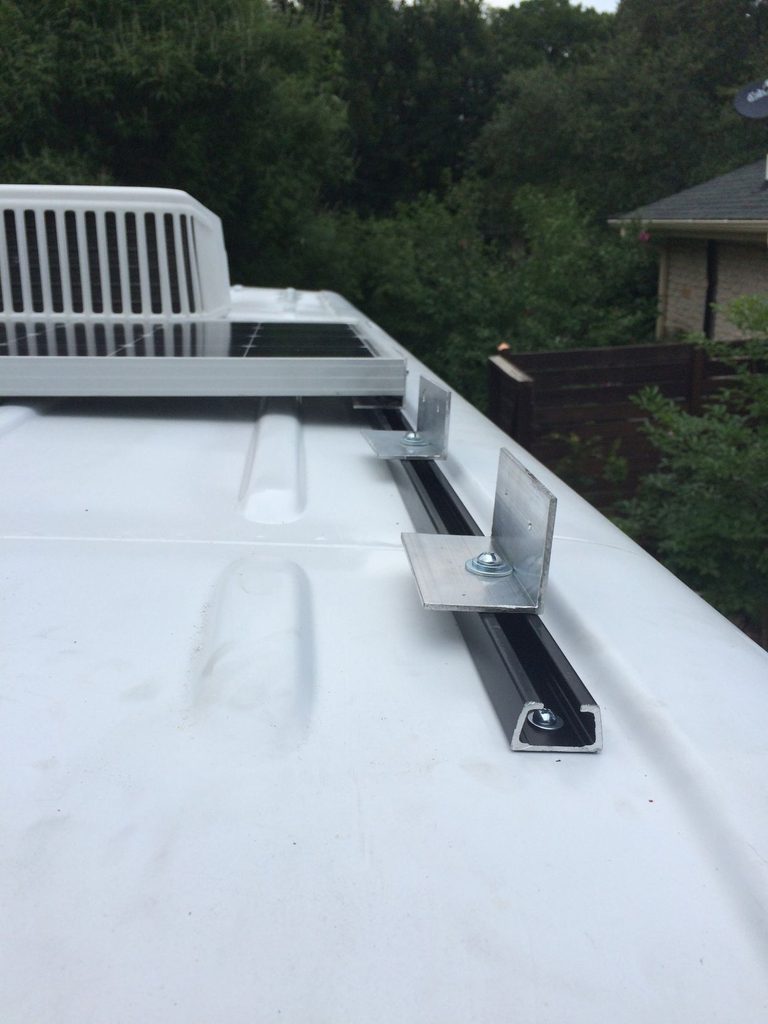
brackets for the solar panels
Better Alternatives: How to Properly Mount a Rack on a T1N
Instead of risking your gutters, consider these proven methods that offer superior safety and stability.
1. Door Jamb Clamps (Gutterless Mounts)
If your T1N has a seamless roof without visible gutters, or if you want to avoid the gutter entirely, door jamb mounts are the industry standard.
How it works: These racks use rubber-padded claws that grip the top edge of the door frame.
Pros: No drilling required; distributes weight across the stronger door pillar structure.
Cons: Requires opening doors to install/remove; slight gap between rack and roof.
2. Fixed Point Mounts (Drill-In)
For permanent solutions, fixed point mounts are the gold standard.
How it works: You identify the reinforced areas of the roof (usually marked by dimples or specified in the owner’s manual) and drill through the inner and outer roof skins to bolt directly into the internal frame.
Pros: Maximum strength; aerodynamic profile; no movement.
Cons: Permanent modification; requires professional installation to ensure waterproof sealing.
3. Track Systems
Some T1N models come with pre-installed tracks or rails.
How it works: Slide-in feet lock into existing channels.
Pros: Easy to adjust; uses factory-engineered strong points.
Cons: Limited to specific rack brands compatible with the track profile.
Comparison: Gutter Mount vs. Recommended Methods
To help you decide, here is a quick breakdown of the options.
Feature
Gutter Clamp Mount
Door Jamb Mount
Fixed Point (Drilled)
Installation Difficulty
Easy
Moderate
Hard (Professional Rec.)
Structural Safety
Low
High
Very High
Risk of Leaks
Medium (if gutter damages)
Low
Low (if sealed properly)
Aerodynamics
Poor (bulky)
Good
Excellent
Reversibility
Yes
Yes
No
Cost
Low
Moderate
High
Step-by-Step: Installing a Safe Door Jamb Rack
Since we advise against using gutters, here is how to safely install a door-jamb style rack on your T1N.
Clean the Contact Points: Wipe the top edge of your door frames with isopropyl alcohol. Dirt can cause slippage.
Position the Feet: Place the rack feet on the door jambs, ensuring they are centered over the strongest part of the pillar (usually near the hinges or latch).
Adjust Width: Extend the crossbars to match the width of your van. Ensure they are parallel.
Tighten Gradually: Tighten the clamps evenly. Do not overtighten one side before the other. Use a torque wrench if specified by the manufacturer (typically 5–7 Nm).
Check Clearance: Open and close all doors to ensure the rack does not interfere with door movement.
Load Test: Before hitting the highway, place a moderate load on the rack and drive at low speeds to check for shifting or noise.
Frequently Asked Questions (FAQ)
1. Can I use soft straps to tie a rack to my T1N gutters?
While soft straps are less likely to crush the metal than hard clamps, they are not recommended for securing a rigid roof rack. Straps can stretch, loosen over time, and abrade the paint. They are suitable for temporary cargo tying, not for mounting the rack structure itself.
2. Will using gutter clips void my Volkswagen warranty?
It depends on the damage. If the clips cause dents, tears, or rust in the gutter area, Volkswagen will likely deny warranty coverage for those specific repairs. Always consult your dealer before modifying attachment points.
3. What is the weight limit for a T1N roof?
Most VW Transporter models have a dynamic roof load limit (while driving) of around 75 kg (165 lbs) and a static limit (when parked) of 300–500 kg. Always check your specific owner’s manual, as this varies by model year and roof type.
4. Are there any adapter kits specifically for T1N gutters?
Some third-party manufacturers produce “gutter-mounted” feet, but they are rare for modern T1Ns because the gutters are often too narrow or fragile. Most reputable brands (like Thule, Yakima, or Front Runner) have moved away from gutter mounts for newer vans in favor of door-jamb or fixed-point systems.
5. How do I prevent rust if I have already used gutter clamps?
If you have already used clamps, inspect the gutters regularly. Apply a silicone-based lubricant to prevent moisture trapping. If you see paint chipping, touch it up immediately with automotive-grade paint to prevent oxidation.
Conclusion
So, T1N can you use roof gutters to mount roof rack? Technically, you might find a way to clamp something on there, but it is a gamble with your vehicle’s integrity and your safety. The rain gutters on your VW Transporter are designed for water, not wind resistance and heavy loads.
By choosing door jamb mounts or fixed-point systems, you ensure that your gear stays secure, your roof remains leak-free, and your van retains its value. Don’t let a cheap shortcut ruin your adventure—or your vehicle.
Found this guide helpful? Share it with your fellow van life community on social media to help them make safer choices on the road!
Leave a Reply