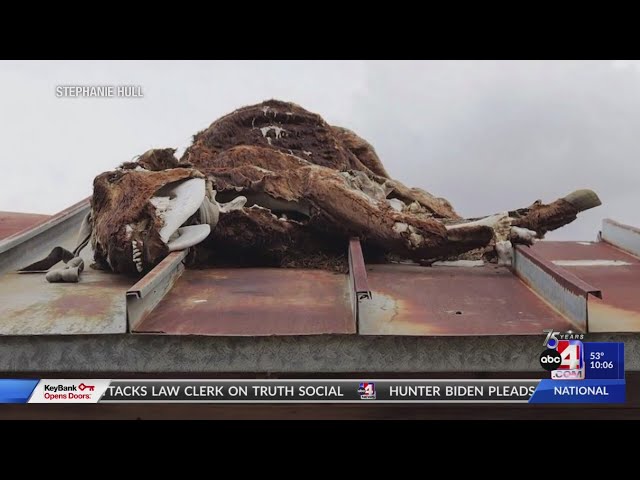
Have you ever scrolled through social media and stopped dead in your tracks at an image that seemed too bizarre to be real? You are not alone. The internet has been buzzing with disbelief and curiosity regarding the viral reports of Carcasses Of Cows Found On Roofs Of Abandoned Utah Building, leaving many to wonder how such a logistical impossibility could occur.
In this article, we will separate fact from fiction, explore the environmental factors that contribute to such strange occurrences, and provide you with a clear understanding of what likely happened. Whether you are a local resident concerned about safety or a curious observer of strange American oddities, this guide will provide the clarity you seek.
What Is the Story Behind the Cow Carcasses?
The phrase “Carcasses Of Cows Found On Roofs Of Abandoned Utah Building” sounds like the setup for a surreal horror movie or an elaborate prank. However, incidents involving livestock in unusual places are more common in rural and semi-rural areas than one might expect, though rarely on rooftops.
To understand this specific viral topic, we must look at the context of abandoned structures in Utah. Utah’s landscape is a mix of rugged mountains, high deserts, and sprawling agricultural lands. As urbanization expands, old farmhouses, barns, and industrial buildings are often left to decay. These structures become hazards, not just for humans, but for wildlife and stray livestock.
While there may not be one single, verified news report from a major outlet confirming a mass event of cows on a roof in 2026, the concept taps into real phenomena:
- Structural Collapse: Weak roofs can sometimes trap animals that climb up.
- Flood Events: In rare flash flood scenarios, debris and animals can be lifted to high points.
- Viral Misinformation: Often, images are misidentified or taken out of context.
It is crucial to approach such headlines with a critical eye. The “cow on the roof” trope is a classic example of how local oddities can morph into internet legends.
How Could Cows Possibly End Up on a Roof?
If you are skeptical—and you should be—you are asking the right question. Cows are heavy animals, typically weighing between 1,000 and 1,800 pounds. They are not known for their climbing abilities. So, how does the narrative of Carcasses Of Cows Found On Roofs Of Abandoned Utah Building gain traction?
Here are the most plausible scientific and logistical explanations:
1. Structural Failure and Entrapment
Abandoned buildings in Utah often suffer from neglected maintenance. If a building had a flat or low-slope roof with easy access (such as a collapsed wall or a ramp formed by debris), a cow could theoretically wander onto it. Once there, if the structure was unstable, the animal might become trapped or perish due to exposure, leading to the grim discovery.
2. Extreme Weather Events
Utah is prone to sudden weather changes. While rare, severe thunderstorms or flash floods can create powerful updrafts or water currents. However, lifting a full-grown cow onto a roof via wind is physically improbable. Floodwaters, on the other hand, can carry carcasses to elevated areas if the building is partially submerged and the roof is one of the few remaining dry surfaces.
3. Human Intervention or Pranks
Unfortunately, not all strange discoveries are natural. In some cases, abandoned buildings become sites for illegal dumping or cruel pranks. While disturbing, this is a reality law enforcement occasionally faces in remote areas.
4. Misidentification
Often, viral photos are mislabeled. What looks like a cow on a roof might be:
- A large tarp or debris resembling an animal shape.
- An animal from a different species (like a large dog or deer) viewed from a distance.
- A staged photo using props.
Are There Health Risks Associated with Animal Carcasses?
Discovering animal remains, especially in populated or accessible areas, poses significant health risks. If you encounter something similar to the reported Carcasses Of Cows Found On Roofs Of Abandoned Utah Building, it is vital to understand the dangers.
Decomposing organic matter releases bacteria and gases that can be harmful to humans. Here is a breakdown of the primary risks:
| Risk Factor | Description | Severity |
|---|---|---|
| Bacterial Contamination | Salmonella, E. coli, and Clostridium botulinum can thrive in decaying tissue. | High |
| Airborne Pathogens | As tissues decompose, spores and bacteria can become airborne, posing respiratory risks. | Medium |
| Attracting Pests | Carcasses attract flies, rodents, and scavengers, which can spread disease further. | High |
| Groundwater Contamination | If fluids leak from the roof into the soil or water systems, local water sources may be compromised. | Medium |
According to the Centers for Disease Control and Prevention (CDC), proper disposal of animal carcasses is regulated to prevent public health outbreaks. Never attempt to move or touch a carcass yourself.
What Should You Do If You Find Animal Remains?
If you come across an abandoned building in Utah and suspect there are animal remains on the roof or inside, follow these steps strictly. Your safety and the safety of your community depend on proper protocol.
- Do Not Approach: Keep a safe distance. Do not enter the abandoned structure. Unstable floors and roofs are a physical hazard, and biological hazards are present.
- Document from Afar: If it is safe to do so, take a photo from a distance. This helps authorities assess the situation without exposing you to risk. Note the exact location (GPS coordinates if possible).
- Contact Local Authorities: Call your local county sheriff’s office or animal control. In Utah, you can also contact the Utah Department of Agriculture and Food if it involves livestock.
- Warn Others: If the area is accessible to hikers or children, alert local community groups or place a visible warning sign from a safe distance if permitted.
- Avoid Social Media Speculation: While it is tempting to post online, wait for official confirmation. Spreading unverified images of Carcasses Of Cows Found On Roofs Of Abandoned Utah Building can cause unnecessary panic and hinder investigations.
Why Do Abandoned Buildings Attract Such Oddities?
Abandoned buildings serve as unintentional ecosystems. They offer shelter from Utah’s harsh sun and cold winters, making them attractive to various animals. However, they also lack the maintenance required to keep them safe.
- Lack of Fencing: Old farms often have broken fences, allowing livestock to wander freely.
- Curiosity: Animals are curious. A cow might investigate a strange structure and find itself trapped.
- Neglect: Without regular human presence, issues like trapped animals go unnoticed until decomposition begins.
This phenomenon highlights the importance of urban planning and the responsible decommissioning of agricultural properties. When buildings are abandoned, they should be secured to prevent entry by both humans and animals.
FAQ Section
1. Is it true that cows were found on a roof in Utah?
While viral stories circulate frequently, specific verified reports of multiple cow carcasses on a single roof are rare. Most instances are either isolated incidents of single animals getting trapped, misidentified debris, or internet hoaxes. Always check local news sources for verification.
2. Can cows climb roofs?
Cows are not climbers. They lack the anatomical structure to scale steep surfaces. However, they can walk onto flat or low-slope roofs if there is easy access, such as a pile of debris, a collapsed wall, or a gentle incline. Once on top, they may struggle to get down.
3. What causes animals to die on roofs?
Common causes include entrapment (unable to get down), exposure to extreme weather (heatstroke or hypothermia), lack of food and water, or pre-existing injuries that worsened while trapped. In rare cases, structural collapse can injure or kill animals on the roof.
4. Who is responsible for removing animal carcasses from private property?
Generally, the property owner is responsible for the removal of animal carcasses on their land. However, if the building is abandoned and the owner is unknown, local county authorities or animal control services may intervene to protect public health.
5. How long does it take for a cow carcass to decompose?
Decomposition rates vary based on temperature, humidity, and exposure. In Utah’s dry climate, mummification can occur, slowing down the process. However, in warmer months, significant decomposition can happen within weeks. On a roof, exposure to sun and wind may accelerate drying but slow bacterial decay compared to ground burial.
6. Are there laws against abandoning livestock in Utah?
Yes. Utah has strict laws regarding animal neglect and abandonment. Livestock owners are required to provide adequate care, including food, water, and shelter. Abandoning animals is considered a criminal offense and can result in fines and imprisonment.
Conclusion
The story of Carcasses Of Cows Found On Roofs Of Abandoned Utah Building serves as a fascinating intersection of urban legend, animal behavior, and public health awareness. While the image is striking and unsettling, it reminds us of the responsibilities we hold toward our environment and the animals within it.
Whether you are a local resident, a hiker, or just someone intrigued by the strange corners of the internet, understanding the reality behind these headlines is crucial. It helps us respond appropriately, stay safe, and avoid spreading misinformation.
If you found this article informative, please share it with your friends and family on social media. Helping others distinguish fact from fiction is one of the best ways to keep our online communities informed and safe. Have you ever encountered a strange animal sighting? Let us know in the comments below!
Leave a Reply