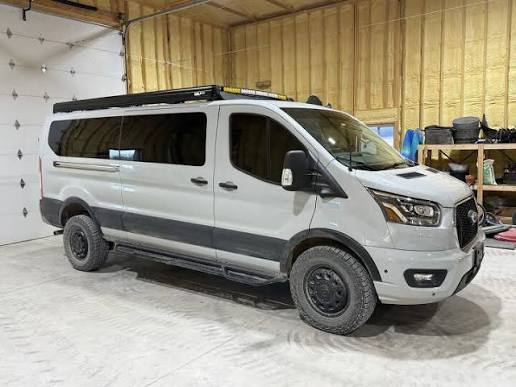
Choosing the right commercial vehicle is more than just picking a color; it’s about selecting a tool that fits your daily workflow like a glove. If you are transitioning to electric or expanding your fleet, you might be stuck debating between roof heights, wondering which option offers the best balance of utility and efficiency. This 2024 Transit 350 EV Low Roof Vs Standard Height Comparison will help you cut through the noise and make a data-driven decision for your business.
The shift to electric commercial vehicles is accelerating, with many businesses looking to reduce carbon footprints while maintaining operational efficiency. However, the physical dimensions of the vehicle play a crucial role in how it performs in real-world scenarios, from urban parking garages to suburban delivery routes. Understanding these nuances is essential before signing any lease or purchase agreement.
Why Roof Height Matters for Your Business
Before diving into the specific specs of the 2024 Ford E-Transit, it is vital to understand why this dimension is critical. Roof height affects three main areas: cargo capacity, aerodynamics (and thus range), and accessibility.
For a business owner, every cubic foot of cargo space translates to potential revenue. However, every inch of height added to the vehicle increases wind resistance, which can drain the battery faster. It is a delicate balancing act. The “Low Roof” and “Standard Height” (often referred to as Medium Roof in some contexts, but distinct in the Transit lineup) offer different solutions to this problem.
Key Specifications: The Numbers Game
To make an informed choice, we need to look at the hard data. While both models share the same chassis and powertrain, their vertical dimensions change the driving and loading experience significantly.
| Feature | 2024 Transit 350 EV Low Roof | 2024 Transit 350 EV Standard Height |
|---|---|---|
| Overall Height | Approx. 81.5 inches | Approx. 97.4 inches |
| Interior Standing Height | ~60 inches (Kneeling/Crouching) | ~72 inches (Standing) |
| Cargo Volume | ~404 cu ft | ~487 cu ft |
| Aerodynamic Drag | Lower (Better Range Potential) | Higher (Slightly Reduced Range) |
| Garage Fit | Fits most residential garages | May not fit standard garages |
Note: Exact specifications may vary slightly based on wheelbase configuration (130″ vs 148″) and optional equipment. Always verify with the official Ford builder tool.
Interior Usability: Can You Stand Up?
The most immediate difference you will notice is inside the cabin. For many tradespeople, the ability to stand upright while organizing tools or retrieving parts is a game-changer for productivity and safety.
The Standard Height Advantage With an interior standing height of approximately 72 inches, the Standard Height model allows most adults to stand fully upright. This reduces back strain during long loading sessions. If your team spends hours inside the van sorting packages or accessing heavy equipment, this ergonomic benefit is significant. It transforms the van from a mere transport box into a mobile workspace.
The Low Roof Reality The Low Roof model offers an interior height of around 60 inches. This means you will be crouching or kneeling for most tasks. While this might seem inconvenient, it is perfectly adequate for drivers who primarily load at the rear door and rarely enter the cargo area. If your workflow involves pallet jacks or forklifts loading from the back, you may never need to step inside the high-ceiling area anyway.
Cargo Capacity and Volume Analysis
When comparing the 2024 Transit 350 EV Low Roof Vs Standard Height, cargo volume is a primary differentiator. The Standard Height model offers roughly 80+ cubic feet more space than its lower counterpart.
To visualize this, imagine adding an extra row of shelving or several large appliance boxes. For HVAC technicians, plumbers, or parcel delivery services, this extra vertical space allows for taller items to be stored upright. This maximizes the floor plan efficiency because you aren’t forced to lay long items flat.
However, if your cargo consists mainly of flat, dense materials like tiles, lumber, or stacked boxes, the Low Roof might suffice. The key is to audit your typical load. Do you carry tall ladders, standing refrigerators, or tall shelving units? If yes, the Standard Height is likely necessary. If no, the Low Roof keeps the center of gravity lower and the vehicle more stable.
Impact on Range and Efficiency
One of the biggest concerns for EV adopters is range anxiety. Does the taller roof hurt your mileage? The answer is yes, but perhaps not as much as you think.
Aerodynamics play a massive role in electric vehicle efficiency. A taller vehicle presents a larger frontal area to the wind, increasing drag. According to general automotive engineering principles, drag increases with the square of speed. Therefore, at highway speeds, the Standard Height model will consume more energy than the Low Roof model.
While Ford has not released separate EPA range estimates for each roof height specifically in all marketing materials, real-world tests suggest a variance of 5-10% in range depending on driving conditions. If your route involves significant highway driving, the Low Roof could provide a tangible buffer in range. For city stop-and-go traffic, the difference is negligible.
Accessibility and Parking Constraints
Where do you park your van overnight? This simple question often dictates the roof height choice.
Residential Garages Most standard residential garage doors have a clearance of 7 feet (84 inches). The Low Roof Transit, at roughly 81.5 inches, fits comfortably in most home garages. This is a huge perk for owner-operators who want to charge their vehicle at home using a Level 2 charger without building expensive external infrastructure.
The Standard Height model, at nearly 97.4 inches, will not fit in a standard garage. You will need to park outdoors or in a commercial lot with higher clearances. This impacts security, weather protection for the vehicle, and charging convenience.
Urban Infrastructure In cities, parking garages often have height restrictions ranging from 6’8″ to 7’6″. The Low Roof navigates these structures with ease. The Standard Height model may be barred from entering older multi-story parking decks, limiting where you can make deliveries or take breaks. Always check the clearance signs in your primary operating zones.
Cost Implications and Total Cost of Ownership
Is there a price difference? Generally, the Standard Height model carries a slight premium over the Low Roof due to the additional materials and manufacturing complexity. However, the base price difference is often minimal compared to the cost of batteries or optional tech packages.
Consider the Total Cost of Ownership (TCO):
- Purchase Price: Standard Height is slightly higher.
- Energy Costs: Low Roof may save slightly on electricity due to better aerodynamics.
- Infrastructure: Low Roof saves money if it allows home garage charging vs. installing a covered outdoor charger.
- Productivity: Standard Height may save money on worker compensation claims related to back injuries from crouching.
Weigh these factors against your specific business model. For a single-owner operator, the garage fit might be the deciding financial factor. For a fleet manager, employee ergonomics might outweigh the minor energy savings.
Expert Insight on Electric Vans
According to industry analysis, the adoption of electric vans is driven by total lifecycle costs rather than just upfront price. As noted in broader automotive studies, optimizing vehicle specification to match route profiles is key to maximizing ROI. You can read more about the general history and evolution of commercial vans on Wikipedia to understand how far the platform has come.
The E-Transit represents a mature iteration of this platform, designed specifically to handle the weight of batteries without compromising payload. Choosing the right roof height ensures that you aren’t paying for unused space or suffering from unnecessary range loss.
FAQ Section
Q1: Which model has a better payload capacity? Both the Low Roof and Standard Height 2024 Transit 350 EV models are built on the same robust chassis. The payload capacity is primarily determined by the battery pack size and gross vehicle weight rating (GVWR), not the roof height. Therefore, payload differences are negligible, but always check the specific window sticker for your configured model.
Q2: Can I install roof racks on the Standard Height model? Yes, both models support roof rack systems. However, adding racks and cargo to the roof of the Standard Height model will significantly increase aerodynamic drag, further reducing your electric range. It is recommended to keep roof loads minimal for EVs.
Q3: Is the Low Roof easier to drive? Many drivers report that the Low Roof feels more car-like and stable, especially in windy conditions or when changing lanes at highway speeds. The lower center of gravity provides a confident driving experience, which can be beneficial for new EV drivers.
Q4: Does the Standard Height model require special maintenance? No, the maintenance schedule for the E-Transit is consistent across roof heights. The mechanical and electrical components are identical. The only difference is the physical body panels, which would only affect repair costs in the event of an accident involving the roof.
Q5: How does the charging time differ between the two? There is no difference in charging time. Both models utilize the same battery technology and charging ports. Charging speed depends on the charger type (Level 2 vs. DC Fast Charging) and the state of charge, not the vehicle’s roof height.
Conclusion
Making the right choice in the 2024 Transit 350 EV Low Roof Vs Standard Height Comparison comes down to your specific operational needs. If you prioritize home charging convenience, maximum range efficiency, and urban maneuverability, the Low Roof is the smart pick. It fits in garages, slices through the wind, and offers ample space for most standard trades.
However, if your team needs to stand upright to work efficiently, or if you regularly carry tall cargo, the Standard Height model is worth the trade-off in aerodynamics and parking flexibility. It transforms the van into a more ergonomic workspace, potentially boosting productivity and reducing physical strain.
Evaluate your daily routes, your parking situation, and your cargo types. Once you decide, you’ll be well on your way to a smoother, greener, and more efficient business operation.
Found this comparison helpful? Share it with your fellow business owners on LinkedIn or Facebook to help them make the switch to electric with confidence!
Leave a Reply