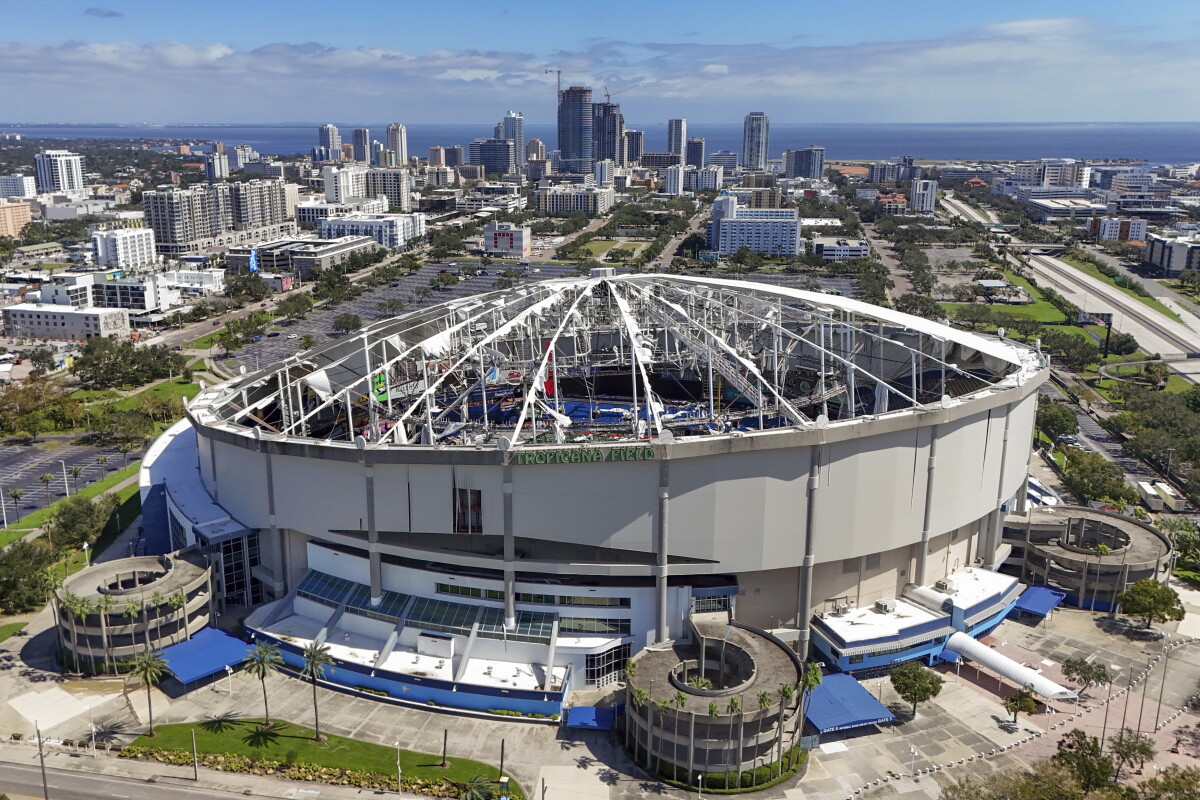
The dream of a new baseball era in Florida has hit a significant bureaucratic wall. For fans who have waited years for a resolution to the aging Tropicana Field saga, the recent decision by local officials comes as a frustrating setback. Specifically, the news that St. Petersburg rejects proposal to repair roof of Rays stadium has thrown the future of the franchise into renewed uncertainty.
This decision is not just about shingles and steel beams; it is about millions of dollars in public funding, the safety of spectators, and the long-term viability of Major League Baseball in the Tampa Bay area. If you are confused about why a simple repair was rejected or what happens next, you are not alone. This article breaks down the complex situation, the financial reasoning behind the vote, and the realistic timeline for the Rays’ future home.
Why Did St. Petersburg Reject the Roof Repair Proposal?
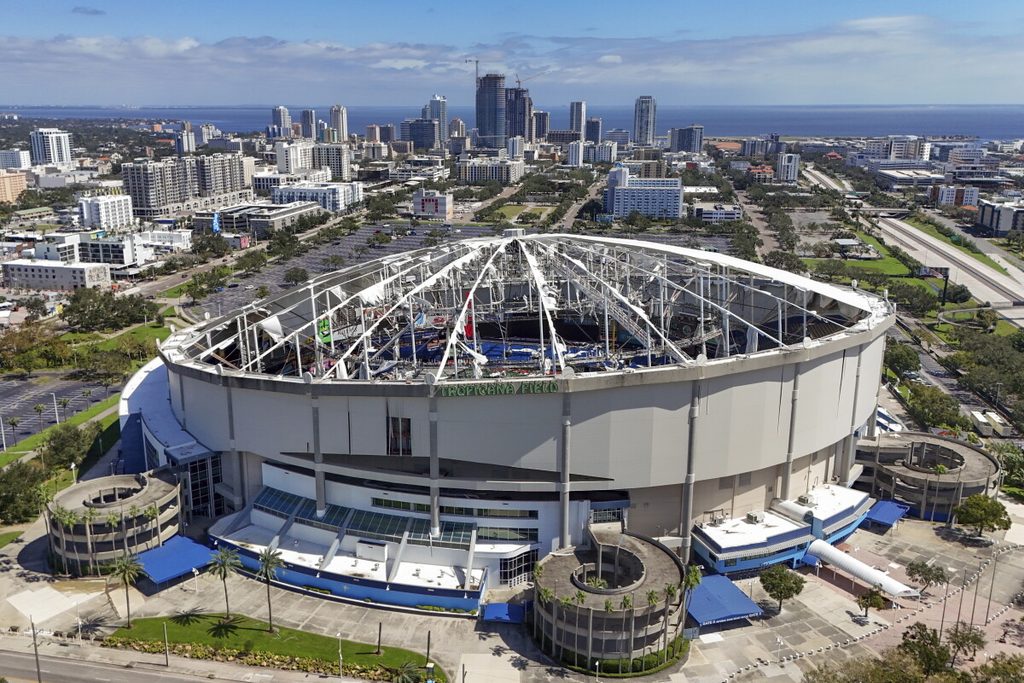
To understand the rejection, we must look at the context of the damage and the proposed solution. Tropicana Field, often called “The Trop,” suffered catastrophic damage during Hurricane Milton in late 2025. The storm tore large sections of the fiberglass roof, leaving the interior exposed to the elements and rendering the stadium unusable for immediate play.
The initial proposal presented to the City Council involved a quick-fix repair strategy. The goal was to patch the existing structure to allow the Rays to play the 2026 season while negotiations for a new stadium continued. However, the council voted against this measure. Why?
Financial Liability Concerns
The primary driver behind the rejection was cost versus value. Engineering reports suggested that repairing the damaged roof would cost upwards of $15 million. Critics on the council argued that spending this amount on a structure slated for eventual demolition was fiscally irresponsible.
- Cost of Repair: Estimated at $12–$15 million.
- Remaining Lifespan: The current stadium is well past its prime, with major structural components failing.
- Opportunity Cost: Funds used for repairs could be diverted to community projects or the down payment for a new venue.
As one council member stated during the heated debate, “We cannot throw good money after bad. The roof is a symptom of a larger issue: the building itself is obsolete.”
Structural Integrity Risks
Beyond the price tag, there were genuine safety concerns. Engineers warned that patching a tensile fabric roof that had already failed under high winds might not hold up during the next hurricane season. Given Florida’s volatile weather patterns, the city refused to assume the liability of a partially repaired structure.
What Are the Immediate Impacts on the Tampa Bay Rays?
The rejection of the repair proposal forces the Rays into a difficult logistical position. With the 2026 season approaching, the team lacks a home field. This scenario triggers several contractual and operational clauses in their lease and MLB agreements.
Temporary Relocation Options
Since Tropicana Field is deemed unsafe and unrepaired, the Rays must find an alternative venue. The most likely scenarios include:
- Spring Training Facility: Playing early home games at their Port Charlotte complex. However, this venue lacks the seating capacity (approx. 8,500 seats) required for regular-season MLB games.
- Minor League Ballparks: Renting larger minor league stadiums in the region, such as those in Clearwater or Dunedin, though these also face capacity issues.
- Neutral Sites: There has been speculation about playing a series of “home” games in other cities, similar to how the Marlins once played games in San Juan, Puerto Rico.
Financial Penalties and Revenue Loss
Playing in smaller venues drastically cuts ticket revenue, concessions, and merchandise sales. Furthermore, the team may face penalties from MLB if they fail to meet minimum attendance or facility standards. The local economy also takes a hit, as fewer tourists visit St. Petersburg for game-day experiences.
How Does This Affect the New Stadium Deal?
The rejection of the roof repair is intrinsically linked to the broader negotiations for a new waterfront stadium. For years, the Rays, St. Petersburg, and Pinellas County have been locked in talks regarding a state-of-the-art facility.
Accelerating the Timeline
Paradoxically, destroying the option to repair the old stadium may accelerate the deal for the new one. With no viable home for the 2026 and potentially 2027 seasons, pressure mounts on all parties to sign the final agreements. The city’s stance signals that they are done propping up the old infrastructure and are ready to commit to a fresh start—or risk losing the team entirely.
Key Components of the Proposed New Stadium
While the old roof is being left to decay, the plans for the new venue remain ambitious. According to recent drafts, the new stadium will feature:
- Capacity: 30,000+ seats with expandable options.
- Location: The historic Gas Plant site in downtown St. Petersburg.
- Funding Model: A mix of private investment from the Rays ownership group and public funding from tourist development taxes.
For more background on the history of stadium financing in the US, you can refer to this Wikipedia overview on sports venue funding.
Comparison: Repairing vs. Rebuilding
To clarify why the city made this choice, let’s look at a direct comparison between the two paths.
| Feature | Repair Existing Roof | Build New Stadium |
|---|---|---|
| Initial Cost | $12–$15 Million | $1.3–$1.5 Billion |
| Timeline | 3–6 Months | 3–5 Years |
| Longevity | 2–5 Years (Max) | 30+ Years |
| Fan Experience | Poor (Outdated amenities) | State-of-the-Art |
| Economic Impact | Minimal | High (Tourism/Jobs) |
| Risk | High (Structural failure) | Moderate (Construction delays) |
As the table shows, while the upfront cost of a new stadium is astronomical, the long-term value proposition is significantly higher. The repair option was merely a band-aid on a broken leg.
What Do Experts Say About the Decision?
Sports economists and urban planners have weighed in on the controversy. Most agree that St. Petersburg’s decision, while painful for short-term fans, is the correct long-term move.
Dr. Emily Richardson, a sports management professor at the University of South Florida, noted, “Cities often fall into the trap of maintaining white elephants. By rejecting the repair, St. Petersburg is signaling to MLB that they are serious about a modern partnership, not just subsidizing decay.”
However, fan sentiment is mixed. Long-time supporters worry that the delay could lead to relocation threats from MLB commissioner Rob Manfred. The league has historically been impatient with markets that do not provide modern facilities, as seen in the Oakland Athletics’ recent moves.
FAQ: Common Questions About the Rays Stadium Situation
1. Will the Rays play in St. Petersburg in 2026?
It is highly unlikely they will play in Tropicana Field. They may play some games in the broader Tampa Bay area using temporary venues, but the iconic dome will remain closed for construction or demolition prep.
2. Is the Rays team moving to another city?
While relocation rumors persist, the current focus is on securing the new St. Petersburg deal. MLB prefers stability, and moving a team is a last-resort nuclear option. The rejection of the roof repair is a negotiation tactic, not necessarily an eviction notice.
3. Who is paying for the new stadium?
The proposed deal involves a significant contribution from the Rays’ ownership group, supplemented by public funds derived from hotel taxes and tourism dollars. No new local sales taxes are currently proposed for the project.
4. How long will the new stadium take to build?
If approvals are granted in early 2026, construction could begin by late 2026. A typical MLB stadium takes 3 to 4 years to build, suggesting a potential opening in 2029 or 2030.
5. Can the roof be fixed later if the new stadium deal fails?
Technically, yes, but the cost would skyrocket, and the structural integrity would still be questionable. The city’s rejection makes it clear they do not intend to revisit this option unless forced by extreme legal pressure.
Conclusion
The headline St. Petersburg rejects proposal to repair roof of Rays stadium marks a pivotal turning point for baseball in Florida. It ends the era of trying to save the past and forces a confrontation with the future. While the short-term consequences involve logistical headaches and displaced fans, the long-term benefit is a clear path toward a modern, economically viable stadium.
For fans, this is a time for patience and advocacy. Engage with local representatives, support the team in whatever temporary venue they inhabit, and keep the conversation alive. A new chapter for the Rays is being written, and it starts with saying “no” to the old way.
Did this article help clarify the situation? Share it with your fellow Rays fans on social media to keep the discussion going!