Replacing a flat roof is often a source of significant anxiety for homeowners and business owners alike. The fear of water damage, structural issues, and the sheer disruption to daily life can be overwhelming. If you are currently staring at a leaking ceiling or planning ahead, you are likely asking yourself: how long does it take to replace a flat roof? Understanding the timeline is crucial for minimizing inconvenience and managing expectations effectively.
The Short Answer: Typical Timelines
For most standard residential or small commercial properties, a complete flat roof replacement typically takes between 1 to 3 days. However, this is a general estimate. Larger commercial buildings or complex residential structures may require 3 to 5 days, or even up to two weeks for massive industrial projects.
The duration depends heavily on the size of the roof, the material chosen, and the condition of the existing structure. Weather conditions also play a pivotal role; rain or high winds can halt work entirely, extending the project timeline significantly.
Key Factors Influencing Replacement Duration
Several variables determine whether your roofing crew will finish in a day or a week. Understanding these factors helps you plan better.
1. Size and Complexity of the Roof
Square footage is the most obvious factor. A 1,000-square-foot garage roof is vastly different from a 10,000-square-foot warehouse. However, complexity matters just as much. Roofs with numerous penetrations (vents, HVAC units, skylights) require meticulous flashing work, which is time-consuming.
- Simple Rectangle: Fastest installation.
- Multiple Levels/Obstacles: Slower due to detailed sealing requirements.
2. Type of Roofing Material
Not all flat roofing materials are installed at the same speed. Here is a breakdown of common materials and their typical installation speeds:
| Material | Installation Speed | Durability | Best For |
|---|---|---|---|
| EPDM (Rubber) | Fast | High (20+ years) | Residential & Commercial |
| TPO/PVC | Moderate | Very High | Energy Efficiency |
| Modified Bitumen | Slow | Moderate | Budget-Conscious |
| Built-Up Roof (BUR) | Very Slow | High | Heavy Traffic Areas |
EPDM is often the fastest to install because it comes in large sheets that can be rolled out quickly. In contrast, Built-Up Roofing involves layering tar and gravel, which requires curing time between layers.
3. Condition of the Existing Roof
Does the old roof need to be torn off completely?
- Tear-Off Required: This adds 1–2 days to the project. The crew must remove old materials, haul them away, and inspect the deck.
- Overlay Possible: If the existing roof is in decent condition, some materials can be installed directly over the old layer. This saves time but may void warranties or hide underlying deck issues.
4. Weather Conditions
Flat roofing adhesives and membranes require specific temperatures to bond correctly. Most manufacturers recommend installation when temperatures are above 40°F (4°C). Rain is a major disruptor; wet decks cannot be sealed properly. Always check the forecast before scheduling.
Step-by-Step Breakdown of the Process
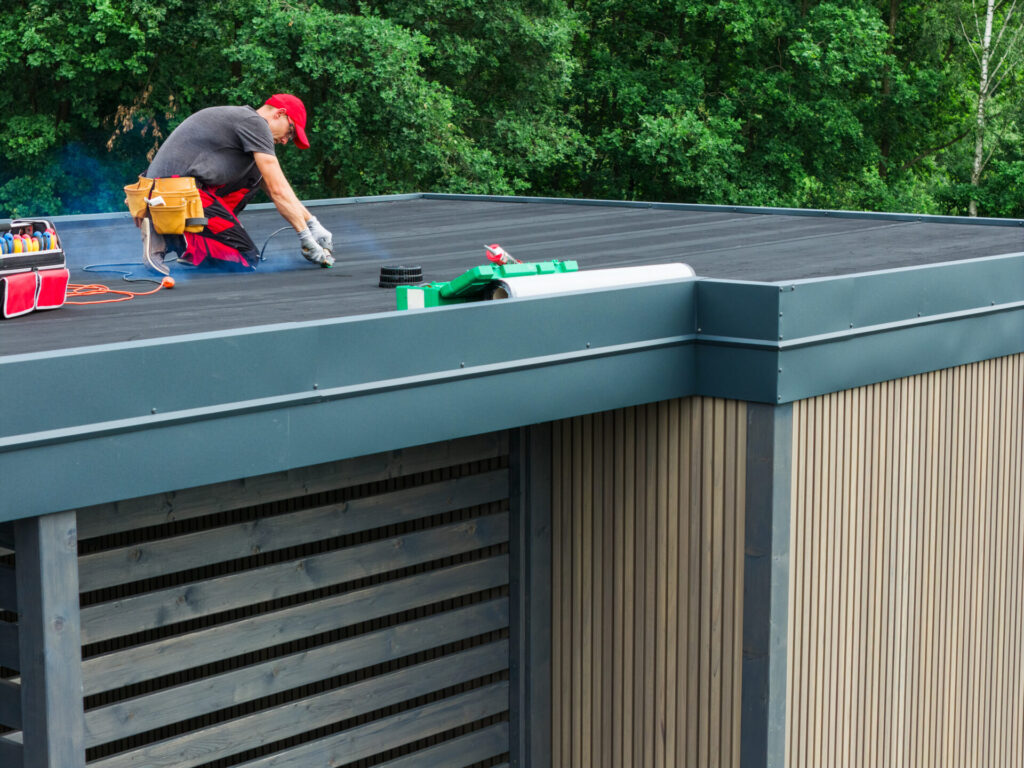
To give you a clearer picture, here is what happens during those few days.
Day 1: Preparation and Tear-Off
The crew arrives early to set up safety equipment and protect your landscaping. They begin removing the old roofing material. This is the noisiest and messiest part of the process. Once the old material is gone, they inspect the wood decking for rot or damage. Any compromised sections are replaced immediately.
Day 2: Installation of Underlayment and Membrane
With a clean, dry deck, the team installs the insulation boards and underlayment. Then, the main roofing membrane (such as EPDM or TPO) is rolled out. Seams are either glued, heat-welded, or taped, depending on the material. This step requires precision to ensure watertight seals.
Day 3: Flashing and Final Details
The edges of the roof, vents, and drains are sealed with flashing. This is critical for preventing leaks. The crew performs a final inspection, cleans up debris, and removes dumpsters. Some contractors may wait a day for adhesives to fully cure before walking on the roof extensively.
Why Professional Expertise Matters (E-E-A-T)
While DIY might seem tempting, flat roofing requires specialized knowledge. According to industry standards, improper seam welding is the leading cause of premature flat roof failure. A professional roofer brings experience, proper tools, and warranty protection.
For more detailed technical specifications on roofing materials, you can refer to authoritative sources like Wikipedia’s entry on Built-up Roofing, which outlines the historical and technical evolution of these systems. Trusting certified professionals ensures compliance with local building codes and manufacturer warranties.
Common Mistakes That Delay Projects
Avoid these pitfalls to keep your project on schedule:
- Ignoring Permits: Failing to secure necessary permits can halt work indefinitely. Ensure your contractor handles this.
- Poor Communication: Not clarifying access points or parking for crews can cause daily delays.
- Choosing the Lowest Bidder: Cheap contractors may lack the manpower to finish quickly, dragging a 2-day job into a week.
FAQ Section
How long does it take to replace a flat roof on a house?
For an average-sized home (1,500–2,500 sq. ft.), a flat roof replacement usually takes 1 to 2 days. This assumes a full tear-off and standard weather conditions.
Can I stay in my house during flat roof replacement?
Yes, in most cases. However, expect noise and vibration. If you have sensitive health conditions or work from home, you might consider staying elsewhere for the peak noise periods (tear-off and nailing).
Does rain delay flat roof replacement?
Yes. Most roofing adhesives and membranes cannot be applied to wet surfaces. Even light drizzle can pause work for 24 hours until the deck dries completely.
What is the fastest flat roof material to install?
EPDM rubber roofing is generally the fastest to install due to its large sheet sizes and simple adhesion methods. TPO is also relatively quick if heat-welding equipment is used efficiently.
How long does a flat roof last after replacement?
A properly installed flat roof lasts between 15 to 30 years, depending on the material. EPDM and TPO often reach the 20–25 year mark, while built-up roofs may last 15–20 years.
Do I need to replace the insulation too?
It is highly recommended. Old insulation may be compressed or wet, reducing its R-value. Replacing it improves energy efficiency and provides a smooth surface for the new membrane.
Conclusion
Knowing how long it takes to replace a flat roof empowers you to plan your life around the renovation. While most projects wrap up within a few days, preparation is key. Choose the right material, hire a reputable contractor, and keep an eye on the weather.
A new flat roof not only protects your property but can also enhance energy efficiency and curb appeal. Don’t let the prospect of construction stress you out—with the right team, it’s a quick and worthwhile investment.
Found this guide helpful? Share it with friends or neighbors who might be facing similar roofing decisions!