Have you ever stood in front of a house, looked up at its roof, and wondered exactly how steep it is? For homeowners, contractors, and DIY enthusiasts alike, understanding roof geometry is crucial for everything from material estimation to safety planning. If you are specifically asking, “What is the angle of a 6 12 pitch roof,“ you are looking at one of the most common and versatile slopes in American residential construction.
In this guide, we will break down the mathematics, practical implications, and design considerations of a 6/12 pitch. Whether you are planning a new build, replacing shingles, or simply satisfying your curiosity, this article provides the precise data and expert insights you need.
Understanding the Basics: What Does 6/12 Mean?
Before we dive into the specific angle, it is essential to understand the terminology. In the United States, roof pitch is expressed as a ratio of rise to run.
- Rise: The vertical height the roof gains.
- Run: The horizontal distance covered.
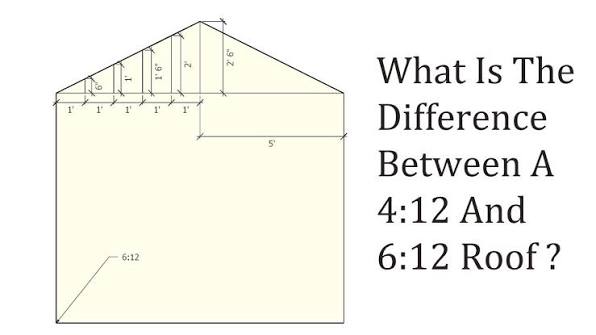
A 6/12 pitch means that for every 12 inches of horizontal distance (run), the roof rises 6 inches vertically. This is often written as 6:12 or 6/12. It is not a percentage, nor is it directly an angle in degrees—yet. To get the angle, we must use trigonometry.
The Mathematical Calculation
To find the angle in degrees, we use the inverse tangent function (arctan). The formula is:
Angle=arctan(RunRise)
For a 6/12 pitch: Angle=arctan(126)=arctan(0.5)
When you calculate this, the result is approximately 26.57 degrees.
So, to answer the primary question directly: The angle of a 6 12 pitch roof is 26.57°.
This specific angle places the roof in the “medium slope” category. It is steep enough to shed water and snow effectively but gentle enough to be walked on with proper safety precautions.
Why Is the 6/12 Pitch So Popular in the US?
The 6/12 pitch is arguably the “Goldilocks” of roofing slopes—not too flat, not too steep. Here is why it dominates the suburban landscape across the United States.
1. Optimal Water Drainage
Flat roofs (low slope) are prone to pooling water, which can lead to leaks and structural damage over time. A 26.57-degree angle ensures that rainwater runs off quickly. According to building science principles, gravity does the heavy lifting here, reducing the reliance on sealants alone to keep the home dry.
2. Snow Shedding Capabilities
For homeowners in regions with moderate snowfall, such as the Midwest or Northeast, a 6/12 pitch is highly effective. While extremely heavy snow might still accumulate, the slope is generally sufficient to allow snow to slide off before it becomes dangerously heavy. This reduces the risk of roof collapse compared to flatter pitches like 3/12 or 4/12.
3. Attic Space and Ventilation
One of the hidden benefits of a 6/12 pitch is the interior volume it creates. Unlike low-slope roofs that offer minimal attic space, a 6/12 roof provides ample room for:
- Storage boxes and seasonal items.
- HVAC systems and ductwork.
- Proper ventilation pathways, which are critical for preventing ice dams and mold growth.
4. Walkability and Safety
From a contractor’s perspective, a 6/12 roof is manageable. While OSHA (Occupational Safety and Health Administration) requires fall protection for roofs steeper than 4/12 in many commercial contexts, residential contractors often find a 6/12 pitch stable enough to work on with standard safety harnesses and non-slip footwear. It is not so steep that installation becomes exponentially more dangerous or expensive.
Comparison: 6/12 Pitch vs. Other Common Pitches
To help you visualize where the 6/12 stands, let’s compare it to other common residential roof slopes.
| Roof Pitch | Angle (Degrees) | Classification | Best For |
|---|---|---|---|
| 2/12 | ~9.46° | Low Slope | Modern minimalist designs, hot climates. |
| 4/12 | ~18.43° | Low-Medium | Cost-effective builds, mild weather areas. |
| 6/12 | 26.57° | Medium | All-around performance, snow/rain balance. |
| 8/12 | ~33.69° | Medium-High | Heavy snow regions, traditional aesthetics. |
| 12/12 | 45.00° | Steep | Gothic styles, extreme snow shedding. |
As you can see, the 6/12 pitch sits comfortably in the middle. It offers a significant upgrade in drainage over the 4/12 pitch without the dramatic cost increase associated with the 8/12 or higher pitches.
Material Considerations for a 6/12 Roof
Not all roofing materials are created equal. The angle of your roof dictates what materials you can safely and effectively use.
Asphalt Shingles
This is the most common choice for a 6/12 pitch. Standard asphalt shingles perform excellently at this angle. They are affordable, easy to install, and widely available. Most manufacturers warranty their shingles for pitches between 4/12 and 21/12, making the 6/12 pitch ideal for maximizing product lifespan.
Metal Roofing
Metal roofs are increasingly popular for their durability. A 6/12 pitch is suitable for both standing seam metal roofs and metal shingles. The slope ensures that water sheds rapidly, minimizing the chance of corrosion or leakage at the seams.
Tile and Slate
While clay tiles and slate are heavier and often associated with steeper roofs (8/12 or higher), they can be used on a 6/12 pitch. However, this requires careful installation with additional underlayment and fastening methods to prevent slippage. Always consult with a structural engineer if switching to heavy materials on an existing frame.
Expert Note: Always check the manufacturer’s minimum slope requirements. Installing a material on a pitch lower than recommended can void your warranty. For more detailed standards on roofing materials, you can refer to general construction guidelines on Wikipedia.
Cost Implications: Is a 6/12 Pitch Expensive?
Cost is always a major factor in roofing decisions. How does a 6/12 pitch affect your budget?
- Material Costs: Moderate. You use more material than a flat roof, but less than a steep cathedral-style roof.
- Labor Costs: Reasonable. Because the roof is walkable, laborers can work more efficiently. Steeper roofs require special scaffolding, lift equipment, and slower movement, which drives up labor hours. A 6/12 pitch strikes a balance, keeping labor costs competitive.
- Maintenance: Lower long-term costs. Due to efficient water shedding, these roofs tend to have fewer leak-related repairs compared to low-slope roofs.
Step-by-Step: How to Measure Your Roof Pitch
If you are unsure whether your roof is truly a 6/12, here is how you can verify it safely.
- Gather Tools: You will need a level (at least 12 inches long), a tape measure, and a pencil.
- Access the Attic: It is safer to measure from inside the attic rather than climbing onto the roof.
- Place the Level: Hold the level horizontally against the bottom of a rafter. Ensure the bubble is centered, indicating it is perfectly level.
- Measure the Rise: At the 12-inch mark on the level, measure the vertical distance from the bottom of the level to the bottom of the rafter.
- Calculate: If the vertical distance is 6 inches, you have a 6/12 pitch. If it is 4 inches, it is a 4/12 pitch.
Note: If measuring from the outside, ensure you are measuring the structural slope, not just the edge trim.
FAQ Section
1. Can I walk on a 6/12 pitch roof?
Yes, but with caution. A 6/12 pitch (26.57 degrees) is considered walkable by professional roofers using proper safety gear, such as harnesses and rubber-soled shoes. However, for homeowners, it is generally recommended to avoid walking on the roof unless necessary, as it can still be slippery when wet or dusty.
2. Is a 6/12 pitch good for solar panels?
Absolutely. A 6/12 pitch is often considered ideal for solar panel installation in many parts of the US. The angle allows for good sun exposure throughout the day, and the slope helps keep the panels clean by allowing rain to wash away dust and debris.
3. How much does a 6/12 roof cost compared to a 4/12?
Generally, a 6/12 roof may cost slightly more in materials due to the increased surface area (about 11% more surface area than a flat plane). However, the difference in labor is minimal. The total cost difference is usually marginal, but the performance benefits of the 6/12 often outweigh the small price increase.
4. What is the minimum pitch for asphalt shingles?
Most asphalt shingle manufacturers require a minimum pitch of 2/12 or 4/12, depending on the specific product and local building codes. A 6/12 pitch is well above the minimum, ensuring optimal performance and warranty validity.
5. Does a 6/12 pitch require special ventilation?
No special ventilation is required solely because of the 6/12 pitch, but adequate ventilation is crucial for any roof. The ample attic space provided by a 6/12 slope makes it easier to install soffit vents, ridge vents, and baffles, which help regulate temperature and moisture.
6. How do I convert 6/12 pitch to percentage?
To convert roof pitch to a percentage, divide the rise by the run and multiply by 100. For a 6/12 pitch: (6/12)×100=50%. So, a 6/12 pitch is a 50% slope.
Conclusion
Understanding what is the angle of a 6 12 pitch roof is more than just a math exercise; it is a key component of smart home ownership and construction planning. At 26.57 degrees, this pitch offers a perfect blend of aesthetic appeal, functional drainage, and cost-effectiveness. It is steep enough to handle rain and snow efficiently while remaining safe and affordable to build and maintain.
Whether you are building a new home in the suburbs or replacing an aging roof, the 6/12 pitch remains a top-tier choice for American homeowners. It balances the extremes, providing durability without the premium price tag of steeper designs.
Did you find this guide helpful? Share this article with your friends, family, or contractor to help them make informed roofing decisions. Don’t forget to bookmark this page for future reference on all things roofing!