Have you noticed green, fuzzy patches creeping up your shingles? It’s not just an eyesore; moss can trap moisture against your roof, leading to premature decay and costly leaks. If you are wondering how much does it cost to remove moss from roof, you are in the right place to find clear, actionable answers.
In this guide, we will break down the current market rates for 2026, compare professional services against DIY methods, and provide expert tips to keep your roof clean and healthy for years to come.
Average Cost of Professional Moss Removal
When hiring a professional, the price tag varies based on location, roof size, and the severity of the infestation. Generally, homeowners in the US can expect to pay between $350 and $600 for a standard single-story home. For larger, two-story homes with complex rooflines, costs can range from $600 to $1,200.
Several factors influence these quotes:
- Roof Square Footage: Most contractors charge per “square” (100 square feet). Expect to pay $0.20 to $0.60 per square foot.
- Roof Pitch and Accessibility: Steeper roofs require more safety equipment and labor time, increasing the cost by 20–30%.
- Type of Cleaning Method: Chemical treatments are cheaper than manual removal or soft washing.
- Geographic Location: Labor rates in urban areas like Seattle or Portland (where moss is prevalent) may be higher due to demand.
Cost Breakdown by Method
| Method | Average Cost | Best For |
|---|---|---|
| Chemical Treatment | $350 – $500 | Light moss, preventative care |
| Soft Washing | $400 – $700 | Moderate growth, delicate shingles |
| Manual Removal | $500 – $900 | Heavy infestation, immediate results |
| Full Roof Replacement | $5,000+ | Severe structural damage |
Note: Prices are estimates for 2026 and may vary by contractor.
Why Is Removing Moss Important?
Many homeowners ignore moss until it becomes a major problem. However, moss acts like a sponge, holding water against your roofing materials. Over time, this constant moisture can cause shingles to curl, crack, or rot. In colder climates, trapped water freezes and expands, leading to ice dams and further structural damage.
According to roofing experts, ignoring moss can reduce the lifespan of your asphalt shingles by up to 50%. By addressing the issue early, you protect your investment and avoid the high cost of premature roof replacement. For more detailed information on how biological growth affects building materials, you can refer to resources on biological weathering to understand the scientific basis of this degradation.
DIY vs. Professional Removal: Which Is Better?
Deciding whether to tackle the job yourself or hire a pro depends on your budget, physical ability, and comfort level with heights.
DIY Moss Removal
Cost: $50 – $150 (for chemicals, sprayers, and safety gear).
Pros:
- Significant cost savings.
- You control the timing of the project.
- Satisfying to complete yourself.
Cons:
- Safety Risk: Working on a roof is dangerous. Falls are a leading cause of home injury.
- Potential Damage: Using a pressure washer incorrectly can strip granules from shingles, voiding warranties.
- Time-Consuming: It requires careful application and waiting periods.
Professional Moss Removal
Cost: $350 – $1,200.
Pros:
- Expertise: Pros know which chemicals are safe for your specific roof type.
- Safety: They have insurance, proper harnesses, and experience.
- Warranty: Many offer guarantees on their work.
- Efficiency: The job is done quickly and thoroughly.
Cons:
- Higher upfront cost.
- Need to schedule around their availability.
Verdict: If your roof is single-story and the moss is light, DIY might be feasible. For steep roofs, heavy growth, or two-story homes, hiring a professional is strongly recommended for safety and effectiveness.
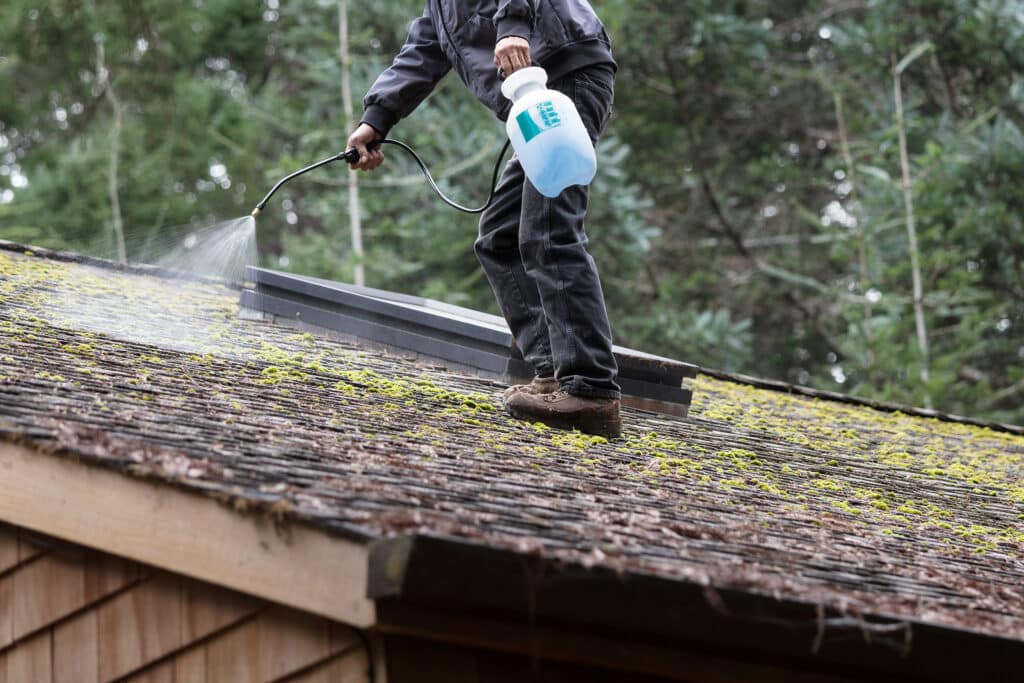
Step-by-Step Guide to Safe DIY Moss Removal
If you decide to handle this task yourself, follow these steps to ensure safety and effectiveness. Always prioritize safety over speed.
- Safety First: Wear non-slip shoes, use a sturdy ladder with stabilizers, and consider using a safety harness. Never work on a wet or windy day.
- Clear Debris: Use a leaf blower or soft-bristle broom to remove leaves, twigs, and loose dirt from the roof surface. This allows the treatment to reach the moss directly.
- Apply Moss Killer: Mix a zinc-based moss killer or a diluted bleach solution (1 part bleach to 4 parts water) in a pump sprayer. Avoid using pressure washers, as the high pressure can damage shingle granules.
- Let It Sit: Allow the solution to sit for 15–20 minutes. Do not let it dry completely. The moss should start to turn brown or yellow.
- Gentle Scrubbing: Use a soft-bristle brush to gently loosen the dead moss. Work from the top of the roof downward to avoid pushing debris under shingles.
- Rinse Carefully: Use a garden hose with a gentle spray nozzle to rinse off the dead moss and chemical residue. Ensure gutters are clear so water flows freely.
Pro Tip: Apply moss killers in the spring or fall when temperatures are between 50°F and 70°F for best results. Avoid applying before heavy rain, which can wash away the treatment before it works.
How to Prevent Moss from Returning
Removing moss is only half the battle. Prevention is key to maintaining a clean roof and minimizing future costs.
- Install Zinc or Copper Strips: These metal strips release ions when it rains, creating an environment where moss cannot grow. Place them near the roof ridge.
- Trim Overhanging Branches: Moss thrives in shade and dampness. Trimming trees allows more sunlight and airflow, keeping the roof drier.
- Clean Gutters Regularly: Clogged gutters cause water to back up onto the roof deck, creating ideal conditions for moss. Clean them at least twice a year.
- Use Preventative Sprays: Apply a moss-inhibiting spray annually, especially in humid climates. Look for products containing zinc sulfate or copper sulfate.
Frequently Asked Questions (FAQ)
1. Does homeowners insurance cover moss removal?
Generally, no. Homeowners insurance typically covers sudden and accidental damage, not gradual wear and tear or maintenance issues like moss growth. However, if moss causes significant damage that leads to a leak, the resulting water damage might be covered, depending on your policy. Always check with your insurer.
2. Can I use a pressure washer to remove moss?
It is not recommended. High-pressure water can strip the protective granules from asphalt shingles, leading to premature aging and voiding warranties. Instead, opt for “soft washing,” which uses low pressure and specialized cleaning solutions.
3. How often should I clean moss off my roof?
In damp, shady climates like the Pacific Northwest, you may need to treat your roof every 1–2 years. In drier regions, every 3–5 years may suffice. Regular inspections after storm seasons are advisable.
4. Is bleach safe for removing moss?
Diluted bleach can be effective, but it can also harm surrounding plants, discolor shingles, and corrode metal fixtures like gutters and flashing. Zinc-based or oxygen-based cleaners are safer alternatives for both your roof and the environment.
5. What is the best time of year to remove moss?
The best times are spring and early fall. Temperatures are moderate, allowing chemicals to work effectively without evaporating too quickly or freezing. Avoid summer heat, which can stress the roof materials, and winter, when surfaces are slippery and dangerous.
Conclusion
Understanding how much does it cost to remove moss from roof helps you budget effectively and protect your home’s value. While DIY methods can save money, professional services offer safety, efficiency, and long-term protection. Whether you choose to tackle it yourself or hire an expert, regular maintenance and preventative measures like zinc strips and tree trimming will keep your roof moss-free for years.
Don’t let moss compromise your home’s integrity. Take action today, and share this guide with friends and neighbors who might be facing the same green challenge!