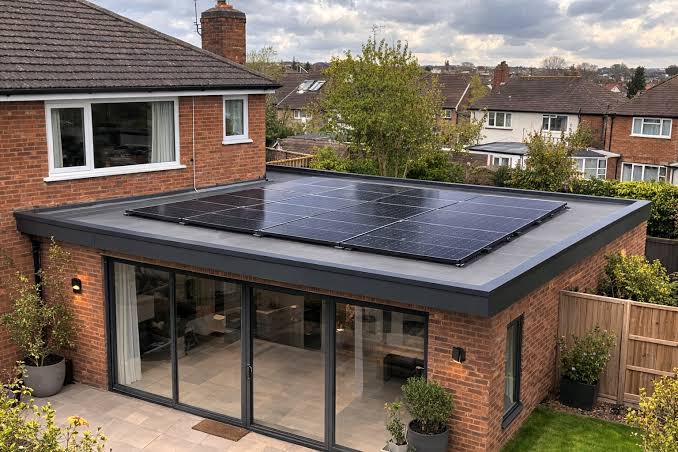
Living in the United Kingdom offers unique architectural challenges, especially when it comes to maximizing renewable energy potential. Many homeowners with modern builds or extensions face a common dilemma: can you put solar panels on a flat roof UK? The short answer is a resounding yes, but the method differs significantly from traditional pitched roof installations.
If you are worried that your property’s design limits your ability to go green, rest assured. With the right technology and installation approach, flat roofs can be highly efficient platforms for solar energy generation. This guide will walk you through everything you need to know, from mounting systems to local regulations, ensuring you make an informed decision for your home.
Why Flat Roofs Are Viable for Solar in the UK
For years, there was a misconception that flat roofs were unsuitable for solar power. However, advancements in mounting technology have changed the landscape. In fact, flat roofs offer distinct advantages that pitched roofs do not.
Unlike sloped roofs, which are fixed at a specific angle determined by the builder, flat roofs allow for optimal orientation. You can adjust the tilt and direction of your panels to capture the maximum amount of sunlight throughout the year. In the UK, where the sun’s path is lower in the sky during winter, this flexibility is crucial for maintaining consistent energy production.
According to recent data from the Department for Energy Security and Net Zero, residential solar adoption has surged, with flat-roofed properties contributing significantly to this growth. The key lies not in if you can install them, but how you install them.
How Are Solar Panels Mounted on Flat Roofs?
The most critical aspect of installing solar on a flat roof is the mounting system. You cannot simply screw panels directly into the surface as you might with a tiled roof. Instead, specialized frameworks are used to hold the panels at an optimal angle.
1. Ballasted Mounting Systems
This is the most popular method for commercial and residential flat roofs in the UK. These systems use weight (ballast) to keep the structure in place rather than penetrating the roof membrane.
- How it works: Concrete blocks or gravel trays are placed on the roof to weigh down the aluminum frame holding the panels.
- Benefit: No drilling means no risk of leaks, preserving your roof’s warranty.
- Consideration: Your roof must be structurally sound enough to support the extra weight.
2. Penetrating Mounts
In some cases, particularly with smaller domestic roofs where weight is a concern, installers may use penetrating mounts.
- How it works: The frame is bolted directly into the roof’s structural beams.
- Benefit: Lighter overall load on the roof.
- Risk: Requires expert waterproofing around the penetration points to prevent leaks.
3. Adhesive Bonding
A newer, less common method involves using high-strength industrial adhesives to bond frames to the roof surface. This is typically reserved for specific roofing materials like EPDM rubber and requires professional assessment.
What Is the Best Angle for Solar Panels on a Flat Roof?
Angle is everything when it comes to efficiency. For a flat roof, you aren’t stuck with the roof’s angle; you create your own.
In the UK, the ideal tilt angle for solar panels is generally between 30 and 40 degrees. This angle ensures that:
- Rainwater runs off easily, keeping the panels clean (self-cleaning effect).
- The panels capture the maximum solar irradiance throughout the year.
However, spacing is vital. If you tilt panels too steeply, they cast long shadows on the rows behind them, reducing overall output. A professional installer will calculate the “pitch” and “row spacing” to ensure no panel shades another during peak sunlight hours.
Pro Tip: Avoid laying panels completely flat (0 degrees). While it looks sleek, dust and debris accumulate quickly, and rain does not wash them away efficiently, leading to a significant drop in performance over time.
Do You Need Planning Permission for Solar Panels on a Flat Roof?
One of the most frequent questions UK homeowners ask is about bureaucracy. Under current Permitted Development Rights, most domestic solar installations do not require full planning permission. However, there are strict conditions for flat roofs:
- Height Restriction: The panels must not protrude more than 200mm above the highest part of the roof (excluding the chimney).
- Visibility: If your property is in a conservation area or a World Heritage Site, you may need to consult your local planning authority.
- Listed Buildings: If your home is a listed building, you will almost certainly need Listed Building Consent.
It is always wise to check with your local council before proceeding. While many installations fall under permitted development, rules can vary slightly by locality. For detailed national guidelines, you can refer to the UK Government’s Planning Portal or general resources on Solar Energy to understand the broader context of renewable infrastructure.
Cost vs. Benefit: Is It Worth It?
Installing solar on a flat roof can be slightly more expensive than a standard pitched roof due to the cost of the mounting framework. However, the long-term benefits often outweigh the initial outlay.
| Feature | Pitched Roof Solar | Flat Roof Solar |
|---|---|---|
| Installation Complexity | Lower (standard rails) | Higher (custom framing) |
| Optimization | Fixed angle | Fully adjustable angle |
| Maintenance Access | Difficult (requires scaffolding) | Easy (walkable surface) |
| Aesthetics | Blends with roofline | Visible structure |
| Average Cost (4kW) | £5,000 – £7,000 | £6,000 – £8,500 |
Note: Prices are estimates based on 2026 market rates and can vary based on panel quality and roof condition.
Despite the higher upfront cost, the ability to optimize the angle means flat roof systems can sometimes generate 5-10% more energy annually than a poorly oriented pitched roof. Additionally, maintenance is easier and cheaper since technicians can safely walk on the roof without expensive scaffolding.
Step-by-Step Installation Process
If you decide to proceed, here is what the typical installation journey looks like:
- Structural Survey: An engineer assesses your roof’s load-bearing capacity. This is non-negotiable for ballasted systems.
- Design & Simulation: Installers use software to model sun paths and shadow analysis, determining the optimal tilt and layout.
- Roof Preparation: The roof surface is cleaned and inspected for any existing damage. Any repairs are made before installation begins.
- Framework Installation: The aluminum racking system is assembled. If using ballast, weights are positioned precisely according to the design.
- Panel Mounting: Solar panels are secured to the frames and wired together.
- Inverter Connection: The DC electricity from the panels is converted to AC via an inverter (usually mounted on a wall nearby).
- Testing & Commissioning: The system is tested for safety and efficiency before being handed over to you.
Frequently Asked Questions (FAQ)
1. Will solar panels damage my flat roof?
No, not if installed correctly. Ballasted systems do not penetrate the roof, eliminating leak risks. Even penetrating systems, when installed by certified professionals with proper flashing and sealants, are safe and often come with workmanship warranties.
2. How long do solar panels last on a flat roof?
High-quality solar panels typically come with a 25-30 year performance warranty. The mounting structures are usually made of aluminum or stainless steel, designed to withstand UK weather conditions for decades.
3. Can I install solar panels myself on a flat roof?
While DIY kits exist, it is strongly discouraged. Incorrect weighting can collapse a roof, and improper electrical wiring poses fire risks. Furthermore, you need MCS (Microgeneration Certification Scheme) certification to qualify for smart export guarantees (SEG) payments.
4. Do flat roof solar panels work in cloudy UK weather?
Yes. Modern photovoltaic panels are designed to generate electricity even in diffuse light. While they produce less energy on cloudy days compared to sunny ones, they still contribute to your household’s power needs.
5. What maintenance is required?
Flat roof solar systems require minimal maintenance. You should inspect them twice a year for debris buildup. Because they are tilted, rain usually keeps them clean. Ensure the area around the ballast remains clear of leaves or moss.
Conclusion
So, can you put solar panels on a flat roof UK? Absolutely. Not only is it possible, but it can also be a highly efficient way to harness renewable energy. By utilizing ballasted mounting systems and optimizing the tilt angle, you can overcome the limitations of a flat surface and enjoy significant savings on your energy bills.
The key to success lies in professional installation and a thorough structural assessment. Don’t let the shape of your roof deter you from joining the green energy revolution. With the right setup, your flat roof can become a powerful asset for your home and the environment.
If you found this guide helpful, please share it with friends or neighbors who might be considering solar power. Together, we can make the UK a greener place, one roof at a time!