Have you ever paused to think about where your tongue sits when you aren’t speaking or eating? For many people, this simple question reveals a surprising habit that could be affecting their sleep, facial structure, and overall well-being. If you are wondering, “Does your tongue rest on the roof of your mouth?” the answer should ideally be yes, but millions of adults and children inadvertently let it drop, leading to potential long-term issues.
In this guide, we will explore the science behind proper tongue posture, often referred to as “oral rest position.” We will break down why it matters, how to achieve it correctly, and what happens when you get it wrong. Whether you are interested in improving your breathing, refining your jawline, or simply understanding your body better, this article provides the expert-backed insights you need.
Why Proper Tongue Posture Matters More Than You Think
Most of us never give our tongues a second thought unless we bite them accidentally. However, the tongue is a powerful muscle that plays a critical role in more than just taste and speech. It acts as a natural scaffold for your upper jaw (maxilla) and influences the development of your facial structure.
When your tongue rests correctly, it applies gentle, consistent pressure against the palate. This pressure helps keep the airway open and supports the proper alignment of teeth. Conversely, incorrect tongue posture can lead to mouth breathing, dental misalignment, and even sleep disorders like obstructive sleep apnea.
According to orthodontic and myofunctional experts, the resting position of the tongue is foundational to craniofacial development. Ignoring this small detail can have cascading effects on your health, from poor sleep quality to chronic neck pain. Understanding the mechanics of tongue placement is the first step toward correcting these issues naturally.
What Is the Correct Oral Rest Position?
To answer the core question directly: Yes, your tongue should rest on the roof of your mouth. But it’s not just about touching the ceiling of your mouth; the specific placement matters significantly.
The ideal oral rest position involves three key components:
- Tip Placement: The tip of your tongue should rest gently against the ridge of gum tissue just behind your upper front teeth. This area is known as the incisive papilla. Crucially, do not push against the teeth themselves, as this can cause them to protrude over time.
- Body Contact: The middle and back portions of the tongue should suction lightly against the hard and soft palate.
- Lip Seal: Your lips should be closed comfortably, without strain, ensuring you breathe through your nose.
This position is often summarized by the phrase: “Lips together, teeth slightly apart, tongue up.” It requires minimal effort once it becomes a habit, but it demands conscious practice initially.
The Role of Nasal Breathing
Proper tongue posture is inextricably linked to nasal breathing. When your tongue is on the roof of your mouth, it naturally encourages you to breathe through your nose. Nasal breathing filters, warms, and humidifies the air before it enters your lungs, offering significant health benefits over mouth breathing.
If you find it difficult to keep your tongue up, it may be because you are a habitual mouth breather. Breaking this cycle is essential for maintaining the correct oral rest position.
Common Mistakes People Make With Tongue Posture
Even when people try to correct their tongue posture, they often fall into common traps. Here are the most frequent errors:
- Pushing Against Front Teeth: As mentioned earlier, pressing the tongue against the incisors can lead to an “overjet” or buck teeth. The force should be directed upward, not forward.
- Tensing the Jaw: Some individuals clench their jaw while trying to keep their tongue up. This creates tension in the temporomandibular joint (TMJ) and can lead to headaches. Your teeth should remain slightly apart.
- Only Lifting the Tip: Many people only lift the very tip of their tongue, leaving the back half flat. This is ineffective. The entire dorsal surface of the tongue needs to engage with the palate to create the necessary vacuum seal.
- Forcing It Too Hard: The pressure should be gentle. Think of it as a light suction, not a push. Excessive force can cause muscle fatigue and discomfort.
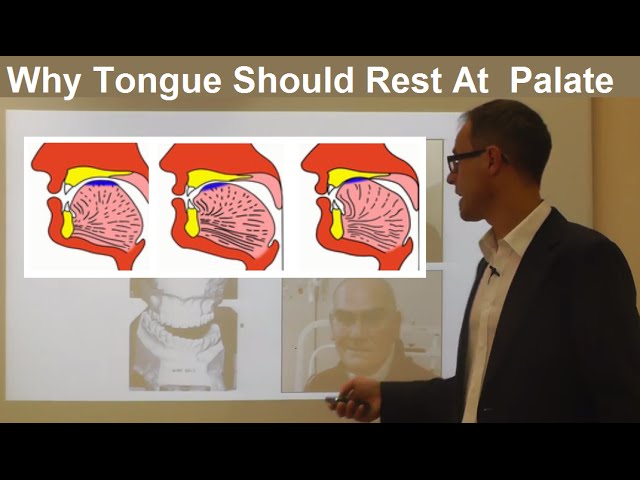
The Consequences of Low Tongue Posture
What happens if you ignore the question, “Does your tongue rest on the roof of your mouth?” and let it sit low in the floor of your mouth? The consequences can be both aesthetic and medical.
Facial Development and “Long Face Syndrome”
In children, low tongue posture combined with mouth breathing can alter facial growth. Without the upward pressure of the tongue, the upper jaw may narrow and descend vertically. This results in a longer, narrower face, often referred to as “adenoid facies” or long face syndrome. Features may include:
- A recessed chin
- Narrow dental arches
- Crowded teeth
- Dark circles under the eyes due to poor sleep quality
Dental Issues
Teeth align based on the balance of forces from the cheeks, lips, and tongue. When the tongue is low, the outward pressure from the cheeks is unchecked, potentially leading to crossbites or crowded teeth. Orthodontists often see relapse in patients who had braces but did not correct their tongue thrust or resting posture.
Sleep and Respiratory Health
A low tongue position allows the tongue to fall backward during sleep, partially obstructing the airway. This is a primary contributor to snoring and Obstructive Sleep Apnea (OSA). By keeping the tongue elevated, you help maintain a wider airway, promoting deeper, more restorative sleep.
For more detailed information on the anatomy of the tongue and its functions, you can refer to this comprehensive resource on Wikipedia.
How to Train Your Tongue for Proper Posture
Changing a lifelong habit takes time and consistency. Here is a step-by-step guide to training your tongue to rest on the roof of your mouth.
Step 1: The “Click” Technique
Make a clicking sound with your tongue. Notice where the tip of your tongue lands after the click? It should be right behind your upper front teeth. Hold it there. This is your target zone.
Step 2: Create a Vacuum Suction
With your tongue in the “click” position, swallow your saliva. As you swallow, notice how the back of your tongue lifts. Try to maintain that lifted position after the swallow. You should feel a slight suction holding your tongue against the palate.
Step 3: Check Your Lip Seal
Ensure your lips are closed. If you cannot breathe comfortably through your nose while keeping your tongue up, you may have nasal congestion. Address any underlying allergies or structural issues with a doctor.
Step 4: Practice Daily Reminders
Set reminders on your phone or place sticky notes on your computer monitor that ask, “Does your tongue rest on the roof of your mouth?” Use these cues to check your posture throughout the day.
Step 5: Strengthening Exercises
Just like any muscle, the tongue can be strengthened. Try these simple exercises:
- Tongue Sweep: Run the tip of your tongue along the roof of your mouth from front to back. Repeat 10 times.
- Suction Hold: Suction your tongue to the roof of your mouth and hold it for 5–10 seconds. Release and repeat 5 times.
FAQ Section
1. Should my teeth touch when my tongue is on the roof of my mouth?
No. In the ideal resting position, your teeth should be slightly apart (about 2–3 millimeters). This is known as the “freeway space.” Clenching your teeth together can lead to TMJ disorders and tooth wear.
2. Can correcting tongue posture change my face shape as an adult?
While dramatic skeletal changes are more common in children whose bones are still growing, adults can still benefit. Correcting tongue posture can improve muscle tone, reduce double chin appearance, and prevent further dental shifting. It may also enhance jawline definition by reducing mouth breathing and associated facial elongation.
3. What if I have a tongue tie?
A tongue tie (ankyloglossia) restricts the movement of the tongue, making it physically difficult to reach the roof of the mouth. If you suspect you have a tongue tie, consult with a dentist, ENT specialist, or myofunctional therapist. They may recommend a frenectomy (a minor procedure to release the tie) followed by therapy.
4. Is it normal for my tongue to feel tired when I start practicing?
Yes, absolutely. Your tongue is a muscle, and if it hasn’t been used correctly for years, it will fatigue quickly. Start with short intervals of proper posture and gradually increase the duration. The fatigue should subside as the muscle strengthens.
5. Does tongue posture affect speech?
Yes. Proper tongue placement is essential for clear articulation, particularly for sounds like “t,” “d,” “n,” and “l.” Low tongue posture can contribute to lisps or mumbled speech. Correcting the resting position often improves speech clarity over time.
6. How long does it take to make this a habit?
Habit formation varies by individual, but most experts suggest it takes between 3 to 6 months of consistent practice to make proper tongue posture automatic. Consistency is key—practicing for a few minutes every hour is more effective than one long session once a day.
Conclusion
So, does your tongue rest on the roof of your mouth? If it doesn’t, you now have the knowledge and tools to change that. Proper tongue posture is a small adjustment with profound implications for your breathing, sleep, dental health, and facial aesthetics. It is a free, non-invasive way to support your overall well-being.
Remember, the goal is not perfection overnight but consistent awareness. Start by checking your posture right now. Are your lips closed? Is your tongue suctioned to the palate? Are your teeth slightly apart? If so, you are on the right track.
If you found this guide helpful, please share it with friends or family who might benefit from better breathing and posture habits. Together, we can promote healthier lifestyles one small change at a time.