Have you ever looked at a map of Asia and wondered about the colossal peaks that seem to touch the sky? For travelers, geography enthusiasts, and curious minds alike, identifying which mountain is known as the roof of the world is more than just a trivia question; it is an entry point into understanding one of Earth’s most majestic and challenging environments. This guide will clarify the answer, explore the science behind the elevation, and provide context on why this specific peak commands such global reverence.
The Direct Answer: Mount Everest
When people ask, “Which mountain is known as the roof of the world,” the most widely accepted and scientifically accurate answer is Mount Everest.
Located in the Mahalangur Himal sub-range of the Himalayas, Mount Everest stands as the highest point on Earth above sea level. Its summit reaches an elevation of 8,848.86 meters (29,031.7 feet). This staggering height was jointly announced by Nepal and China in December 2020, settling years of minor discrepancies regarding the exact measurement.
While the phrase “Roof of the World” has historically been applied to the Pamir Mountains or the Tibetan Plateau as a region, in modern common parlance and mountaineering contexts, it is synonymous with Everest. The mountain serves as the ultimate benchmark for altitude, defining the limits of human endurance and atmospheric pressure.
Why Everest Holds the Title
The designation isn’t arbitrary. It is based on precise geodetic data. Unlike other high peaks that may be taller from base to summit (such as Mauna Kea in Hawaii), Everest is the highest point relative to mean sea level. This metric is the standard used by geographers and the international climbing community.
- Location: Border between Nepal and Tibet (China).
- Local Names: Sagarmatha (Nepal) meaning “Goddess of the Sky,” and Chomolungma (Tibet) meaning “Mother Goddess of the World.”
- Global Recognition: Recognized by the United Nations and major geographical societies as the highest peak.
Clarifying the Confusion: Plateau vs. Peak
It is important to address a common source of confusion. Historically, the term “Roof of the World” was often used to describe the Pamir Mountains in Central Asia or the Tibetan Plateau.
The Tibetan Plateau Context
The Tibetan Plateau is the highest and largest plateau in the world, with an average elevation exceeding 4,500 meters (14,800 feet). Because it covers such a vast area at such extreme altitudes, early explorers and poets referred to the entire region as the “Roof of the World.” However, when the question specifies a mountain, rather than a region, Everest is the correct individual entity.
The Pamir Mountains Context
In the 19th century, British explorers sometimes referred to the Pamirs as the “Roof of the World” because they were among the first high-altitude regions mapped by Westerners. However, with modern satellite technology and comprehensive global mapping, we now know that the Himalayas, and specifically Everest, surpass the Pamirs in maximum elevation.
To understand the geological distinction between these regions, you can refer to detailed geographical records on Wikipedia, which provides extensive historical context on how these names evolved over centuries of exploration.
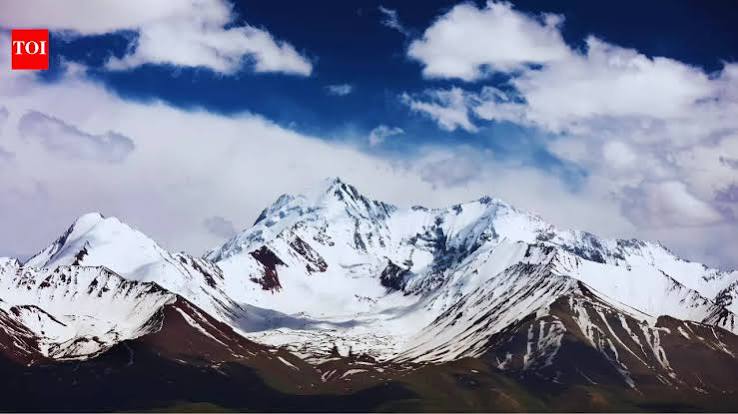
How High Is the Roof of the World?
Understanding the scale of Mount Everest helps explain why it holds this prestigious title. The height is not just a number; it represents a distinct atmospheric zone.
Key Elevation Statistics
| Metric | Measurement | Significance |
|---|---|---|
| Height Above Sea Level | 8,848.86 meters (29,031.7 ft) | The standard global benchmark for “highest.” |
| Distance from Earth’s Center | ~6,382 km | Not the furthest point; Chimborazo is further due to Earth’s bulge. |
| Base-to-Peak Height | ~3,650 meters (12,000 ft) | Less than Mauna Kea, but still immense. |
| Oxygen Levels at Summit | ~33% of sea level | Creates the “Death Zone” above 8,000 meters. |
The “Death Zone”
One of the defining characteristics of the “Roof of the World” is the Death Zone. This term refers to altitudes above 8,000 meters (26,247 feet), where the atmospheric pressure is so low that there is insufficient oxygen to sustain human life for extended periods. Climbers must use supplemental oxygen or risk severe hypoxia, cerebral edema, and death. This harsh reality underscores why Everest is not just a mountain, but a formidable natural barrier.
People Also Ask: Common Questions About Everest
To ensure you have a complete understanding of which mountain is known as the roof of the world, let’s address specific questions that often arise in search queries.
Is Mount Everest Still Growing?
Yes, Mount Everest is still growing. The Indian tectonic plate continues to push northward into the Eurasian plate, causing the Himalayas to rise. Geologists estimate that Everest grows approximately 4 millimeters (0.16 inches) per year. However, erosion and seismic activity can also cause slight variations in height. The 2015 Nepal earthquake, for instance, was initially thought to have lowered the peak, but subsequent surveys confirmed it remained largely stable or slightly higher.
Who Was the First to Reach the Roof of the World?
The first confirmed ascent of Mount Everest was achieved by Sir Edmund Hillary from New Zealand and Tenzing Norgay, a Sherpa of Nepal, on May 29, 1953. Their success was the culmination of decades of failed attempts by various international expeditions. It is crucial to acknowledge the role of Sherpa climbers, who have been the backbone of Himalayan mountaineering for over a century.
Can Anyone Climb the Roof of the World?
Technically, anyone with sufficient financial resources and physical fitness can attempt to climb Everest, but it is not advisable for beginners. Most commercial expeditions require climbers to have prior high-altitude experience, often including a summit of another 7,000 or 8,000-meter peak. The cost ranges from $30,000 to $100,000, covering permits, guides, oxygen, and logistics. The physical toll is immense, requiring months of acclimatization.
What Is the Best Time to Climb Everest?
The optimal window for climbing Mount Everest is during the pre-monsoon season, specifically from late April to early June. During this period, the jet stream shifts north, reducing wind speeds at the summit. Another shorter window exists in the post-monsoon season (September–October), but it is less popular due to unstable weather and accumulated snow. Winter climbs are extremely rare and dangerous due to hurricane-force winds and extreme cold.
The Environmental Impact of Being the “Roof”
With fame comes responsibility. As the most famous mountain in the world, Everest faces significant environmental challenges.
Waste Management Issues
Decades of climbing have left tons of waste on the mountain, including empty oxygen cylinders, tents, food wrappers, and human waste. The Nepalese government has implemented stricter regulations in recent years, requiring climbers to bring back their trash or forfeit their deposit.
Climate Change Effects
Glaciers in the Himalayas are melting at an alarming rate. The Khumbu Icefall, a critical section of the standard climbing route, is becoming increasingly unstable due to rising temperatures. This poses a direct threat to the safety of climbers and the long-term viability of expeditions. Scientists warn that if current trends continue, the landscape of the “Roof of the World” could change dramatically within the next few decades.
Conclusion
So, which mountain is known as the roof of the world? The answer is unequivocally Mount Everest. Standing at 8,848.86 meters, it represents the pinnacle of Earth’s topography above sea level. While the term has historical ties to the Tibetan Plateau and Pamir Mountains, modern geography and global consensus reserve this title for Everest.
Understanding Everest goes beyond knowing its height. It involves appreciating the geological forces that created it, the cultural significance it holds for the Sherpa and Tibetan people, and the extreme challenges it presents to those who dare to ascend. Whether you are a student researching geography or an aspiring mountaineer, recognizing Everest as the “Roof of the World” is the first step in understanding our planet’s most dramatic landscapes.
If you found this guide helpful, please share it with your friends on social media who love geography or adventure travel. Let’s spread awareness about the beauty and fragility of our world’s highest peak!