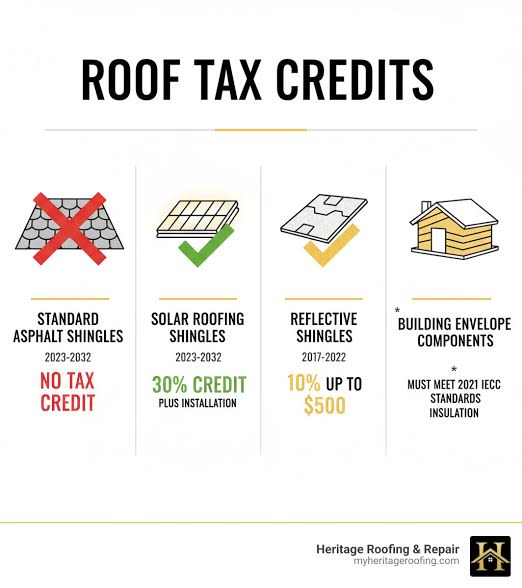
Installing a new roof is a significant investment, but many homeowners are unaware that upgrading to an energy-efficient metal roof can actually pay you back through federal incentives. With rising energy costs and increasing environmental awareness, understanding these financial benefits is crucial for making a smart home improvement decision. If you are wondering, “does a metal roof qualify for energy tax credit 2024,” the answer is yes, but specific criteria must be met to ensure you receive the benefit.
In this comprehensive guide, we will break down exactly what makes a metal roof eligible, how much money you can save, and the step-by-step process to claim your credit without triggering an audit.
Understanding the 2024 Energy Efficient Home Improvement Credit
The landscape of home improvement tax incentives changed significantly with the passage of the Inflation Reduction Act (IRA). Previously known as the Nonbusiness Energy Property Credit, this incentive was revamped and extended through 2032. For the 2024 tax year, it is officially called the Energy Efficient Home Improvement Credit.
It is vital to understand that this is a tax credit, not a tax deduction. A deduction reduces your taxable income, whereas a credit reduces your tax bill dollar-for-dollar. This makes the credit significantly more valuable for most homeowners.
Key Changes for 2024
- Annual Limit: The credit is now capped on an annual basis rather than a lifetime limit.
- Increased Cap: The maximum credit for qualified building envelope components (like roofs) has increased.
- Efficiency Standards: The requirements for what constitutes “energy efficient” have become stricter, aligning with ENERGY STAR® standards.
Does a Metal Roof Qualify for Energy Tax Credit 2024? The Specific Criteria
Not every metal roof automatically qualifies. You cannot simply choose any color or type of metal panel and expect a rebate from the IRS. To answer the question, “does a metal roof qualify for energy tax credit 2024,” we must look at two main factors: reflectivity and certification.
1. The “Cool Roof” Requirement
To qualify, the metal roof must meet specific solar reflectance and thermal emittance standards. These are often referred to as “cool roof” properties. The goal is to reflect more sunlight and absorb less heat than a standard roof.
According to the IRS guidelines for 2024, the roofing product must meet the current ENERGY STAR® program requirements. Generally, this means:
- Initial Solar Reflectance: Must be at least 0.25 (for steep-slope roofs) or higher depending on the specific ENERGY STAR version active at the time of installation.
- Thermal Emittance: Must be sufficiently high to release absorbed heat.
Most standard unpainted or dark-colored metal roofs do not qualify. However, metal roofs coated with special reflective pigments (often light colors or specialized “cool” coatings) frequently meet these standards.
2. Manufacturer Certification
This is the most critical step. You must verify that the specific product you are buying is certified. The manufacturer must provide a Manufacturer’s Certification Statement. This document explicitly states that the product meets the applicable energy efficiency standards set by the IRS.
Pro Tip: Do not rely on verbal assurances from contractors. Always ask for the written certification sheet for the exact SKU (Stock Keeping Unit) of the roofing material being installed.
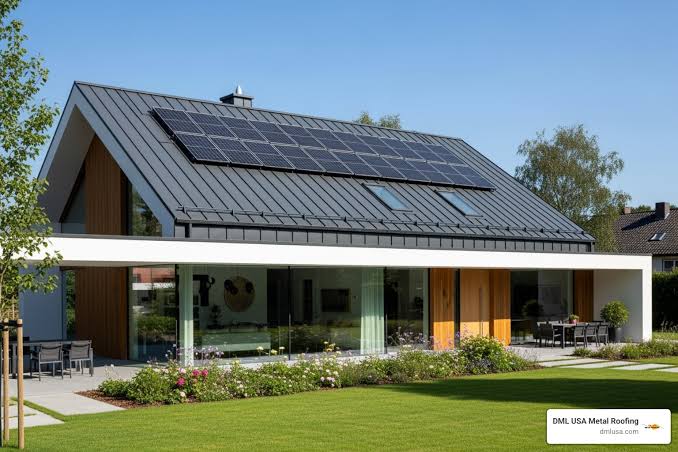
How Much Can You Save? Breaking Down the Numbers
Understanding the financial impact helps justify the upfront cost of a premium energy-efficient metal roof. Under the 2024 rules, the calculation is straightforward but has strict caps.
The Calculation Formula
The credit is equal to 30% of the total cost of the qualified property, including labor and installation materials.
The Annual Cap
For tax years beginning in 2023, 2024, and beyond, the maximum credit amount for all qualified building envelope components (which includes roofs, windows, doors, and insulation) is $1,200 per year.
However, there is a sub-limit specifically for roofs:
- Maximum Credit for Roofs: $600 per year.
| Expense Item | Example Cost | Credit Eligible? | Potential Credit (30%) |
|---|---|---|---|
| Metal Roofing Materials | $8,000 | Yes (if certified) | $2,400 |
| Installation Labor | $4,000 | Yes | $1,200 |
| Total Project Cost | $12,000 | $3,600 | |
| IRS Cap Applied | $600 |
As shown in the table above, even if 30% of your total cost exceeds $600, you are limited to claiming $600 for the roof component. Note that if you also install energy-efficient windows in the same year, those fall under the same $1,200 total umbrella, so strategic planning of your renovations can maximize your return.
Step-by-Step Guide to Claiming Your Credit
Claiming the credit requires careful documentation. Follow these steps to ensure your claim is processed smoothly by the IRS.
Step 1: Verify Eligibility Before Purchase
Before signing a contract, check the ENERGY STAR® Roof Products List or ask your contractor for the Manufacturer’s Certification Statement. Ensure the product is listed for the current year.
Step 2: Keep Detailed Records
Save every receipt. You need proof of payment for both materials and labor. The invoice should clearly separate the cost of the roofing materials from other services if possible, though a total project invoice is acceptable if it describes the qualified work.
Step 3: File IRS Form 5695
When filing your 2024 federal tax return, you must complete IRS Form 5695 (Residential Energy Credits).
- Go to Part II of the form (Nonbusiness Energy Property Credit).
- Enter the total cost of the qualified metal roof installation.
- Calculate 30% of that cost.
- Apply the $600 cap limitation as instructed in the form’s worksheet.
Step 4: Attach Documentation
While you do not send the receipts to the IRS with your return, you must keep them in your records for at least three years in case of an audit. The Manufacturer’s Certification Statement is your primary defense if the IRS questions the eligibility of your roof.
Common Mistakes to Avoid
Even well-intentioned homeowners make errors that lead to denied credits. Here are the most common pitfalls:
- Assuming All Metal Roofs Qualify: As mentioned, only those meeting ENERGY STAR® standards qualify. A standard galvanized steel roof usually does not.
- Missing the Tax Year Window: The work must be completed and paid for within the 2024 calendar year (January 1 – December 31, 2024). If you pay a deposit in 2024 but the installation finishes in 2025, you generally claim it in 2025.
- Confusing Credits with Rebates: Some local utilities offer instant rebates. You can often claim both the utility rebate and the federal tax credit, provided the rebate doesn’t reduce the “cost basis” of your purchase in a way that violates specific state rules. Always check local guidelines.
FAQ Section
1. Does a metal roof qualify for energy tax credit 2024 if I install it myself?
Yes, DIY installations can qualify, but you can only claim the cost of the materials. You cannot claim the value of your own labor. Ensure you keep receipts for all purchased materials and that the materials themselves are certified energy-efficient products.
2. Can I claim the credit for a metal roof over an existing shingle roof?
Generally, no. The IRS typically requires that the new roofing be part of a substantial renovation or replacement. Adding a metal layer over old shingles (“roof-over”) may not qualify as a new building envelope component in the eyes of some auditors, and it may void the ENERGY STAR® certification of the product. It is safest to remove the old roof entirely.
3. Is there an income limit for claiming this tax credit?
No. Unlike some other green energy incentives (like the Electric Vehicle credit), the Energy Efficient Home Improvement Credit does not have an income cap. Homeowners of any income level can claim this credit as long as they owe federal taxes.
4. What if my tax liability is less than $600?
This credit is non-refundable. This means it can reduce your tax bill to zero, but it will not result in a refund check if the credit amount exceeds what you owe in taxes. However, under current laws, unused portions of this specific credit generally do not carry forward to future years, so it is best utilized when you have a sufficient tax liability.
5. Where can I find the official list of qualifying products?
You should consult the ENERGY STAR® website or the manufacturer’s documentation. For broader context on energy conservation standards, you can also refer to general resources like Wikipedia’s page on Energy Efficiency to understand the scientific principles behind reflectivity and emittance, though always prioritize IRS publications for tax rules.
Conclusion
So, does a metal roof qualify for energy tax credit 2024? Absolutely, provided it meets the stringent ENERGY STAR® requirements for solar reflectance and thermal emittance. By choosing a certified “cool roof” system, you not only enhance your home’s durability and aesthetic appeal but also secure a $600 federal tax credit while lowering your monthly cooling bills.
Remember, the key to success is documentation. Secure your Manufacturer’s Certification Statement, keep your receipts, and file Form 5695 accurately.
Found this guide helpful? Share it with friends or family who are considering a roof replacement. Helping others navigate these complex tax rules can save them hundreds of dollars!