Tag: Home Maintenance

  • Lilly Miller Moss Out 27oz: The Ultimate Roof Cleaner

    Lilly Miller Moss Out 27oz: The Ultimate Roof Cleaner

    Have you ever looked up at your roof or walked across your patio only to be greeted by unsightly green patches of moss and slippery algae? It is a common frustration for homeowners in humid climates, but ignoring it can lead to costly structural damage over time. Fortunately, there is a powerful solution designed specifically for this purpose: Lilly Miller Moss Out For Roofs And Walks Concentrate 27Oz. This concentrated formula is not just a cleaner; it is a preventative treatment that restores the aesthetic appeal of your home while protecting its integrity.

    In this comprehensive guide, we will explore everything you need to know about this product. From understanding how it works to step-by-step application instructions, we aim to provide you with the knowledge to tackle moss growth confidently and safely.

    What Is Lilly Miller Moss Out and How Does It Work?

    Before diving into the application process, it is crucial to understand the science behind the product. Many homeowners mistakenly believe that moss is merely a surface-level cosmetic issue. However, moss roots can penetrate shingles, wood, and concrete, causing moisture retention that accelerates decay.

    Lilly Miller Moss Out For Roofs And Walks Concentrate 27Oz utilizes a potent blend of active ingredients designed to kill moss, algae, lichen, and mildew on contact. The primary mechanism involves disrupting the cellular structure of the plant life, causing it to dry out and die within days. Unlike pressure washing, which can damage roofing materials by forcing water under shingles, this chemical approach is gentle on surfaces but tough on organic growth.

    The “Concentrate” aspect of the 27-ounce bottle is particularly significant. It allows for customization based on the severity of the infestation. For light maintenance, a diluted mix suffices, while heavy moss coverage may require a stronger concentration. This versatility makes it a cost-effective choice compared to pre-mixed solutions that offer less flexibility.

    According to general horticultural principles, maintaining a pH balance that discourages organic growth is key to long-term prevention. You can read more about the biological nature of moss and its impact on structures on Wikipedia.

    Why Choose the 27oz Concentrate Over Other Cleaners?

    With countless cleaning products available on the market, why should you specifically choose this brand and size? The answer lies in efficiency, coverage, and ease of use.

    Key Benefits at a Glance

    • High Coverage Area: One 27oz bottle can cover a significant square footage when mixed correctly, making it ideal for average-sized residential roofs and walkways.
    • No Scrubbing Required: One of the biggest selling points is that it requires no physical scrubbing. You spray it on, let it work, and rinse it off later. This saves hours of labor and reduces the risk of personal injury from climbing ladders.
    • Preventative Action: It does not just kill existing moss; it leaves a residue that inhibits new growth for several months, depending on weather conditions.
    • Safe for Most Surfaces: When used as directed, it is safe for asphalt shingles, wood shakes, tile, brick, stone, and concrete.

    Comparison: Chemical Treatment vs. Pressure Washing

    FeatureLilly Miller Moss OutPressure Washing
    Risk of DamageLow (Chemical action)High (Water force can lift shingles)
    Labor IntensityLow (Spray and wait)High (Physical effort required)
    LongevityMonths of preventionImmediate clean, no prevention
    Water UsageMinimalExcessive
    Cost EfficiencyHigh (Concentrate lasts longer)Variable (Equipment rental/purchase)

    As seen in the table above, the chemical approach offered by Lilly Miller Moss Out For Roofs And Walks Concentrate 27Oz provides a safer and more sustainable solution for long-term home maintenance.
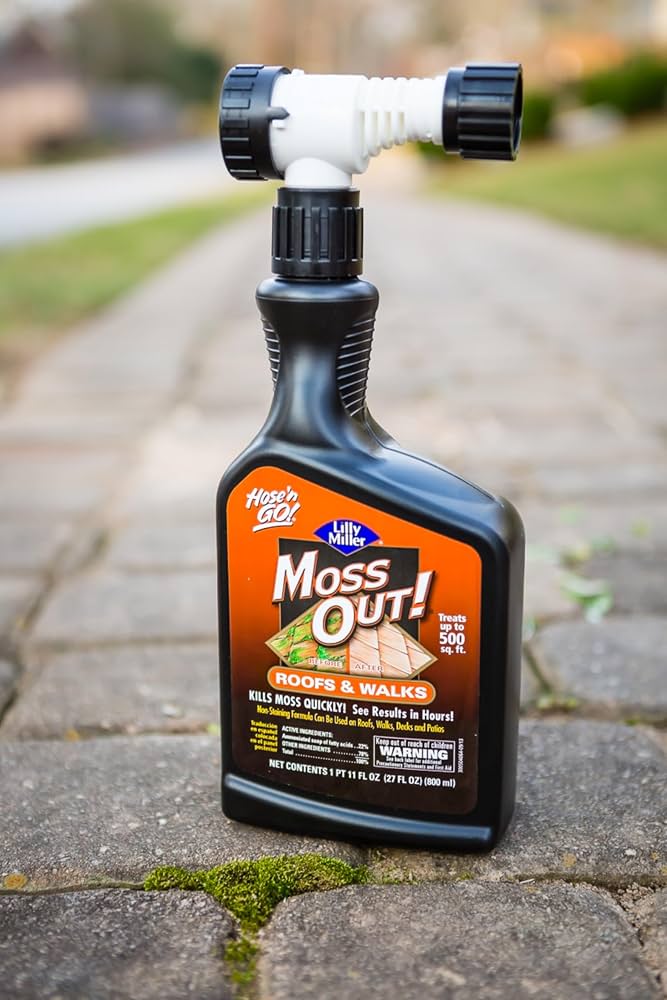
    Lilly Miller Moss Out For Roofs And Walks Concentrate 27Oz

    Step-by-Step Guide: How to Apply Correctly

    Proper application is critical to achieving the best results. Incorrect mixing or application can lead to ineffective cleaning or potential damage to surrounding plants. Follow these detailed steps to ensure success.

    Step 1: Preparation and Safety

    Safety should always be your top priority. Wear protective gear, including:

    • Rubber gloves
    • Safety goggles
    • Long-sleeved clothing
    • Non-slip shoes if working on walks

    Ensure the weather forecast predicts dry conditions for at least 24 hours after application. Rain will wash away the concentrate before it has time to work.

    Step 2: Mixing the Solution

    For the Lilly Miller Moss Out For Roofs And Walks Concentrate 27Oz, the standard mixing ratio is typically 1 part concentrate to 4 parts water for moderate growth. However, always check the specific label instructions as formulations can update.

    1. Fill a garden sprayer with 1 gallon of water.
    2. Add the recommended amount of concentrate (usually around 6-8 ounces per gallon for heavy moss).
    3. Shake or stir gently to mix. Do not use metal containers as the chemicals may react.

    Step 3: Application Technique

    Start from the bottom of the roof or walkway and work your way up. This prevents streaking and ensures even coverage.

    • For Roofs: Spray evenly until the surface is wet but not dripping excessively. Pay special attention to shaded areas where moss thrives.
    • For Walks: Apply directly to the stained areas. For porous concrete, you may need to saturate the surface slightly more.

    Step 4: Waiting Period

    Allow the solution to sit for 24 to 48 hours. You will notice the moss turning brown or yellow, indicating it is dying. Do not rinse immediately. The drying process is part of the killing mechanism.

    Step 5: Rinsing and Cleanup

    After the waiting period, rinse the area with a garden hose. Use low pressure to avoid damaging shingles. The dead moss should wash away easily. If some residues remain, a soft-bristle brush can be used gently, but often the rain or hose rinse is sufficient.

    Common Mistakes to Avoid

    Even with a high-quality product like Lilly Miller Moss Out For Roofs And Walks Concentrate 27Oz, user error can hinder results. Here are the most common pitfalls:

    1. Applying in Direct Sunlight: Extreme heat can cause the solution to evaporate too quickly, reducing its effectiveness. Apply in the early morning or late afternoon.
    2. Ignoring Surrounding Plants: While the product is designed for hardscapes, it can harm delicate garden plants. Wet down nearby grass and shrubs with plain water before application to create a barrier, and rinse them thoroughly afterward.
    3. Using Too Little Product: Skimping on the concentrate to save money often leads to incomplete kills, requiring re-application sooner. Stick to the recommended ratios.
    4. Neglecting Gutters: Moss often starts in gutters. Ensure you apply the solution there as well to prevent blockages and water backup.

    Frequently Asked Questions (FAQ)

    1. How long does it take for the moss to die?

    You will typically see color changes within 24 to 48 hours. Complete drying and detachment of the moss may take up to two weeks, depending on the thickness of the growth and weather conditions.

    2. Is Lilly Miller Moss Out safe for pets?

    Once the product has dried completely, it is generally safe for pets. However, keep dogs and cats away from the treated area during the application and the initial 24-hour drying period. Always rinse the area thoroughly before allowing pets back onto walks or roofs.

    3. Can I use this on my wooden deck?

    Yes, Lilly Miller Moss Out For Roofs And Walks Concentrate 27Oz is safe for wood decks. However, test a small, inconspicuous area first to ensure it does not discolor any specific stain or finish you may have applied.

    4. How often should I apply this product?

    For preventative maintenance, applying once a year is usually sufficient. In areas with high humidity or heavy shade, you may need to apply it every six months. Regular inspection of your roof and walks will help determine the optimal frequency.

    5. What if it rains shortly after application?

    If it rains within 24 hours of application, the effectiveness may be reduced. You may need to reapply the product once the surface has dried completely. Check the weather forecast carefully before starting your project.

    6. Does this product remove black streaks caused by algae?

    Yes, the formula is effective against Gloeocapsa magma, the blue-green algae responsible for black streaks on roofs. It may take slightly longer to fade completely compared to green moss, but the results are typically visible within a few weeks.

    Conclusion

    Maintaining a clean and moss-free home exterior is not just about curb appeal; it is about protecting your investment. Lilly Miller Moss Out For Roofs And Walks Concentrate 27Oz offers a reliable, efficient, and user-friendly solution to combat organic growth. By following the proper application steps and safety guidelines, you can restore the beauty of your roof and walkways without the hassle of intense physical labor or expensive professional services.

    Remember, consistency is key. Regular inspections and timely applications will keep your home looking pristine for years to come. If you found this guide helpful, please share it with your friends and neighbors on social media. Helping others maintain their homes creates a safer and more beautiful community for everyone.

    Disclaimer: Always read and follow the manufacturer’s label instructions carefully. This article is for informational purposes and does not replace professional advice for severe structural issues.
  • Why Do I Hear Footsteps On My Roof At Night?

    Why Do I Hear Footsteps On My Roof At Night?

    It is 2:00 AM, the house is silent, and suddenly—thump, thump, scritch. You freeze. Your heart races as you wonder, “Why do I hear footsteps on my roof at night?” It is a chilling experience that has kept countless homeowners awake, fearing intruders or supernatural phenomena. However, before you call the police or an exorcist, take a deep breath. In the vast majority of cases, the culprit is not human, but rather nature or physics playing tricks on your ears.

    Understanding the source of these noises is crucial not just for your peace of mind, but for the structural integrity of your home. Ignoring persistent roof noises can lead to significant damage, from chewed wiring to compromised insulation. In this guide, we will dissect the most likely reasons for those midnight marches, provide actionable steps to identify the intruder, and offer professional solutions to silence your roof for good.

    The Most Likely Culprit: Wildlife Intruders

    When homeowners ask why they hear footsteps, the answer is almost always biological. Your roof and attic offer warmth, shelter, and protection from predators, making them prime real estate for local wildlife.

    Raccoons: The Heavy Walkers

    If the sounds are heavy, deliberate, and sound like distinct footsteps, raccoons are the primary suspects. Raccoons are nocturnal, meaning they are most active at night. They are also surprisingly heavy, weighing between 10 to 30 pounds. When they walk across your shingles or crawl into your attic, it creates a loud, thumping noise that mimics human footsteps.

    According to wildlife experts, raccoons are intelligent and dexterous. They can lift shingles and tear through vent screens with ease. If you hear dragging sounds mixed with footsteps, it may be a raccoon carrying nesting material.

    Squirrels: The Fast Scuttlers

    While raccoons thump, squirrels scurry. If the noise is rapid, light, and sounds like scratching or fast-paced running, you likely have squirrels. Although they are diurnal (active during the day), they often return to their nests at dusk and dawn, which can coincide with your bedtime.

    • Key Difference: Squirrel noises are higher-pitched and faster. Raccoon noises are slower, heavier, and more rhythmic.

    Opossums and Stray Cats

    Opossums are quieter than raccoons but still make noticeable shuffling sounds. Stray cats seeking warmth may also walk across your roof, especially in colder months. Their footsteps are lighter than raccoons but heavier than squirrels.

    Physics at Play: Thermal Expansion and Contraction

    Not all roof noises are alive. If the sounds are more like pops, creaks, or ticks rather than distinct footsteps, you might be experiencing thermal expansion.

    During the day, your roof absorbs heat from the sun, causing materials like wood, metal, and asphalt to expand. At night, as the temperature drops, these materials contract. This shift in temperature causes friction between building components, resulting in audible popping or cracking sounds.

    This phenomenon is particularly common in:

    • Metal Roofs: Metal expands and contracts significantly with temperature changes.
    • Older Homes: Aging timber frames may settle and creak more noticeably as temperatures fluctuate.
    • HVAC Systems: If your attic houses ductwork, the heating or cooling cycles can cause pipes and vents to expand, creating banging noises that echo through the roof structure.

    While this is harmless to your home’s structure, it can be unsettling. Ensuring your attic is well-insulated can help moderate temperature swings, potentially reducing these noises.

    Structural Issues: Loose Shingles and Wind

    Sometimes, the “footsteps” are actually the sound of your roof deteriorating. High winds can lift loose shingles, causing them to flap against the roof deck. This repetitive flapping can sound like someone walking heavily across the surface.

    Additionally, if tree branches are hanging over your roof, wind can cause them to scrape or tap against the shingles. This rhythmic tapping can easily be mistaken for footsteps in the dead of night.

    Noise TypeLikely CauseUrgency Level
    Heavy ThumpingRaccoonsHigh (Damage risk)
    Fast ScuttlingSquirrelsMedium (Chewing risk)
    Popping/CreakingThermal ExpansionLow (Normal physics)
    Flapping/SlappingLoose Shingles/WindMedium (Leak risk)
    ScratchingBirds/BatsMedium (Health risk)

    How to Identify the Source: A Step-by-Step Guide

    Before you can fix the problem, you must accurately identify it. Here is a systematic approach to diagnosing your roof noise.

    Step 1: Listen to the Timing

    Note exactly when the noise occurs.

    • Dusk/Dawn: Likely squirrels or birds.
    • Mid-Night: Likely raccoons, opossums, or bats.
    • Temperature Drops: Likely thermal expansion.

    Step 2: Analyze the Sound Quality

    • Heavy vs. Light: Heavy sounds suggest larger animals (raccoons, cats). Light sounds suggest smaller animals (squirrels, rats).
    • Rhythmic vs. Random: Rhythmic thumping suggests walking. Random scratching suggests nesting or chewing.

    Step 3: Visual Inspection (Daytime Only)

    Never climb onto your roof at night. Wait until daylight and use binoculars to inspect from the ground. Look for:

    • Droppings: Animal waste near vents or edges.
    • Grease Marks: Raccoons leave dark oily smudges where they enter.
    • Damaged Vents: Torn screens or displaced caps.
    • Loose Shingles: Missing or lifted roofing materials.

    For a deeper understanding of common roof pests, you can refer to general information on urban wildlife adaptations to see how these animals thrive in residential areas.

    Step 4: Check the Attic

    If safe, enter your attic with a flashlight. Look for:

    • Nests made of insulation or leaves.
    • Chewed wires or wood beams.
    • Entry points where daylight shines through.
    Why Do I Hear Footsteps On My Roof At Night

    Solutions: How to Stop the Noise

    Once you have identified the cause, take immediate action.

    For Wildlife Intruders

    1. Do Not Seal Entry Points Yet: If you seal holes while animals are inside, they will die in your attic, causing severe odor and health hazards.
    2. Install One-Way Exclusion Devices: These allow animals to leave but prevent them from re-entering. This is the most humane and effective method.
    3. Trim Tree Branches: Cut back any branches within 6–8 feet of your roof to remove “bridges” for animals.
    4. Secure Trash Cans: Raccoons are attracted to food sources. Ensure your bins are locked tight.

    For Structural Noises

    1. Repair Loose Shingles: Replace damaged shingles to stop flapping.
    2. Insulate Ductwork: Wrapping HVAC ducts in insulation can reduce thermal expansion noises.
    3. Professional Roof Inspection: If you suspect structural settling, hire a licensed roofer to assess the integrity of your framing.

    Frequently Asked Questions (FAQ)

    Q: Can mice make sounds that sound like footsteps?

    A: Mice are generally too small to create sounds that mimic human footsteps. Their noises are typically faint squeaks or very light scratching. If you hear heavy thuds, it is likely a larger animal like a raccoon or cat.

    Q: Is it dangerous to have animals in my attic?

    A: Yes. Animals can chew through electrical wiring, creating fire hazards. They also carry diseases such as rabies, leptospirosis, and hantavirus. Their droppings can contaminate insulation and affect indoor air quality.

    Q: Why do I only hear noises at night?

    A: Most roof invaders, such as raccoons, opossums, and bats, are nocturnal. They sleep during the day and hunt or forage at night. Additionally, the house is quieter at night, making subtle sounds more audible.

    Q: Will homeowner’s insurance cover damage from animals?

    A: Typically, no. Most standard homeowners’ insurance policies exclude damage caused by rodents, birds, and other vermin. However, if an animal causes a secondary issue, like a fire from chewed wires, coverage may vary. Always check your specific policy.

    Q: Can thermal expansion damage my roof?

    A: Generally, no. Thermal expansion is a normal physical process. However, excessive movement due to poor installation or lack of expansion joints in metal roofs can lead to premature wear. Regular maintenance helps mitigate this.

    Conclusion

    Hearing footsteps on your roof at night is undeniably unsettling, but it is rarely a supernatural event. Whether it is a raccoon looking for a warm den, squirrels storing nuts, or your home simply settling in the cold, identifying the source is the first step toward a solution. By understanding the difference between biological intruders and physical phenomena, you can take targeted action to protect your home.

    Don’t let the mystery keep you up at night. Inspect your roof, secure your entry points, and reclaim your peace of mind. If you found this guide helpful, please share it with friends who might be hearing strange noises in their attics!