There is nothing quite as stressful as staring at a leaky ceiling or knowing your shingles are past their prime. You want the problem fixed, but you also need to know when your life will return to normal. If you are asking, “How long does it take to get your roof done,” you are likely balancing convenience, budget, and peace of mind.
Understanding the timeline is crucial for planning your household routine, protecting your landscaping, and managing expectations with your contractor. In this guide, we will break down exactly what influences roofing schedules, from simple repairs to full-scale replacements, so you can plan accordingly.
What Is the Average Timeline for a Full Roof Replacement?
When homeowners ask about roofing timelines, they are usually referring to a complete replacement. For an average-sized single-family home in the United States (approximately 1,500 to 2,500 square feet), a professional roofing crew can typically complete the job in one to three days.
However, “average” is a tricky word in construction. Several variables can stretch this timeline:
- Small Homes (under 1,500 sq. ft.): Often completed in 1 day.
- Medium Homes (1,500–2,500 sq. ft.): Typically 2 days.
- Large or Complex Homes (2,500+ sq. ft.): Usually 3 to 5 days.
It is important to note that this timeframe refers to the physical installation. The entire process—from signing the contract to final inspection—can take several weeks or even months due to permitting and material delivery delays.
Why Do Some Projects Take Longer?
Complexity is the biggest time-eater. A simple gable roof (two sloping sides) is much faster to strip and replace than a hip roof (four sloping sides) or a roof with multiple valleys, dormers, and chimneys. Each intersection requires careful flashing and waterproofing, which demands precision over speed.
How Long Does a Minor Roof Repair Take?
Not every roofing issue requires a full tear-off. If you are dealing with localized damage, such as missing shingles after a storm or a small leak around a vent pipe, the timeline is significantly shorter.
- Minor Repairs: Most minor repairs, such as replacing a few shingles or resealing flashing, can be completed in 2 to 4 hours.
- Moderate Repairs: Fixing a larger section of damaged decking or addressing widespread granule loss might take 1 to 2 days.
For emergency tarping to prevent water intrusion during a storm, crews can often arrive and secure your home within 24 hours of your call, depending on weather conditions and availability.
Key Factors That Influence Roofing Timelines
Several external and internal factors can accelerate or delay your project. Understanding these can help you avoid frustration.
1. Weather Conditions
Roofing is an outdoor job, making it highly susceptible to weather. Rain, high winds, or extreme heat can halt work entirely.
- Rain: Wet roofs are slippery and dangerous. Furthermore, adhesives and sealants require dry surfaces to bond correctly.
- Heat: In summer, asphalt shingles can become too soft to handle properly, forcing crews to work slower or shift hours to early morning.
2. Material Availability
Supply chain issues have impacted the construction industry significantly. While standard asphalt shingles are usually readily available, specialty materials like slate, clay tiles, or specific metal profiles may have lead times of 4 to 8 weeks. Always confirm material stock before signing a contract if you are on a tight schedule.
3. Permitting and Inspections
Local building departments require permits for most roof replacements to ensure code compliance.
- Permit Approval: Can take anywhere from 3 days to 3 weeks, depending on your municipality’s workload.
- Inspections: After the roof is installed, a city inspector must verify the work. Scheduling this inspection can add 2 to 5 days to the final completion date.
4. Crew Size and Experience
A larger, experienced crew will work faster than a smaller team. However, speed should never compromise quality. Reputable companies balance efficiency with thoroughness. Ask your contractor about their typical crew size for your project scope.
Step-by-Step: The Roofing Process Timeline
To give you a clearer picture, here is a breakdown of what happens during a typical 2-day replacement project.
Day 1: Tear-Off and Preparation
- Site Setup (7:00 AM – 8:00 AM): The crew arrives, sets up safety equipment, lays down tarps to protect your landscaping, and places a dumpster for old materials.
- Tear-Off (8:00 AM – 12:00 PM): Workers remove the old shingles, underlayment, and any rotten wood decking. This is the noisiest part of the process.
- Deck Inspection and Repair (12:00 PM – 2:00 PM): Once the bare deck is exposed, the foreman inspects for rot or structural damage. Any compromised plywood is replaced. Note: Unforeseen rot repair can add half a day to the timeline.
- Underlayment Installation (2:00 PM – 5:00 PM): A water-resistant barrier (synthetic or felt) is rolled out and nailed down to protect the deck.
Day 2: Installation and Cleanup
- Flashing and Drip Edge (7:00 AM – 9:00 AM): Metal flashing is installed around chimneys, vents, and valleys to direct water away from vulnerable areas.
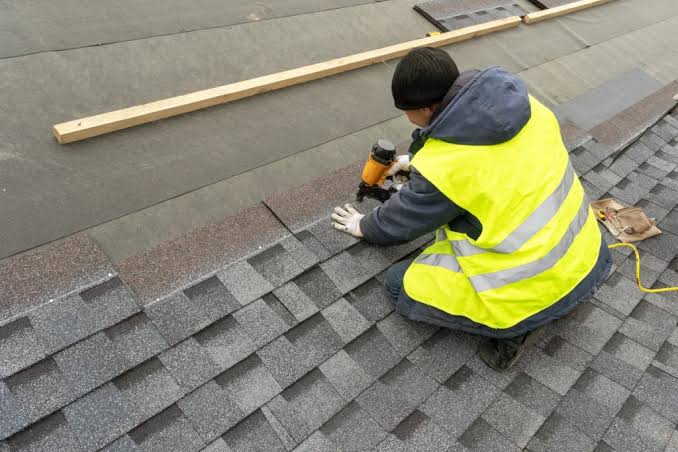
- Shingle Installation (9:00 AM – 3:00 PM): The new shingles are nailed down row by row, starting from the bottom edge up to the ridge.
- Ridge Vents and Caps (3:00 PM – 4:00 PM): The peak of the roof is sealed with ridge caps to ensure proper ventilation and weatherproofing.
- Cleanup and Magnet Sweep (4:00 PM – 5:00 PM): The crew removes all nails, scraps, and packaging. They use magnetic rollers to pick up stray nails from your driveway and lawn.
- Final Walkthrough: The project manager reviews the work with you to ensure satisfaction.
Comparison: Asphalt Shingles vs. Metal vs. Tile
Different materials require different installation techniques and timeframes. Here is a quick comparison:
| Material | Average Installation Time | Durability | Cost Estimate |
|---|---|---|---|
| Asphalt Shingles | 1–3 Days | 15–30 Years | $ |
| Metal Roofing | 3–7 Days | 40–70 Years | $$ |
| Clay/Concrete Tile | 5–10 Days | 50+ Years | $ |
| Slate | 7–14 Days | 75–100+ Years | $$ |
Note: Metal and tile roofs often require specialized installers and more precise measurements, which extends the timeline.
Expert Insight on Roofing Efficiency
According to industry standards, proper preparation accounts for nearly 40% of a successful roofing job. Rushing the tear-off phase often leads to missed deck damage, which causes leaks later. As noted in general construction principles found on Wikipedia, the integrity of the underlying structure is just as critical as the outer layer. Therefore, a slightly longer timeline that includes thorough deck inspection is preferable to a rushed job.
Frequently Asked Questions (FAQ)
1. Can I stay in my house while the roof is being replaced?
Yes, most homeowners remain in their homes during the process. However, expect significant noise, vibration, and dust. If you work from home, have young children, or have pets sensitive to noise, you might consider staying elsewhere for the 1–3 days of active construction.
2. What happens if it rains during the project?
Professional roofers monitor weather forecasts closely. If rain is expected, they will stop work and cover the exposed deck with tarps. Light drizzle may not stop work if the deck is already covered with underlayment, but heavy rain will pause the project until surfaces are dry.
3. Do I need to be home during the installation?
You do not need to be present the entire time, but it is recommended to be available at the start for the initial walkthrough and at the end for the final inspection. Ensure the crew has access to your backyard and any locked gates.
4. How long does a roof inspection take?
A standard pre-installation inspection takes about 30 to 60 minutes. The inspector will check the current condition of the shingles, flashing, gutters, and attic ventilation to provide an accurate quote.
5. Will my homeowner’s insurance cover the time it takes to fix the roof?
Insurance covers the cost of the repair if the damage is due to a covered peril (like hail or wind). It does not dictate the speed of the contractor. However, many insurers require repairs to begin within a certain timeframe (e.g., 180 days) to maintain coverage eligibility.
Conclusion
So, how long does it take to get your roof done? For most American homes using asphalt shingles, you can expect the physical work to be completed in 1 to 3 days. However, always account for additional time for permitting, material delivery, and potential weather delays.
By understanding these timelines and factors, you can choose the right contractor and prepare your home for a smooth renovation. Remember, a well-installed roof protects your biggest investment for decades, so patience during the process pays off in longevity.
Did you find this guide helpful? Share it with your neighbors on social media who might be facing similar roofing decisions. Knowledge is power when it comes to home maintenance!