Have you ever looked at a neighborhood skyline and noticed that almost every chimney sticks out well above the roofline? It isn’t just an aesthetic choice by architects; it is a critical safety requirement. If you are planning a renovation or building a new home, understanding why does chimney have to be higher than the roof is essential for preventing dangerous carbon monoxide leaks and ensuring your fireplace actually works.
In this guide, we will break down the science of airflow, the strict building codes you need to follow, and the real-world consequences of ignoring these height requirements. Let’s dive into the details so you can keep your home safe and warm.
The Science Behind the Height: Understanding the Stack Effect
To understand the height requirement, we first need to look at physics. A chimney doesn’t just “let smoke out”; it actively pulls air in through a phenomenon known as the stack effect.
Hot air is less dense than cold air, so it rises. As the hot gases from your fire rise up the chimney flue, they create a pressure difference. This negative pressure at the bottom of the chimney draws fresh oxygen into the firebox, keeping the combustion going. However, this system is delicate.
If the top of your chimney is too close to the roof, several physical problems occur:
- Wind Turbulence: When wind hits the roof, it creates eddies and downward drafts near the surface. If the chimney exit is within this turbulence zone, the wind can push smoke back down into your home instead of letting it escape.
- Insufficient Draft: Without enough vertical height, the temperature difference between the inside and outside of the flue may not generate enough lift to clear the smoke efficiently.
According to basic fluid dynamics, the taller the column of hot gas, the stronger the upward pull. Therefore, height is directly correlated to performance.
The 3-2-10 Rule: Decoding Building Codes
When contractors and inspectors talk about chimney height, they are usually referring to the 3-2-10 Rule. This is the gold standard adopted by the International Residential Code (IRC) and most local jurisdictions in the United States.
Here is exactly what it means:
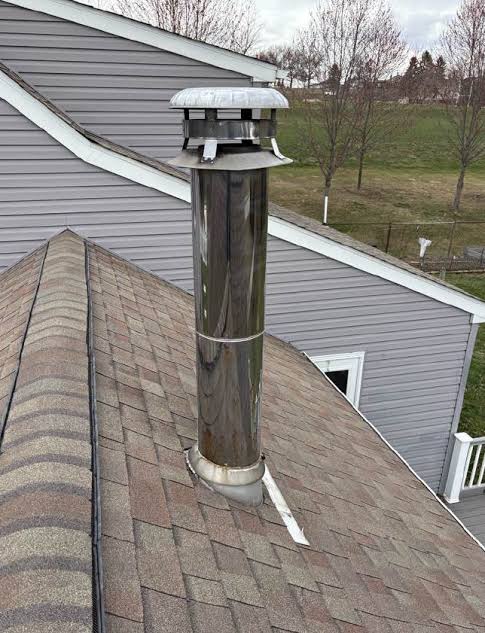
- 3 Feet Above the Roof Penetration: The chimney must extend at least 3 feet above the highest point where it passes through the roof surface.
- 2 Feet Higher Than Nearby Structures: The chimney cap must be at least 2 feet higher than any portion of the building structure (like a ridge beam or parapet wall) within a horizontal distance of 10 feet.
Why This Specific Measurement?
This rule ensures that the chimney outlet is always in “free air,” away from the turbulent boundary layer created by the roof’s shape. By staying 2 feet above any part of the roof within a 10-foot radius, you guarantee that wind flows over the chimney, aiding the draft rather than fighting against it.
| Scenario | Requirement | Reason |
|---|---|---|
| Flat Roof | Min. 3 feet above surface | Prevents wind eddies from pushing smoke down. |
| Near Ridge | 2 feet higher than ridge (if within 10 ft) | Ensures clearance from high-pressure zones. |
| Near Trees/Walls | Additional height may be needed | Avoids obstruction from external structures. |
Safety First: Preventing Carbon Monoxide and Fires
Beyond physics and code compliance, the primary reason for this height requirement is human safety. A chimney that is too low poses two severe risks: Carbon Monoxide (CO) poisoning and roof fires.
The Carbon Monoxide Danger
Carbon monoxide is an odorless, colorless gas produced during incomplete combustion. If your chimney lacks proper height, the draft becomes weak. Instead of exiting the house, exhaust gases can spill back into the living space. This is known as back-drafting.
Even small amounts of CO can cause headaches and nausea, while higher concentrations can be fatal. Proper chimney height ensures that these toxic gases are dispersed high into the atmosphere, far away from windows, vents, and intake systems.
Fire Hazards
Chimneys emit sparks and embers, especially when burning wood. If the chimney exit is too close to the roof material—particularly if you have wooden shingles or dry leaves accumulated in gutters—you risk igniting your own roof.
The National Fire Protection Association (NFPA) emphasizes that clearance is vital. By extending the chimney higher, you increase the distance sparks travel before landing, allowing them to cool down or burn out before touching combustible materials. For more detailed standards on solid fuel-burning appliances, you can refer to guidelines from authoritative bodies like Wikipedia’s overview on Chimneys, which references international safety standards.
Common Mistakes Homeowners Make
Even with clear codes, mistakes happen. Here are the most common errors seen in residential projects:
- Ignoring the “10-Foot Radius”: Homeowners often measure only the point where the chimney exits the roof. They forget to check if the ridge line or a nearby dormer is within 10 feet horizontally. If it is, the chimney must rise 2 feet above that point, not just the exit point.
- Using Short Prefab Kits: Some DIY prefab chimney kits are designed for minimal height. While they may meet the 3-foot rule, they often fail the 2-foot-above-ridge rule on steep roofs.
- Neglecting Wind Patterns: In areas with high winds or specific topographical features (like valleys), standard heights might not be enough. Local codes may require additional height to counteract strong downdrafts.
How to Measure Your Chimney Height Correctly
If you are unsure whether your current chimney meets the requirements, you can perform a simple check. You will need a tape measure and possibly a ladder (please prioritize safety and use a spotter).
- Identify the Exit Point: Locate where the chimney pipe or masonry structure penetrates the roof.
- Measure Vertical Height: Measure straight up from the roof surface at the penetration point to the top of the chimney cap. It must be at least 3 feet.
- Check the Horizontal Distance: Look for any part of the roof structure (ridge, peak, parapet) that is within 10 feet horizontally of the chimney.
- Compare Heights: If such a structure exists, measure its height. Your chimney top must be at least 2 feet higher than that structure.
If your chimney fails either test, it is non-compliant and potentially unsafe. Consult a certified chimney sweep or structural engineer for solutions, which may include adding a chimney extension kit.
FAQ Section
1. Can I install a chimney cap if my chimney is too short?
No. A chimney cap helps keep rain and animals out, but it does not fix draft issues caused by insufficient height. If the chimney is too low, the physics of the stack effect are compromised regardless of the cap. You must extend the flue height to meet code.
2. Does this rule apply to gas fireplaces too?
Yes. While gas appliances produce less smoke, they still emit exhaust gases, including carbon monoxide. Proper venting height is crucial to ensure these gases are dispersed safely away from air intake vents and windows. Always check the manufacturer’s installation manual, as some gas vents have specific height requirements that may exceed local codes.
3. What if my neighbor’s chimney is lower than mine?
Building codes are applied to individual structures based on their specific roof geometry. Your neighbor’s roof might be flat, or their chimney might be located far from their ridge line, allowing it to be shorter while still complying with the 3-2-10 rule. Do not use their setup as a benchmark for your own home.
4. Will a taller chimney make my fire burn hotter?
Not necessarily hotter, but it will burn cleaner and more efficiently. A proper draft ensures adequate oxygen supply to the fire. This leads to more complete combustion, which means less creosote buildup and more heat output from the same amount of fuel.
5. How much does it cost to extend a chimney?
Costs vary widely depending on whether you have masonry or metal pipe. Adding a metal flue extension can cost between $200 and $600, including labor. Extending a masonry chimney is more complex and expensive, often ranging from $1,000 to $3,000, as it requires matching bricks and mortar work.
Conclusion
Understanding why does chimney have to be higher than the roof is not just about following arbitrary rules; it is about protecting your family and your investment. The 3-2-10 rule exists to harness the power of physics, ensuring that toxic gases are vented safely and your fireplace operates efficiently.
By keeping your chimney sufficiently high, you prevent dangerous back-drafting, reduce the risk of roof fires, and ensure a cozy, smoke-free environment. If you suspect your chimney is too short, don’t wait for a problem to arise. Contact a professional inspector today to evaluate your setup.
Found this guide helpful? Share it with your friends on social media who are planning home renovations or dealing with fireplace issues. Safety knowledge is best when shared!