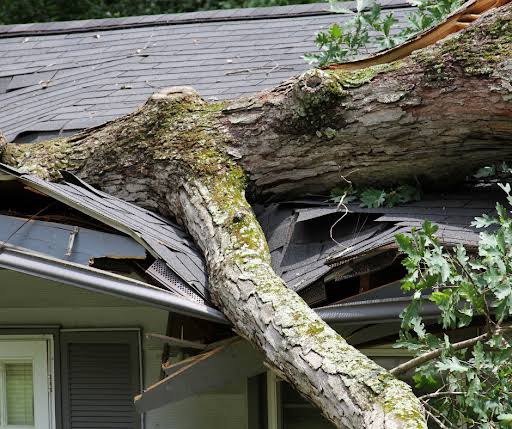
Hearing the sickening crunch of timber hitting your shingles is every homeowner’s nightmare. It is a chaotic, frightening moment that leaves you feeling vulnerable and unsure of your next move. If you are currently staring at debris and wondering what to do if a tree falls on your roof, take a deep breath; you are not alone, and there is a clear, safe path forward.
This guide is designed to walk you through the critical first hours after impact. We will prioritize your family’s safety, help you mitigate further damage, and explain how to navigate the complex insurance claims process with confidence.
1. Is It Safe to Stay in the House?
Your immediate priority is not the roof; it is human life. Before you assess the damage or call anyone, you must determine if your home is structurally compromised.
Evacuate Immediately If:
- You hear cracking, groaning, or shifting sounds from the structure.
- There is a visible sag in the ceiling inside the house.
- You smell gas or see sparks from electrical wires.
- The tree has pierced through the roof into living spaces.
According to the Federal Emergency Management Agency (FEMA), structural instability is the leading cause of injury during post-storm assessments. Do not attempt to be a hero. If the impact was significant, assume the worst and get everyone out.
If the house appears stable, keep everyone away from the affected area. Do not allow children or pets near the room directly beneath the impact zone.
2. How Do I Secure the Property Temporarily?
Once safety is confirmed, your goal shifts to mitigation. In insurance terms, this means taking reasonable steps to prevent additional damage. However, “reasonable” does not mean “dangerous.”
Step-by-Step Mitigation Guide
- Turn Off Utilities: If you suspect damage to electrical lines or gas pipes, shut off the main breakers and gas valve from the outside meter if safe to do so.
- Cover the Breach: If there is a hole, cover it from the inside if possible using heavy-duty plastic sheeting and plywood. Climbing onto a damaged roof is extremely hazardous.
- Document Everything: Before moving any branches or debris, take photos and videos. Capture wide shots of the entire house and close-ups of the damage. This evidence is crucial for your claim.
Expert Tip: Never climb onto a roof that has been struck by a tree. The weight distribution has changed, and the structure may collapse under your weight. Leave high-level mitigation to professionals.
3. Who Should I Call First: Insurance or Arborist?
This is a common dilemma. The general consensus among industry experts is to contact both, but in a specific order.
| Service Provider | Priority | Role |
|---|---|---|
| Emergency Roofing Contractor | High | Secures the home, tars over holes, prevents water intrusion. |
| Insurance Company | High | Starts the claim clock, assigns an adjuster. |
| Certified Arborist | Medium | Assesses tree health, determines if it can be saved or must be removed. |
| General Contractor | Low | Handles interior repairs after the roof is fixed. |
Call your insurance provider immediately to report the incident. Ask them if they have a preferred vendor list for emergency roofing services. Using their network can sometimes speed up the approval process. Simultaneously, hire a licensed roofing contractor to perform emergency tarping.
For more information on tree biology and safety standards, you can refer to Wikipedia’s entry on Arboriculture to understand why professional assessment is vital for large trees.
4. Will Homeowners Insurance Cover the Damage?
Most standard homeowners insurance policies cover damage caused by falling trees, especially if the fall was due to wind, lightning, or weight of ice/snow. However, there are nuances.
What Is Typically Covered:
- Structural damage to the roof and dwelling.
- Debris removal costs (often up to a specific limit, e.g., $500–$1,000).
- Water damage resulting from the breach.
What Might Be Denied:
- Neglect: If the tree was visibly dead, rotting, or leaning before the storm and you failed to address it, the insurer may deny the claim citing lack of maintenance.
- Flood Damage: If the tree fall caused flooding that entered the home, standard policies usually exclude flood damage. You would need separate flood insurance.
Check your policy for the “deductible.” If the repair cost is close to your deductible amount, it might be worth paying out-of-pocket to avoid a premium increase.
5. How Is the Tree Removed Safely?
Tree removal after a roof impact is not a DIY job. It requires specialized rigging techniques to lower branches without causing further damage to the roof or gutters.
The Professional Process:
- Assessment: An arborist evaluates the tension in the branches. A fallen tree often creates “spring poles” – branches under extreme tension that can snap back violently when cut.
- Rigging: Ropes and pulleys are used to control the descent of each section.
- Sectional Removal: The tree is cut into small, manageable pieces and lowered gently to the ground.
- Cleanup: All debris is hauled away. Ensure your contract specifies who is responsible for cleanup.
Do not attempt to cut the tree yourself unless it is completely on the ground and not touching the house. Even then, chainsaw accidents are common among untrained individuals.
6. What Are the Long-Term Repair Steps?
Once the tree is removed and the home is tarped, you need a permanent repair plan.
- Full Roof Inspection: Even if the hole looks small, the impact shock can loosen shingles, crack rafters, or damage the underlying decking far from the impact site.
- Structural Engineering Report: For severe impacts, your insurance adjuster may require a report from a structural engineer to ensure the framing is sound.
- Material Matching: If your roof is older, finding matching shingles can be difficult. Discuss with your contractor whether a full roof replacement is more cost-effective than a patch job, which might look mismatched.
- Interior Restoration: After the roof is watertight, address interior damage like wet drywall, insulation, and flooring. Mold can begin to grow within 24–48 hours, so speed is essential.
FAQ Section
Q: Can I remove the tree myself to save money?
A: No. Removing a tree from a roof is highly dangerous. The tree may be pinned under tension, and cutting it incorrectly can cause it to shift, collapsing the roof further or injuring you. Always hire a licensed and insured tree service.
Q: Does insurance cover the cost of removing the tree if it didn’t hit the house?
A: Usually, no. Most policies only cover tree removal if the tree blocks a driveway or damages a covered structure (like your house or fence). If it fell in the yard without hitting anything, removal is typically your responsibility.
Q: How long does the insurance claim process take?
A: It varies. Emergency tarping happens within 24 hours. Full repairs can take weeks or months depending on contractor availability and the complexity of the claim. Keep detailed records of all communications.
Q: What if the tree belonged to my neighbor?
A: Generally, you file the claim with your insurance company. Your insurer will then pursue subrogation against your neighbor’s insurer if negligence can be proven. If the tree was healthy and fell due to an “act of God” (storm), your neighbor is usually not liable.
Q: Should I get multiple quotes for repairs?
A: Yes. While insurance may recommend vendors, you have the right to choose your contractor. Get at least three detailed estimates to ensure the scope of work is accurate and the pricing is fair.
Conclusion
Dealing with a fallen tree is stressful, but knowing what to do if a tree falls on your roof transforms panic into action. Remember the hierarchy: Safety First, then Mitigation, followed by Documentation and Professional Repair.
By staying calm and following these steps, you protect your family, preserve your insurance claim validity, and ensure your home is restored correctly. Don’t let this disaster catch you off guard next time—share this guide with friends and family on social media so they are prepared too. Stay safe!