Have you ever struggled with dragging heavy shingles or bundles of tiles across your roof, only to worry about damaging the underlying structure or slipping on loose granules? It is a common frustration for both professional roofers and ambitious DIY homeowners. Using a pulley platform to hold materials off of the roof is the smartest solution to keep your workspace clean, safe, and efficient.
Why You Need a Pulley Platform for Roofing Projects
Roofing is physically demanding work. Beyond the physical exertion of lifting, the logistics of getting materials from the ground to the working area can be a bottleneck. Many people assume that simply throwing bundles up or carrying them up the ladder one by one is the only way. However, this method is inefficient and risky.
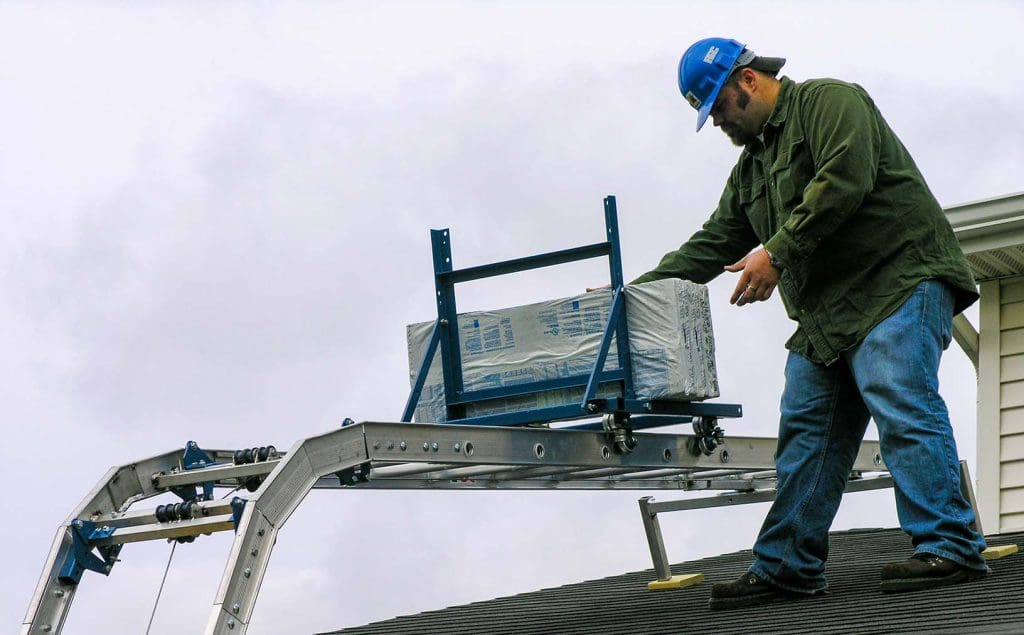
A pulley system designed specifically for roofing does more than just lift; it organizes. By using a platform, you create a staging area that keeps materials elevated above the roof surface. This distinction is critical. When materials sit directly on shingles, they can trap heat, cause indentations, or slide unexpectedly during wind gusts. A suspended or elevated platform mitigates these risks while keeping your primary work zone clear for movement.
How Does a Roofing Pulley Platform Work?
At its core, the system is simple mechanics applied to construction needs. It typically consists of a sturdy frame (the platform), high-tensile ropes or cables, and a set of pulleys anchored securely at the roof’s peak or eave.
The Mechanics of Lift and Hold
The platform acts as a counterbalance or a direct lift mechanism. Once the materials are loaded onto the platform at ground level, the user pulls the rope to hoist the load up. The “hold” feature is usually managed by a cleat, a friction brake, or a locking pulley system that allows the platform to remain suspended at a desired height without constant tension from the operator.
This design ensures that the weight of the materials is transferred to the anchor points rather than the roof deck itself. For those interested in the physics behind simple machines, understanding mechanical advantage can help you choose the right gear ratio for heavier loads. You can read more about the basic principles of pulleys on Wikipedia.
Key Components
- The Platform: Usually made of aluminum or heavy-duty plastic to resist weather and impact.
- The Pulleys: Must be rated for the total weight of the materials plus the platform.
- The Anchor: A secure point at the roof ridge or a specialized stand that does not damage the roofing material.
What Are the Benefits of Keeping Materials Off the Roof?
You might wonder if the extra setup time is worth it. The data suggests it is. Here is why separating your materials from the roof surface is a game-changer.
1. Protection of Roofing Integrity
Asphalt shingles, clay tiles, and metal panels are durable but not invincible. Dragging heavy bundles across them can scrape off protective granules or crack tiles. By using a pulley platform to hold materials off of the roof, you eliminate friction damage entirely. This preserves the warranty of your roofing material and extends its lifespan.
2. Enhanced Safety and Stability
Loose materials on a sloped surface are a hazard. They can slide down, striking workers below or causing tripping hazards above. A secured platform keeps the center of gravity stable. Furthermore, it reduces the number of trips up and down the ladder, which is statistically one of the most dangerous aspects of roofing work.
3. Improved Workflow Efficiency
Time is money in construction. With a pulley system, you can pre-load multiple bundles. While one bundle is being installed, the next is already hoisted and waiting. This continuous workflow can reduce project time by up to 20%, according to industry estimates for small to mid-sized residential roofs.
Comparison: Traditional Methods vs. Pulley Platform
To help you decide, let’s look at a direct comparison between traditional hauling and using a dedicated platform system.
| Feature | Traditional Ladder Carry | Throw-and-Catch Method | Pulley Platform System |
|---|---|---|---|
| Physical Strain | High (Repetitive lifting) | Medium (Erratic movements) | Low (Mechanical advantage) |
| Risk of Damage | Moderate (Dropping items) | High (Impact damage) | Minimal (Controlled lift) |
| Speed | Slow | Fast but chaotic | Consistent and Fast |
| Safety Rating | Low | Very Low | High |
| Setup Time | None | None | 15–30 Minutes |
As shown above, while the pulley platform requires initial setup, the long-term benefits in safety and speed outweigh the upfront investment of time.
Step-by-Step Guide to Setting Up Your System
Setting up a pulley platform to hold materials off of the roof requires precision. Follow these steps to ensure stability and safety.
Step 1: Choose Your Anchor Point
Identify a secure location at the ridge of your roof. If you have a chimney or a sturdy vent pipe, ensure it is not used as an anchor unless specifically rated for it. Ideally, use a ridge anchor strap that wraps over the peak and distributes weight evenly without piercing the roof membrane.
Step 2: Install the Pulleys
Attach the primary pulley to the anchor point. Ensure it is aligned with the path of the lift. If you are using a multi-pulley system for heavier loads, install the secondary pulleys according to the manufacturer’s diagram. Check that all carabiners and hooks are locked.
Step 3: Prepare the Platform
Inspect the platform for any cracks or wear. Attach the lifting ropes securely to the four corners of the platform to ensure it remains level during the ascent. Uneven lifting can cause materials to slide off.
Step 4: Load and Lift
Place your materials on the platform at ground level. Do not exceed the weight rating of the ropes or pulleys. For standard asphalt shingles, a platform can typically hold 3–4 bundles safely. Pull the rope steadily. Use a gloved hand to guide the platform as it approaches the roof edge to prevent swinging.
Step 5: Secure the Load
Once the platform reaches the desired height, engage the locking mechanism. If your system uses a cleat, wrap the rope in a figure-eight pattern to create friction. Test the hold by applying slight downward pressure before releasing the rope completely.
Frequently Asked Questions (FAQ)
1. Can I use a regular boat pulley for roofing?
While boat pulleys are strong, they are not always designed for the abrasive nature of construction ropes or the specific angular stresses of roofing lifts. It is highly recommended to use pulleys specifically rated for construction or lifting applications to ensure safety and durability.
2. How much weight can a typical roofing pulley platform hold?
Most consumer-grade roofing platforms are rated between 150 to 300 pounds. Professional industrial systems can handle significantly more. Always check the manufacturer’s weight limit and never exceed it. Remember to account for the weight of the platform itself in your calculations.
3. Is it safe to use a pulley system on a steep roof?
Yes, it is often safer than climbing a steep roof with heavy loads. However, the anchor point must be exceptionally secure. On very steep pitches (over 8/12), consider using a ridge stabilizer to prevent the anchor from sliding down the slope.
4. What type of rope should I use?
Use a static kernmantle rope or a high-quality synthetic braided rope with low stretch. Avoid elastic bungee cords or old garden hoses. The rope should have a diameter compatible with your pulleys (usually 3/8 inch to 1/2 inch) and be rated for at least three times the maximum load you intend to lift.
5. Can one person operate this system alone?
Yes, one of the main advantages of a pulley platform to hold materials off of the roof is that it is designed for single-person operation. However, having a spotter on the ground to guide the platform during the initial lift can prevent swinging and improve accuracy.
Conclusion
Implementing a pulley platform to hold materials off of the roof is a small change that yields significant results. It protects your investment, safeguards your health, and streamlines your workflow. Whether you are a professional contractor looking to optimize your crew’s efficiency or a homeowner tackling a weekend project, this tool is indispensable.
Don’t let heavy lifting slow you down or compromise the integrity of your new roof. Set up your system, lift with confidence, and enjoy a smoother roofing experience. If you found this guide helpful, please share it with your fellow builders or DIY enthusiasts on social media to help spread the word about safer roofing practices!