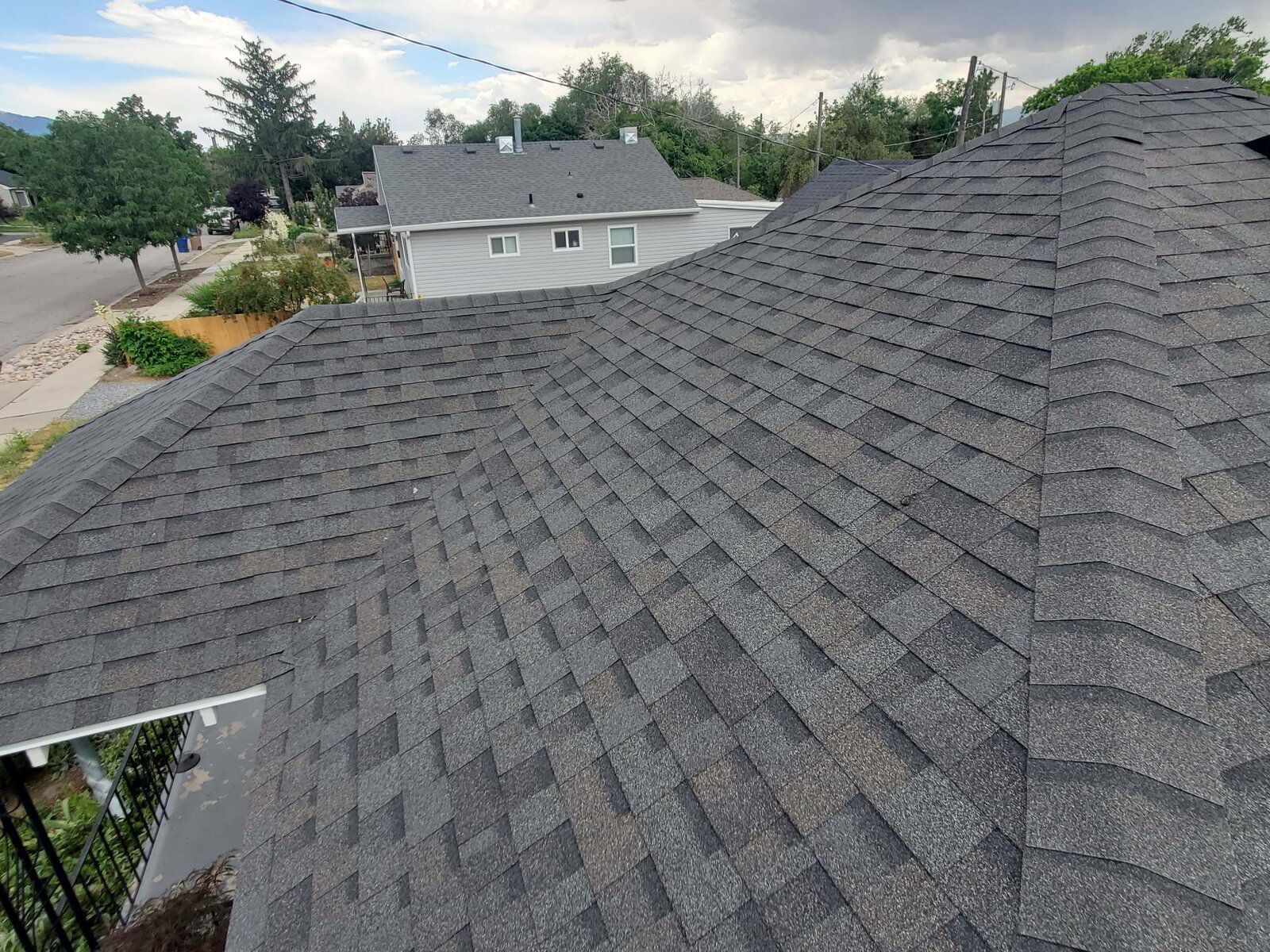
Have you ever stood in the aisle of a home improvement store, staring at stacks of asphalt shingles, wondering exactly how much roof area they will actually cover? It is a common point of confusion for DIY enthusiasts and new homeowners alike, especially when trying to budget for a roof replacement or repair project. Understanding how many square feet in one bundle of roofing shingles is the critical first step to ensuring you buy the right amount of material without overspending or running short mid-project.
In this guide, we will break down the math, explain industry standards, and help you avoid costly mistakes when estimating your roofing needs.
The Standard Answer: 33.3 Square Feet Per Bundle
If you are looking for a quick answer, here it is: Most standard asphalt shingle bundles cover approximately 33.3 square feet.
However, roofing terminology can be tricky. In the construction industry, professionals do not usually talk about “square feet” when ordering materials; they talk about “squares.” One roofing square equals 100 square feet of roof area.
Because three bundles of standard shingles are required to cover one roofing square (100 sq ft), the math breaks down as follows:
- 1 Roofing Square = 100 sq ft
- 1 Roofing Square = 3 Bundles
- 100 sq ft ÷ 3 bundles = 33.33 sq ft per bundle
This 3:1 ratio (three bundles per square) is the industry standard for most traditional 3-tab and architectural asphalt shingles. However, relying solely on this average can lead to errors if you are using premium or specialty products. Always check the specific packaging of the brand you intend to buy, as coverage can vary slightly based on the manufacturer’s design and shingle thickness.
Why Do Some Bundles Cover Less Area?
While 33.3 square feet is the norm, it is not a universal law. Several factors influence the actual coverage of a single bundle. Understanding these variables is crucial for accurate estimation.
1. Shingle Type and Weight
Heavier, premium architectural shingles often have different dimensions than basic 3-tab shingles. Some high-end laminated shingles may require four or even five bundles to cover a single square (100 sq ft). If you are using luxury shingles, one bundle might only cover 20 to 25 square feet.
2. Manufacturer Specifications
Different manufacturers (such as GAF, Owens Corning, or CertainTeed) may produce shingles with slightly different exposure lengths. The “exposure” is the part of the shingle that is visible after installation. A longer exposure means fewer shingles are needed per row, potentially changing the number of bundles per square.
3. Waste Factor and Cuts
The square footage listed on the bundle is for theoretical coverage. It does not account for waste. When you cut shingles to fit around chimneys, vents, valleys, and edges, you generate waste. Therefore, while a bundle physically contains enough material for 33.3 sq ft, your effective coverage will be lower once installation begins.
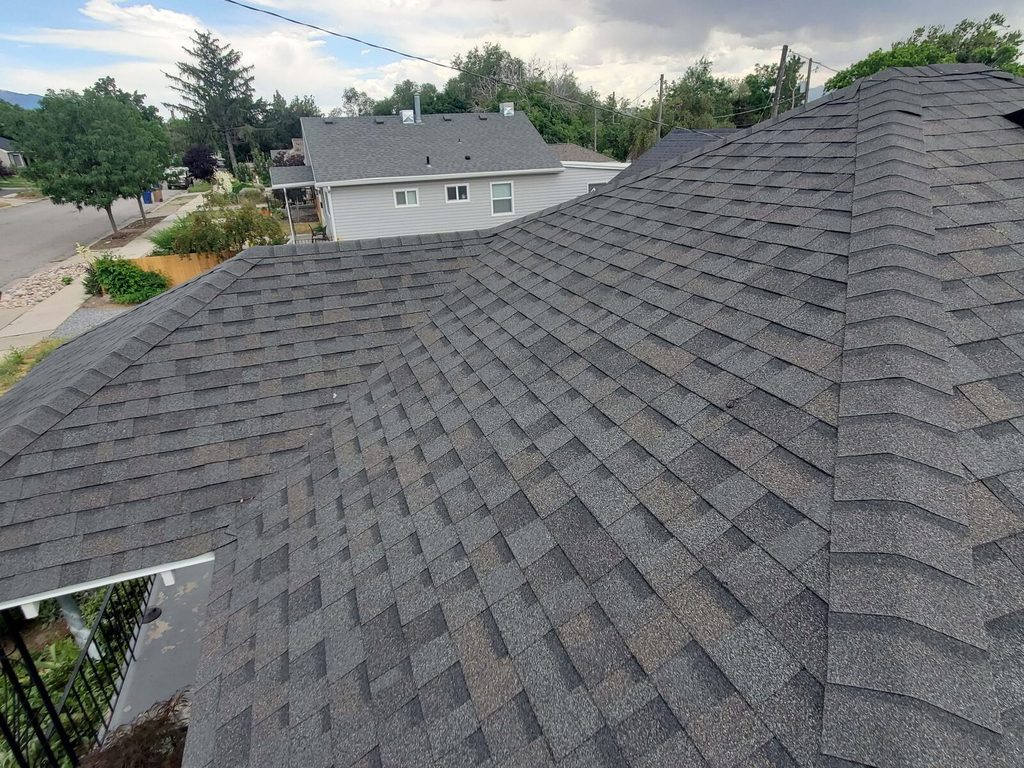
How to Calculate Your Total Roofing Needs
Knowing the coverage per bundle is useless if you don’t know the total size of your roof. Here is a step-by-step method to calculate exactly how many bundles you need.
Step 1: Measure Your Roof’s Footprint
If you cannot climb onto the roof safely, measure the length and width of your house from the ground. Include any overhangs (eaves) in your measurements. Multiply the length by the width to get the footprint area.
Example: A house that is 40 feet long and 30 feet wide has a footprint of 1,200 square feet.
Step 2: Adjust for Roof Pitch
A flat roof has the same area as its footprint. However, most roofs are sloped. The steeper the pitch, the more surface area there is. You must multiply your footprint area by a pitch multiplier.
| Roof Pitch | Multiplier |
|---|---|
| 4/12 (Low) | 1.05 |
| 6/12 (Medium) | 1.12 |
| 8/12 (Steep) | 1.20 |
| 12/12 (Very Steep) | 1.41 |
Continuing the example: If our 1,200 sq ft house has a 6/12 pitch, we calculate: 1,200 x 1.12 = 1,344 sq ft.
Step 3: Convert to Squares and Add Waste
Divide your total adjusted square footage by 100 to get the number of “squares.” Then, add a waste factor. For simple roofs, add 10%. For complex roofs with many hips, valleys, and dormers, add 15–20%.
Calculation: 1,344 sq ft ÷ 100 = 13.44 squares. Adding 10% waste: 13.44 x 1.10 = 14.78 squares.
Step 4: Determine Total Bundles
Finally, multiply the total squares by the number of bundles per square. For standard shingles, this is 3.
Final Count: 14.78 squares x 3 bundles/square = 44.34 bundles. Since you cannot buy partial bundles, round up to 45 bundles.
For more detailed information on roof structures and pitch calculations, you can refer to general construction principles on Wikipedia.
Common Mistakes to Avoid When Buying Shingles
Even experienced DIYers can stumble when estimating roofing materials. Here are the most frequent pitfalls:
- Ignoring Starter Strips: Don’t forget that you need starter shingles for the eaves and rakes. These are often sold separately or require cutting full shingles, which increases waste.
- Underestimating Ridge Caps: The peak of your roof requires ridge cap shingles. These are specialized and not included in the standard bundle count for the field shingles.
- Assuming All Bundles Are Equal: As mentioned earlier, always read the label. If you switch brands mid-project, the coverage per bundle might change, leaving you with mismatched materials or shortages.
- Forgetting Flashing and Underlayment: Shingles are only the top layer. You will also need ice and water shield, roofing felt (underlayment), drip edge, and flashing. These do not come in shingle bundles.
FAQ: Frequently Asked Questions
1. Does every brand of shingle have 33.3 square feet per bundle?
No. While 33.3 sq ft is the industry standard for most asphalt shingles, premium, heavy-weight, or designer shingles may have less coverage per bundle. Some luxury lines require 4 or 5 bundles to cover a 100 sq ft square. Always verify the coverage area printed on the wrapper.
2. How much does one bundle of shingles weigh?
The weight varies significantly by type. Standard 3-tab shingles typically weigh between 50 and 60 pounds per bundle. Architectural shingles are heavier, often weighing 65 to 80 pounds per bundle. This is an important consideration if you are carrying them up a ladder yourself.
3. Can I return unused bundles of shingles?
Most major home improvement stores (like Home Depot or Lowe’s) allow returns of unused, unopened bundles within a specific timeframe (usually 90 days). However, policies vary by location. Keep your receipt and try to buy slightly more than you think you need, as returning extra is easier than rushing back to the store for more.
4. What is the difference between 3-tab and architectural shingles regarding coverage?
In terms of square footage, both typically cover 33.3 sq ft per bundle (3 bundles per square). The difference lies in thickness, durability, and aesthetic appeal. Architectural shingles are laminated (two layers bonded together), making them heavier and more wind-resistant, but they generally follow the same coverage rules as 3-tab shingles unless specified as “premium” or “luxury.”
5. How do I calculate shingles for a shed or small structure?
Measure the length and width of the shed roof. If it is a simple gable or shed roof, calculate the area (Length x Width). Divide by 33.3 to find the number of bundles. For very small projects, remember to still account for waste. Even on a small roof, cuts around edges can result in 10% waste.
6. Is it better to buy too many or too few shingles?
It is always better to buy too many. Running out of shingles mid-project can be disastrous because dye lots can vary. If you run out and buy a new batch weeks later, the color might not match perfectly due to slight manufacturing variations. Having leftover shingles is also beneficial for future repairs.
Conclusion
Knowing how many square feet in one bundle of roofing shingles is fundamental to any successful roofing project. While the magic number is typically 33.3 square feet, accurate planning requires understanding your roof’s pitch, accounting for waste, and verifying the specific specifications of your chosen product.
By following the calculation steps outlined above, you can avoid the stress of mid-project supply runs and ensure your budget remains intact. Remember, measuring twice and buying once (with a little extra) is the golden rule of roofing.
Did you find this guide helpful? Share it with your friends or neighbors who are planning their next home improvement project! Accurate information saves money and time, so let’s help others get their roofing estimates right the first time.